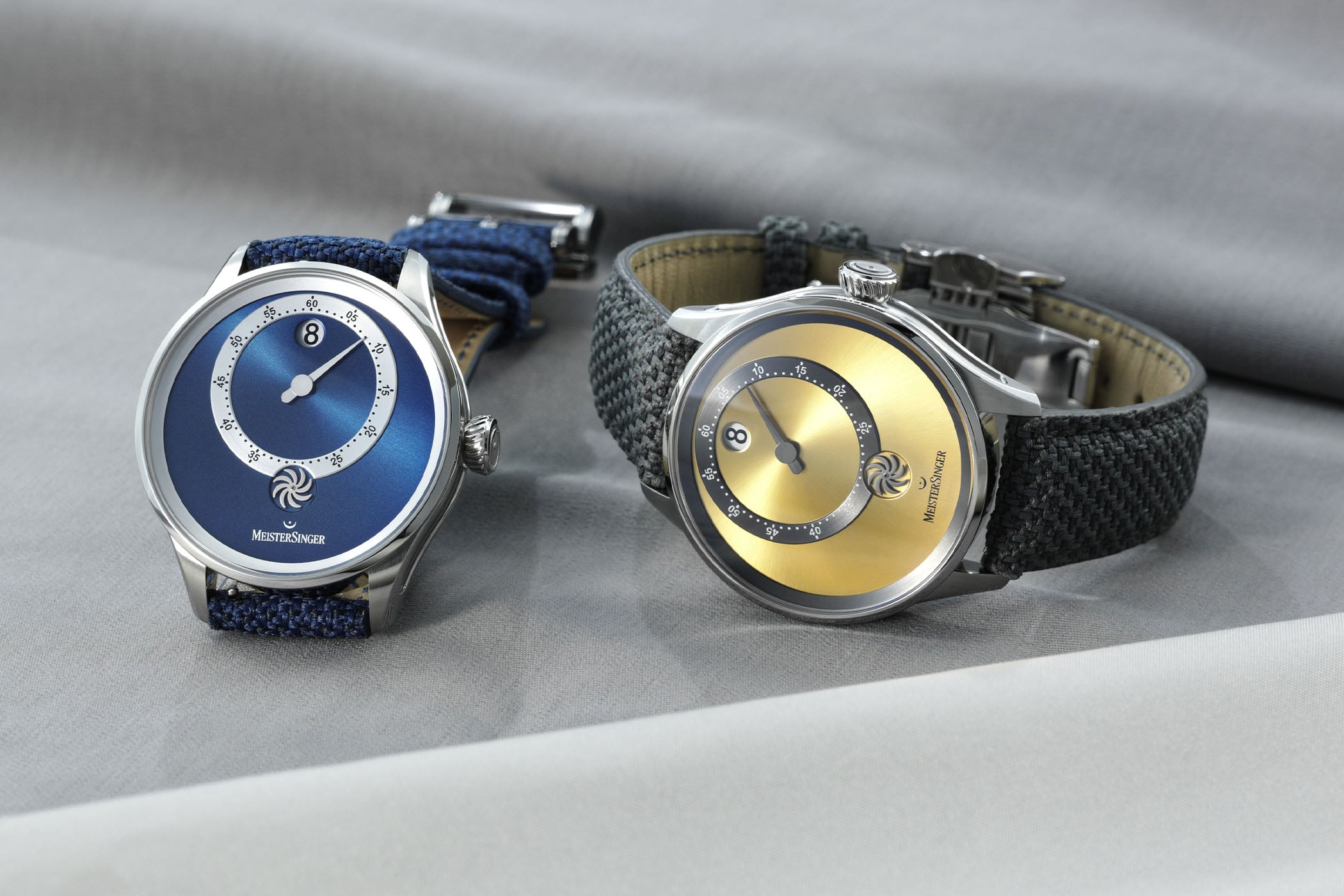
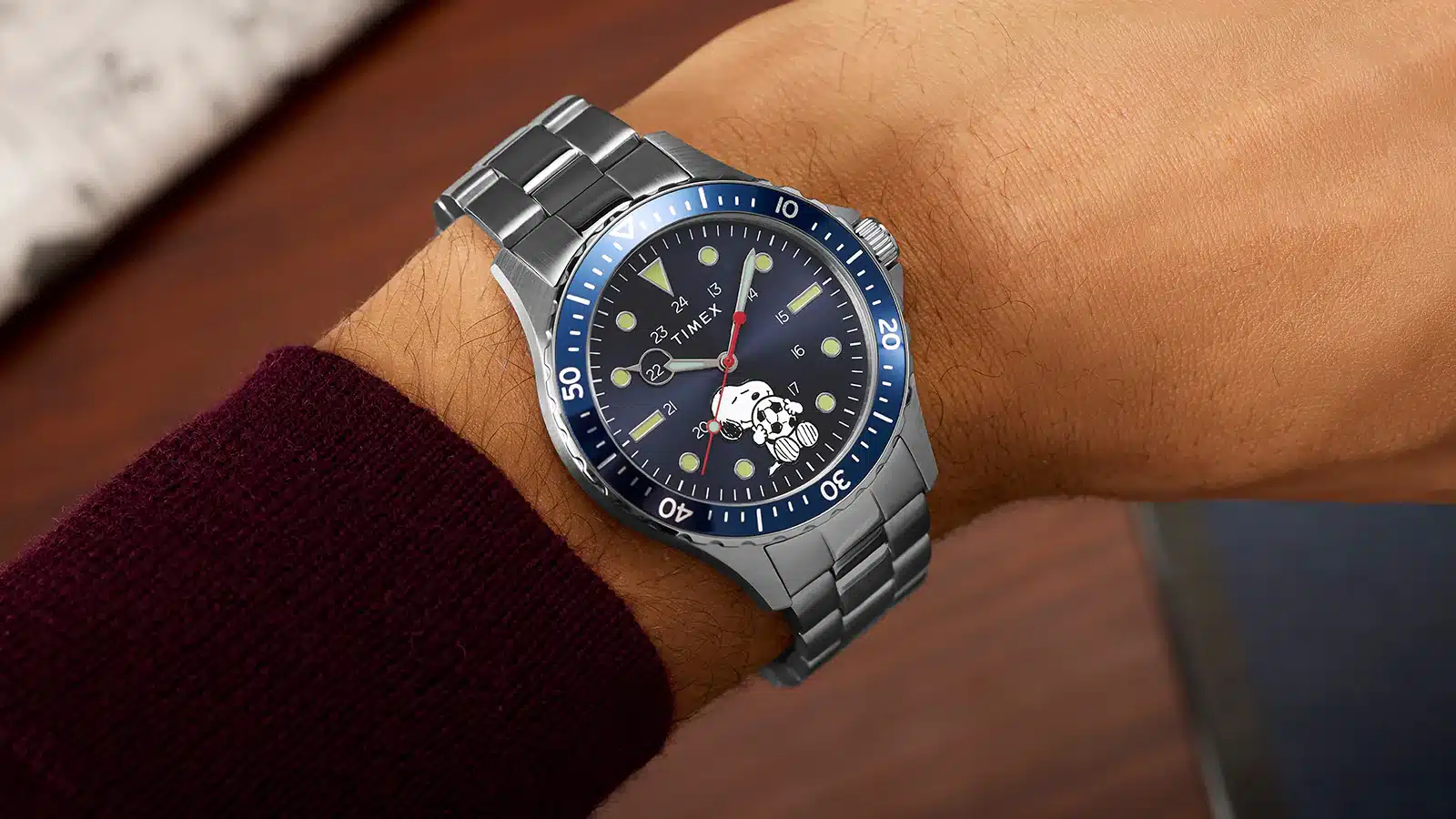
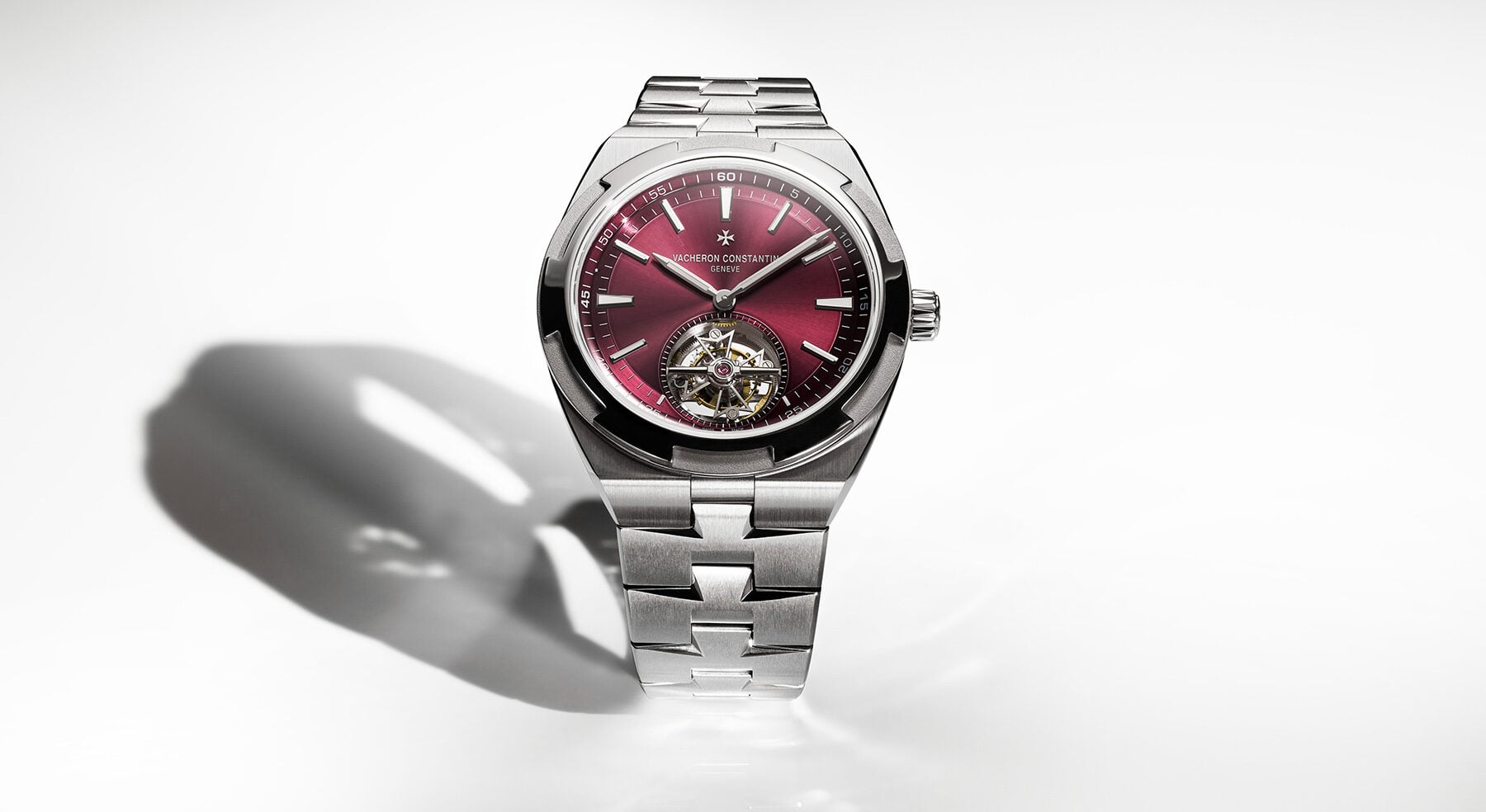
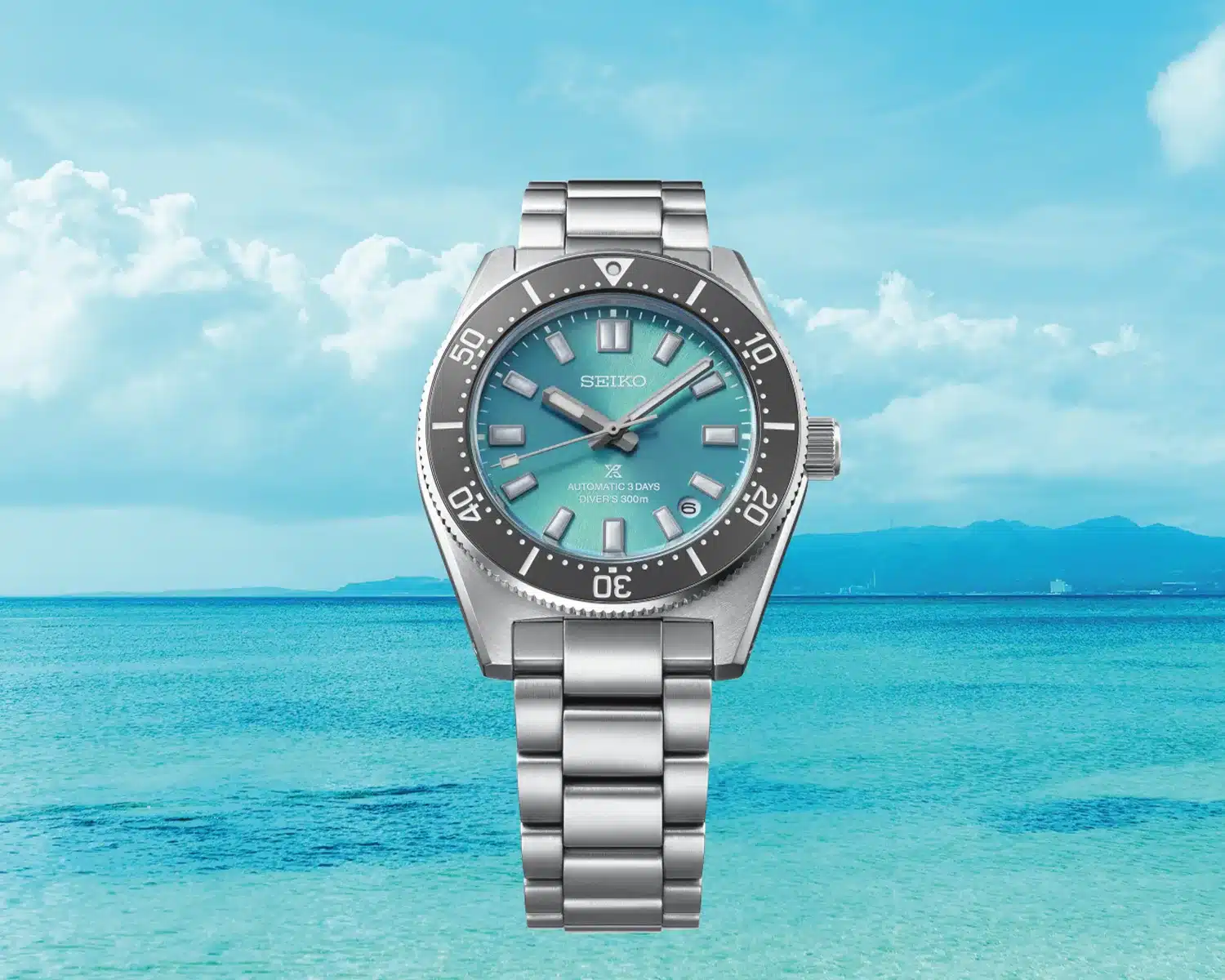
The sunburst pattern is one of watchmaking's older decorative techniques, predating most modern dial finishes. It is achieved by mounting a brass dial blank on a slowly rotating spindle and applying a hardened-steel or diamond cutting tool that travels radially from the centre outward. The cutting tool creates fine concentric striations; under directional light those striations reflect at slightly different angles, producing a visible 'starburst' of brighter and darker zones that move with the viewing angle.
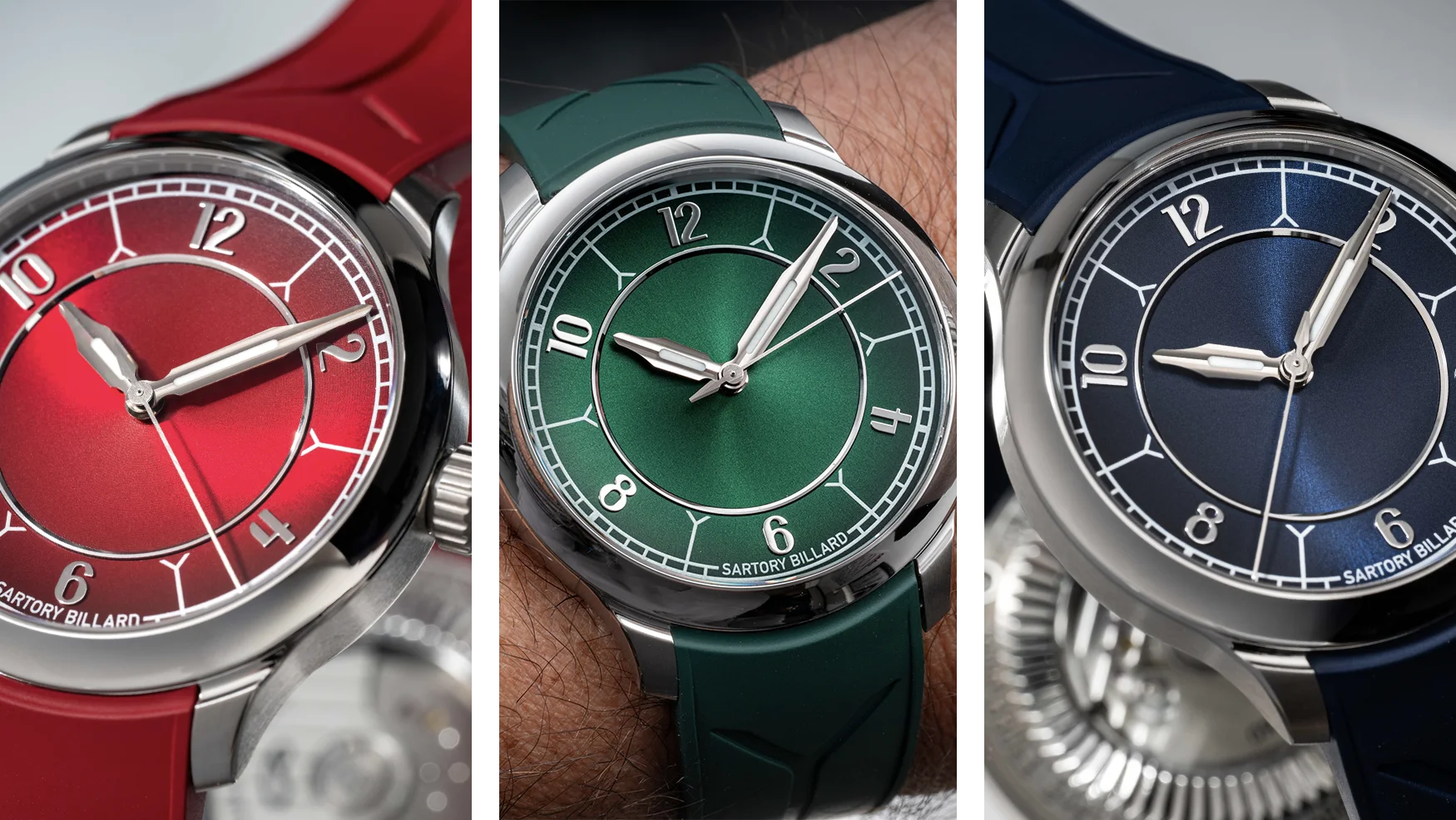
After brushing, the dial is typically galvanised to colour: copper for warmth, then a final electroplated layer (blue, green, silver, salmon, champagne, anthracite, etc.). Indices and printed text are applied last. Because the brushing is mechanical and the colour is electrochemical, the dial's optical character is mostly determined by the brushing fineness and the colour-coat thickness, different brands target different visual effects despite the same nominal technique.
"A sunburst dial is the cheapest way to make a budget dial look expensive. Every wrist movement turns it into a different colour."- Independent dial manufacturer commentary
Closely-related techniques include linen (cross-hatched parallel brushing rather than radial), satin (fine non-directional brushing), and frosted (sand-blasted or chemical-etched matte). All three are surface-treatment categories applied to the same brass blanks; the visual difference is entirely in tool path and finish. Sunburst remains the most widely used because it produces the strongest light-reactivity at the lowest manufacturing cost.
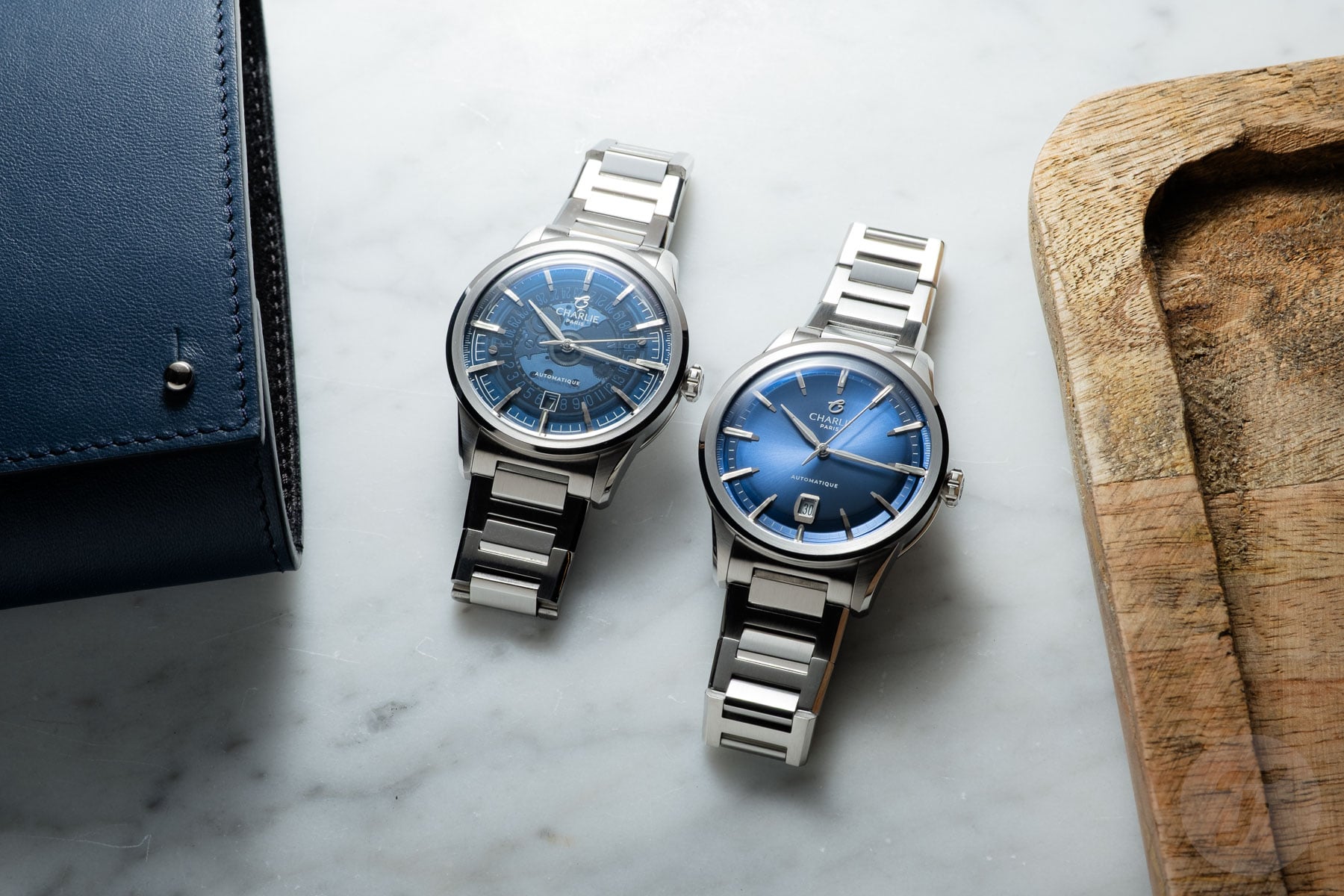
Modern references using sunburst dials cover essentially every price tier. Rolex Datejust dials in champagne, blue, mother-of-pearl and silver use sunray brushing; Tudor Black Bay 36 sunray-blue dials are particularly photographed; Omega Aqua Terra and Constellation lines use sunburst blue, green, and grey; Tag Heuer Carrera Glassbox 39, Longines Master, Tissot PRX, Seiko Presage Cocktail, and Citizen Tsuyosa all use sunburst as a primary dial-finish technique. The post-2010 colour-dial revival is largely a sunburst-dial revival.




Comments 1