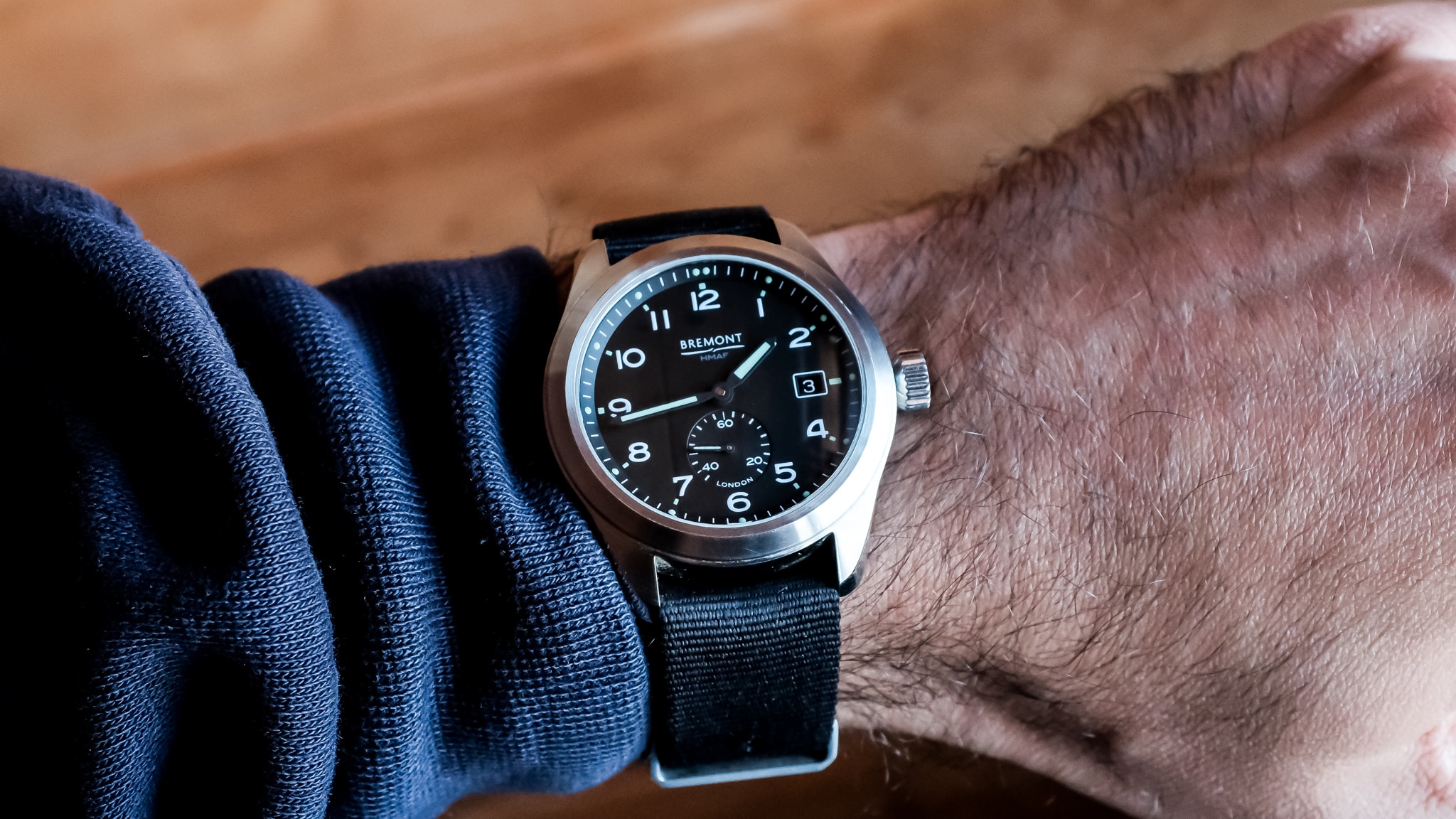
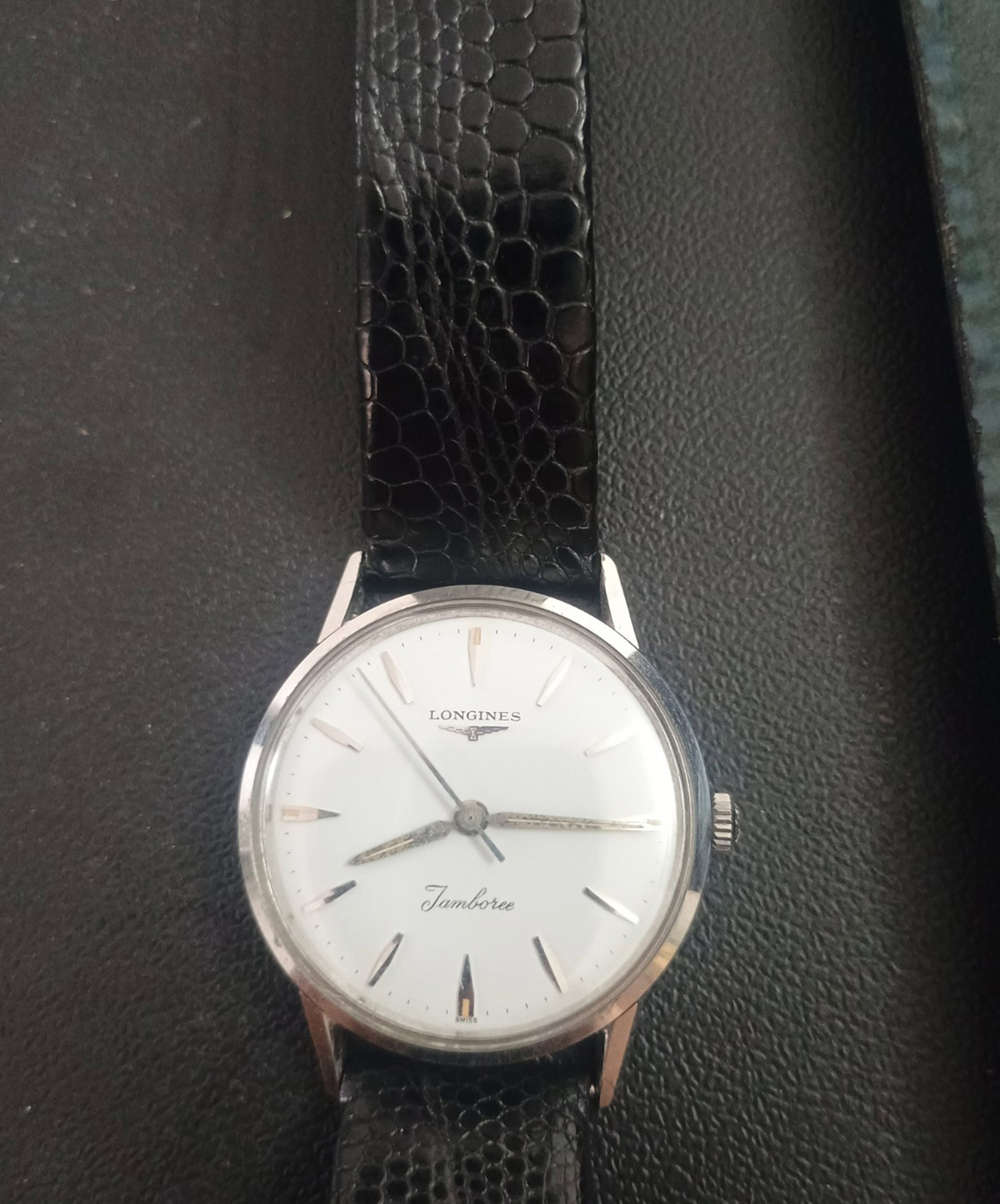
Sword hands are flat blade-shaped hour and minute hands. Unlike dauphine hands, which have a central ridge that divides the hand into two reflective facets, sword hands have a uniform flat upper surface. The outline is similar to dauphine, a long isosceles triangle from the central pivot to the apex, but the absence of the central ridge produces a visually quieter hand that doesn't catch light as a sharp central line. Sword hands therefore work well on dials where the hand should not draw attention to itself.
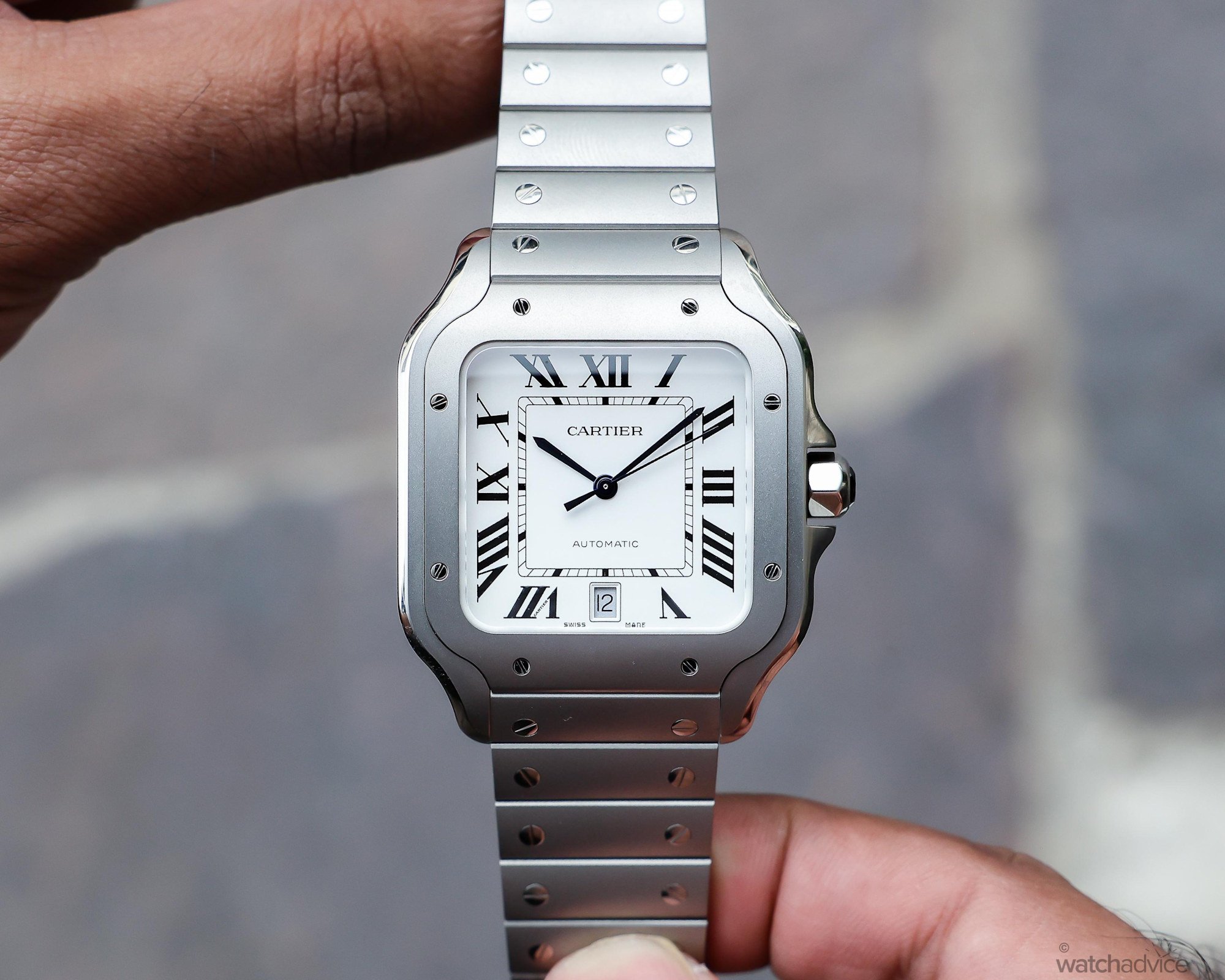
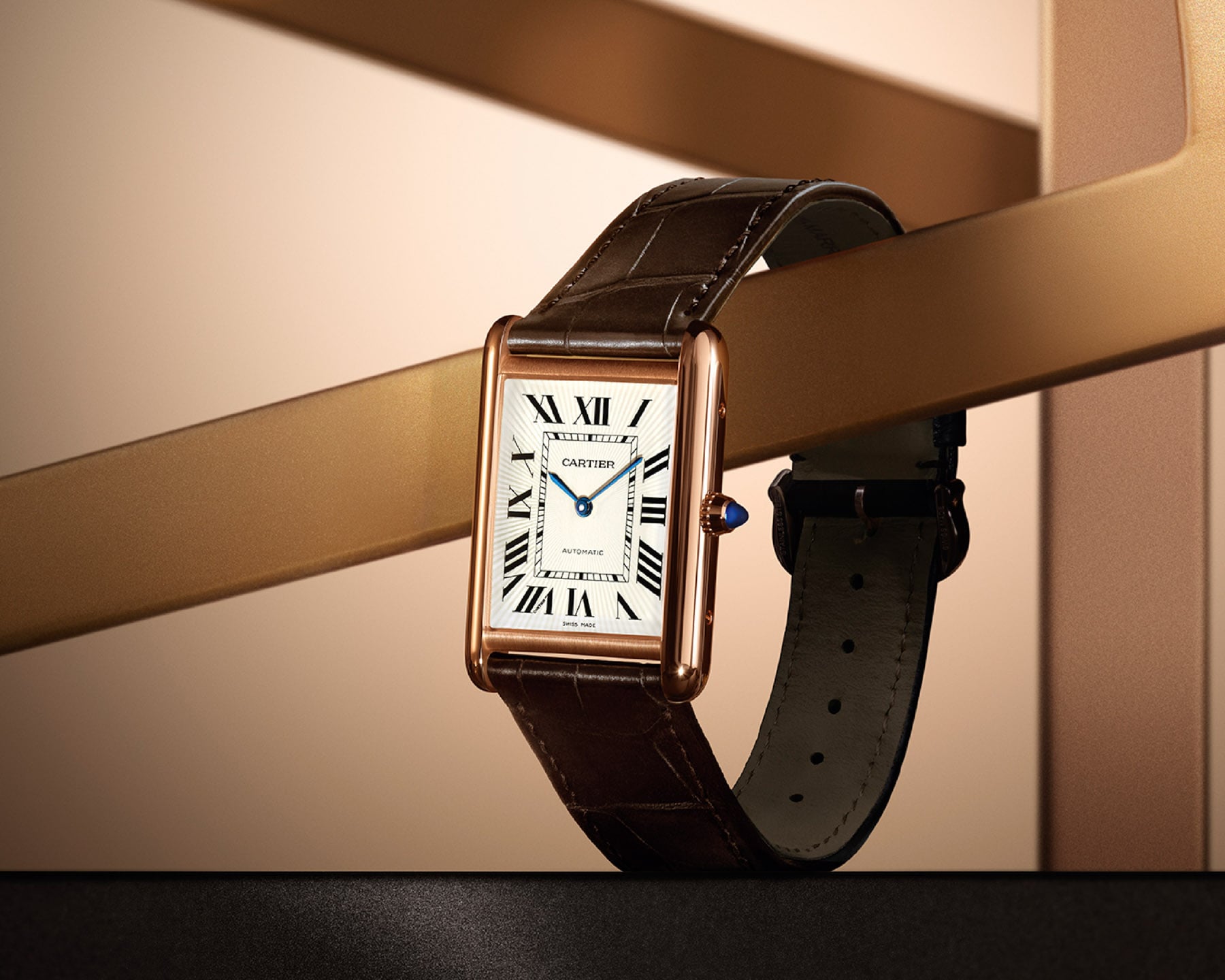
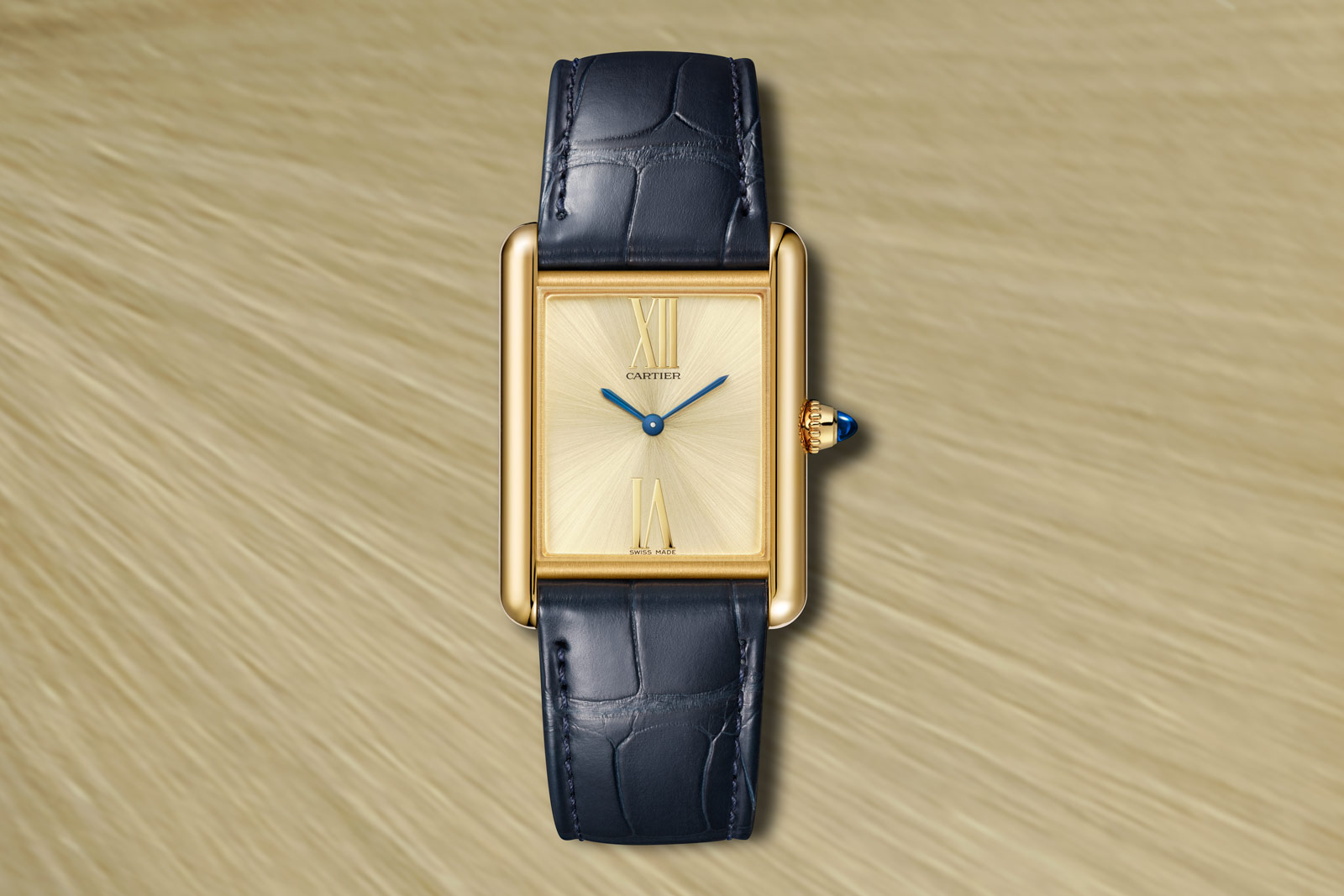
The form is most strongly associated with Cartier, which has used sword hands on essentially every Tank reference since the 1917 original (the first wristwatch designed for combat, made by Cartier for General John Pershing in WWI). The classical Cartier dress watch combines: Roman numerals, blue sword hands (heat-blued steel), railroad-track minute scale, and a blue cabochon crown. The Tank Louis Cartier, Santos, Pasha, Ballon Bleu, Drive de Cartier, and Tonneau all use sword hands as the standard configuration; only the chronograph variants (Pasha Chronograph, Tank Chinoise Chronograph) use slightly different hand forms with secondary chronograph hands.
"A sword hand is the choice when the watch is supposed to disappear into the wrist. The dauphine wants you to notice it; the sword wants you to read the time and forget about the hands."- Cartier design archive, Tank Louis Cartier launch notes
Beyond Cartier, sword hands appear in mid-century military watches as a deliberate alternative to dauphine. The most-cited military application is the IWC Mark XI (1948), the British RAF antimagnetic three-hand pilot watch made under specification AIR/4321 by IWC and Jaeger-LeCoultre. The Mark XI uses simple steel sword hands with luminous central pads; the design was chosen specifically because the flat surface didn't produce the high-contrast light reflections that dauphine hands would, the Mark XI was meant to be read clearly under any cockpit lighting condition without distracting reflections. The same logic applied to the Dirty Dozen W.W.W. specification (1944), where most makers used baton or simple sword variants.
Material variations: blued steel sword hands are the canonical Cartier dress format, achieved by heat-treating polished steel until it reaches the deep peacock-blue colour; polished steel (no bluing) is used on military and tool watches; gold sword hands (yellow, white, or rose) appear on precious-metal Cartier references and on selected JLC and Vacheron dress watches. The blade tip is sometimes pointed (Cartier standard), sometimes flat-cut (some military variants), and in rare cases curved or rounded.
Sword hands are also occasionally lume-filled: a thin recessed channel runs the length of the blade with luminous paint or Super-LumiNova, producing a glowing line in the dark. The lume variant is more common on military and pilot watches (Mark XI uses lume sword hands; many Dirty Dozen W.W.W. references do too) than on dress watches (which typically use unfilled blued or polished steel). The lume-filled variant is sometimes called a "sword cathedral" or "sword pencil" depending on the exact lume channel shape.
In modern collector vocabulary, sword hands are read primarily as a Cartier signature or as a vintage military cue. The Cartier Tank Louis Cartier in white gold with blued sword hands is one of the most-cited modern dress watch references; the IWC Mark XX (the modern successor to the Mark XI) uses sword hands with lume in deliberate continuity with the 1948 specification. Microbrand pilot watches (Vaer, Praesidus, Sangin, Boldr) often use sword hands as a deliberate vintage cue. The format is rare on luxury sports watches, which typically use Mercedes, Snowflake, or Plongeur hands instead.




Comments 1