The Constellation used to be Omega's dress-watch flagship, the one your grandfather wore to weddings before the Speedmaster and the Seamaster ate the spotlight. Then it drifted through the 1980s and 90s in the "Manhattan" claw-lug era, and for a lot of enthusiasts it stayed drifted. In 2026 Omega pulled it back to its 1950s roots and did something the Constellation has never done: it removed the seconds hand and made the first two-hand watch in history to earn Master Chronometer certification. That is the Observatory, and it is a much more interesting watch than the last decade of Constellation press releases suggested.
The short version
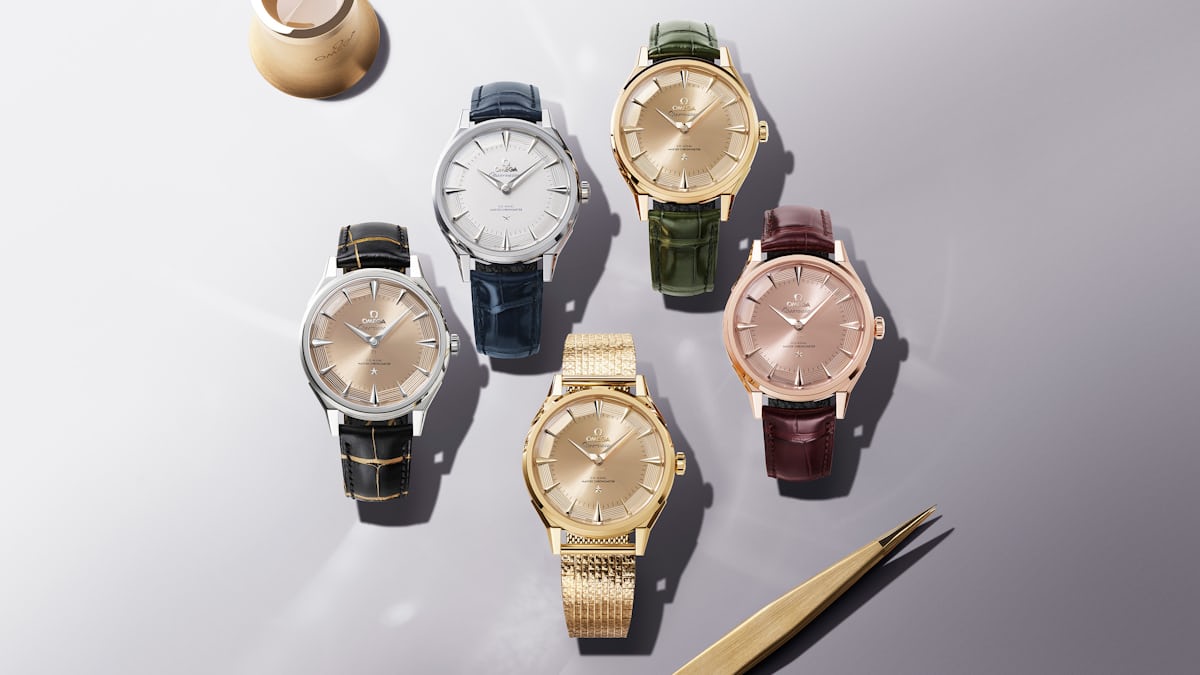
- Case: 39.4mm x 12.23mm, L2L 47.2mm, 19mm lugs. Steel (O-MEGASTEEL), Sedna Gold, Moonshine Gold, Canopus Gold, or Platinum-Gold. 30m water resistance.
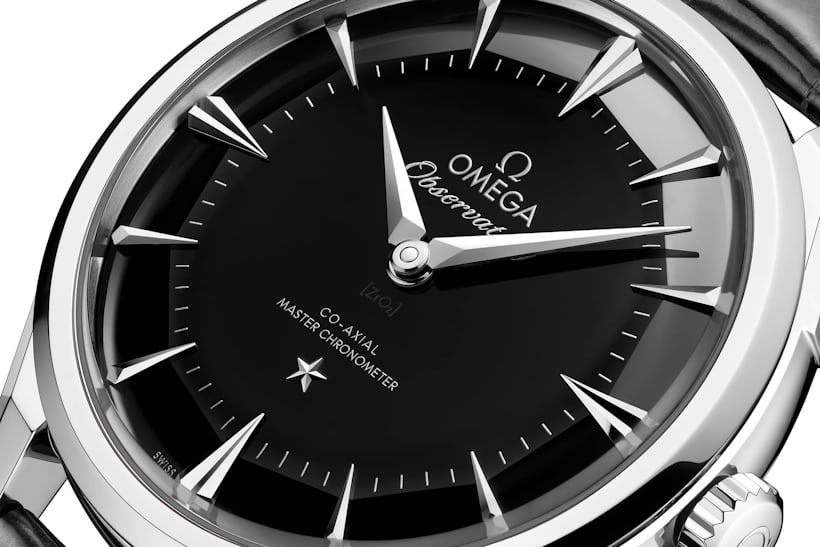
- Dial: Pie-pan step, guilloché stamped grooves, applied kite-shaped indices, no seconds hand.
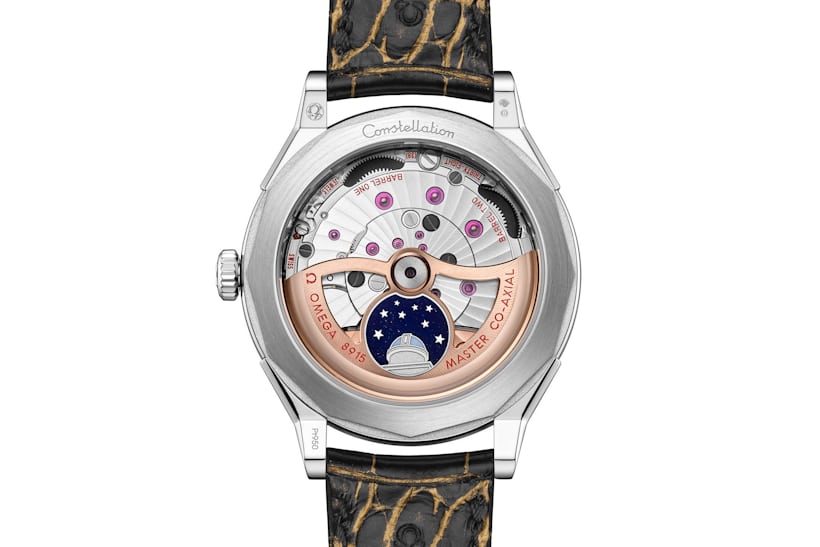
- Movement: Cal. 8914 (steel), 8915 Luxe (gold), 8915 Grand Luxe (platinum). Co-Axial, 60-hour reserve, twin barrels.
- Certification: Master Chronometer (15,000 Gauss antimagnetic, 0/+5 sec/day, first ever for a two-hand watch).
- Price: From €10,700 (steel) to €58,200 (Moonshine Gold on mesh).
Why "Observatory"?
Omega has been pushing its own timekeeping-lab credentials for a while, and the name is a direct pull from that. Every Observatory piece is tested at the Laboratoire de Précision using what Omega calls Dual Metric Technology, which is essentially continuous acoustic analysis of the escapement across 25 days. Beyond COSC's -4/+6 seconds per day window, Master Chronometer certifies to 0 to +5 seconds per day, plus 15,000-Gauss antimagnetism, water resistance, and power-reserve verification. Doing that on a two-hand watch is genuinely new. Everyone else's chronometer certs assume a seconds hand you can time against; Omega had to prove the movement holds rate without one on the dial.
The colours, one line each
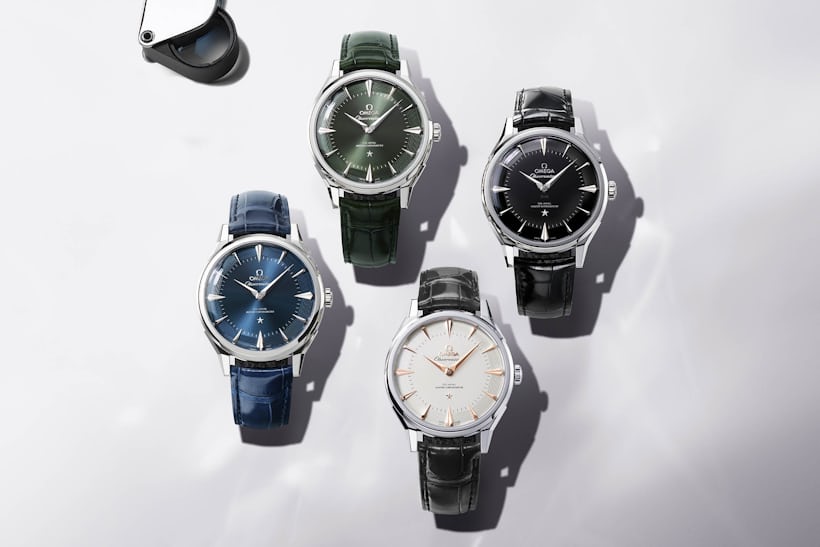
Five dial variants across the launch, plus solid-metal dials in the precious-metal cases. Ranked by how they read on the wrist:
- Silver opaline with gold markers. The Constellation everyone pictures. Warm, dressy, forgiving under a cuff. Best all-rounder.
- PVD blue with stamped grooves. Sunburst-adjacent but the grooves catch the light differently. Reads sportier than a pure sunburst blue. Steel-only.
- PVD green with stamped grooves. The polarising choice. Deep hunter green in shadow, brighter in direct light. The pick if you already own a blue-dial Aqua Terra.
- Polished black ceramic. Slick, monochrome, no engraved grooves so the dial reads flat and glossy. The dressier evening watch of the collection. Comes in the more expensive steel-and-ceramic combo.
- Solid gold dial (Moonshine, Sedna, or Canopus). Matches the case metal. Full-precious-metal Constellations for the buyer who wants no colour contrast at all.
What is actually new versus every previous Constellation
- No seconds hand. First time on a modern Omega chronometer.
- Pie-pan dial. Direct nod to the 1952 and 1958 Constellations. The dial steps down at the outer track, the way vintage Constellations did before the flat-dial Manhattan era.
- Dog-leg lugs. Curved-back lugs that read vintage on the wrist and disappear against the case, replacing the claw-lug that defined the Constellation for 40 years.
- Box sapphire crystals. Both front and back are domed sapphire. The front dome catches light like an acrylic crystal without the softness problem.
- Applied kite-shaped indices. Sharper and taller than the previous baton markers. Reads better in low light.
- Twin-barrel movement. Cal. 8914 / 8915 lineage, 60-hour reserve, Co-Axial escapement, 15,000 Gauss antimagnetic. Same movement DNA as the current Aqua Terra Small Seconds, adapted for the pie-pan two-hand layout.
Prices, by material
- Steel with printed dial: €10,700
- Steel with black ceramic dial: €12,000
- Sedna Gold or Moonshine Gold: €37,300
- Canopus Gold: €43,400
- Platinum-Gold combination: €56,900
- Moonshine Gold on the nine-row mesh bracelet: €58,200
€10,700 for a Master Chronometer, twin-barrel, Co-Axial, 15,000-Gauss steel Constellation is not entry-level Omega money, but it is fair given what is inside. The €12k ceramic-dial upcharge is real; whether it is worth €1,300 more than the printed dial depends entirely on whether you like the flat glossy look.
The wild pick
Reference 140.50.39.21.99.001 is the Platinum-Gold with a matching precious-metal dial. €56,900. Nobody buys this to be sensible. But if you already own a steel Speedmaster and a steel Aqua Terra and you want to close out the Omega collection with something that is unmistakably at the top of the range, this is the piece. The dial catches light like nothing else in the collection and the Grand Luxe calibre gets the highest-spec finishing Omega does.
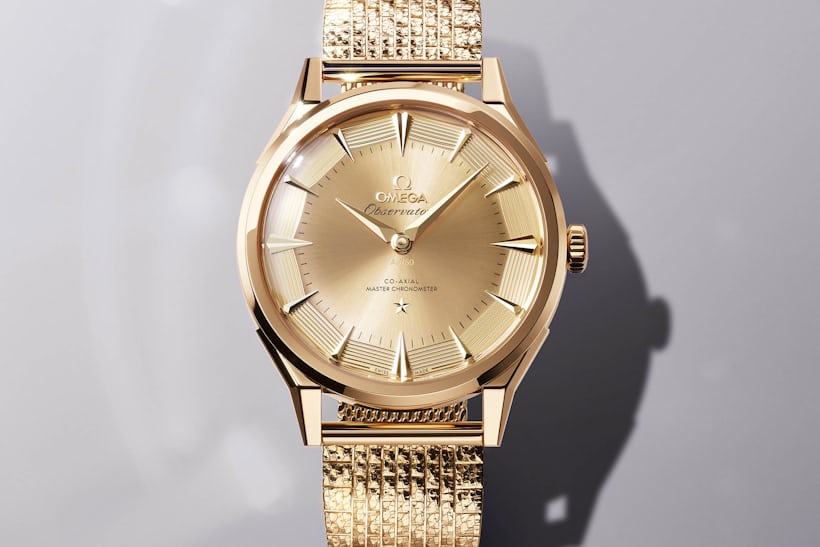
39.4mm x 47.2mm L2L wears exactly the way the numbers suggest: honest mid-size, sits close to the wrist thanks to the dog-leg lugs, and reads bigger than it measures thanks to the pie-pan step. On a 7-inch wrist it disappears under a shirt cuff; on a 6.5-inch wrist it fills the wrist without spilling over. The 19mm lug width takes it into leather easily and looks better on the alligator strap than on any of the launch bracelets except the Moonshine mesh.
Is it for you?
Pick the steel Observatory if:
- You already own the sensible Aqua Terra or Speedmaster and want one Omega that is unmistakably dress-first.
- You prefer the pie-pan step and applied indices over a flat printed dial.
- You care that the movement is chronometer-certified at the tighter Master Chronometer window without a seconds hand to distract you.
- You have a wrist between 6.5 and 7.5 inches. Under 6.5 the piece works with a slim strap; over 7.5 the lug-to-lug will look modest.
Skip it if:
- You need a seconds hand for either practical reasons or because a dial without one feels unfinished. This is not that watch.
- You wanted a modern Omega with a bracelet-first feel. The Observatory is happier on leather.
- You are already committed to the Manhattan-era Constellation look. This is a full reset.
- Your budget puts you in the Aqua Terra 41 conversation. That watch does more, is water-resistant to 150m, and comes on a proper bracelet at similar money.
The verdict, in one paragraph
The Constellation Observatory is Omega's most confident dress-watch in a generation. Master Chronometer certification without a seconds hand is a genuine industry-first, the pie-pan dial is executed with the taste the last twenty years of Constellations lacked, and the €10,700 entry-price for a steel Master Chronometer with a twin-barrel Co-Axial movement is honest. Skip it if you can't live without a seconds hand. Buy it if you can, and don't overthink which colour: the silver opaline is the classical answer, the polished black ceramic is the modern one, and the green is the fun one. All three land on the wrist as the same watch, just dressed differently.
Comments
No comments yet, be the first to weigh in.