Every Sunday morning has one of these debates in it. You are on the second coffee, a watch friend messages you a photo of an Aqua Terra, someone else replies with a Black Bay 58, and someone inevitably says "but really, Omega is Rolex, right?". Then everyone spends forty-five minutes disagreeing. Here is our answer, and it is more Tudor than most enthusiasts want to admit.

The Rolex-vs-Omega story we all grew up with
For 60 years the answer was obvious. James Bond wore both. The moon landings picked Speedmaster. The America's Cup wore Rolex. Boutique windows had them side by side. Anyone who cared about mechanical watches at any point between 1970 and 2020 accepted the pairing without thinking about it. Speedmaster vs Daytona. Seamaster vs Submariner. Constellation vs Datejust. Aqua Terra vs Explorer. Every category, one of each.
The comparison worked because the price lists were roughly in the same postcode. A steel Sub in 2015 was €7,500; a steel Seamaster Diver was €4,500. Same shape, half the money, half the wait. That was the whole pitch: if you want it now and you want most of what a Rolex delivers, buy the Omega.

What Tudor did to the frame
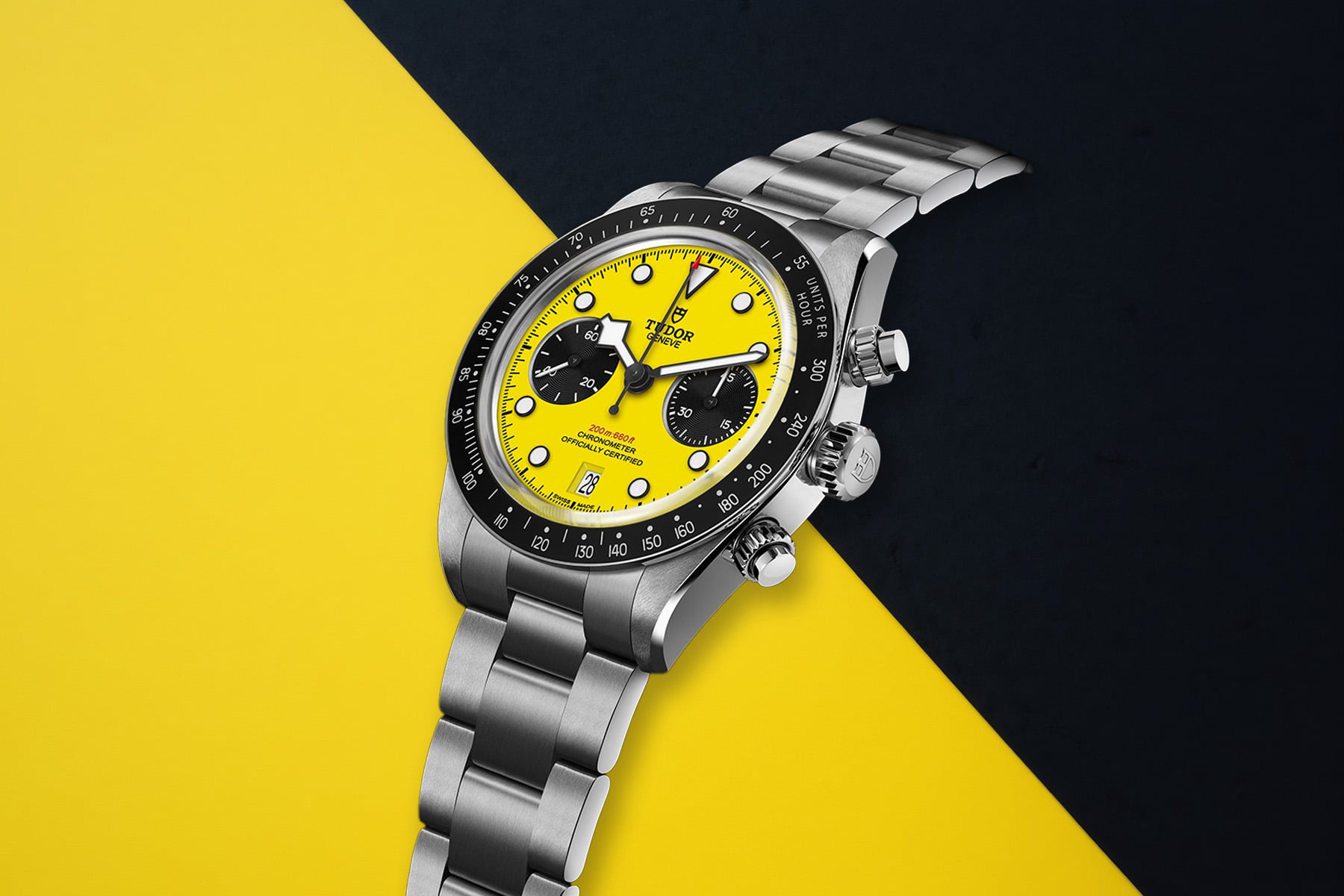
Tudor's return in 2010, and then the 2018 Black Bay Fifty-Eight in particular, changed the arithmetic. Suddenly there was a proper vintage-styled diver from a Rolex-family brand, at €3,500-ish, with a five-year warranty and an in-house-adjacent movement. The Sub-alternative slot Omega had owned for decades got contested. And Tudor kept building: Pelagos, Black Bay Chrono, Pelagos FXD, Ranger, Royal, Black Bay 54.
Tudor's current catalogue starts around €2,500 and stops around €6,500. That is the exact range where the sensible Omega Seamaster Diver, Aqua Terra 38/41, and Railmaster sit. Not the Speedmaster Moonwatch, not the Constellation Observatory, not the ceramic Dark Side of the Moon. But the volume Omegas? Same drawer as Tudor.
Five reasons Omega is still Rolex's rival
- Brand equity. Every enthusiast under 50 grew up seeing Omega and Rolex on the same tier of the mental hierarchy. Perception has 60 years of momentum.
- Complications. The Constellation Observatory Master Chronometer, the Speedmaster Moonshine Gold, the De Ville Central Tourbillon: Omega still ships pieces that go head to head with Rolex's Sky-Dweller and 1908.
- Movement tech. Omega's Master Chronometer standard (0/+5 sec/day, 15,000 Gauss) is stricter than COSC and, on paper, tighter than Rolex's Superlative Chronometer (-2/+2). Fair fight.
- Precious metals. Both make solid gold, both make platinum, both have proprietary alloys (Moonshine, Sedna, Canopus vs Everose, Rolesor). This is not a Tudor conversation.
- Water resistance flagships. Ultra Deep 6000m vs Deepsea Challenge 11,000m. Same category, both grail-adjacent.
Five reasons Omega is really Tudor's rival now
- Price overlap. The steel Aqua Terra 41 is €6,300. The Black Bay Chrono 39 is €5,900. The Speedmaster '57 is €7,000; a Pelagos FXD is €5,000. Same drawer, same buyer.
- Waiting list reality. You can walk in and buy an Omega. You can walk in and buy a Tudor. You cannot walk in and buy a Submariner, GMT-Master II, or Daytona. That is a huge structural difference.
- Movement supplier story. Both Omega and Tudor use in-house-designated movements built to their spec by external sisters (Omega leans on ETA, Tudor uses Kenissi). Rolex builds every movement in-house from scratch. That is a different manufacturing story entirely.
- Marketing tone. Omega and Tudor both do celebrity ambassadors, high-visibility motorsport and film partnerships, and drop-culture limited editions. Rolex barely markets at all outside the Wimbledon-tier tentpoles.
- Buyer overlap. Ask ten friends who own a Black Bay 58 what they cross-shopped. Half say Aqua Terra. None say Submariner (they couldn't get one). The market voted.
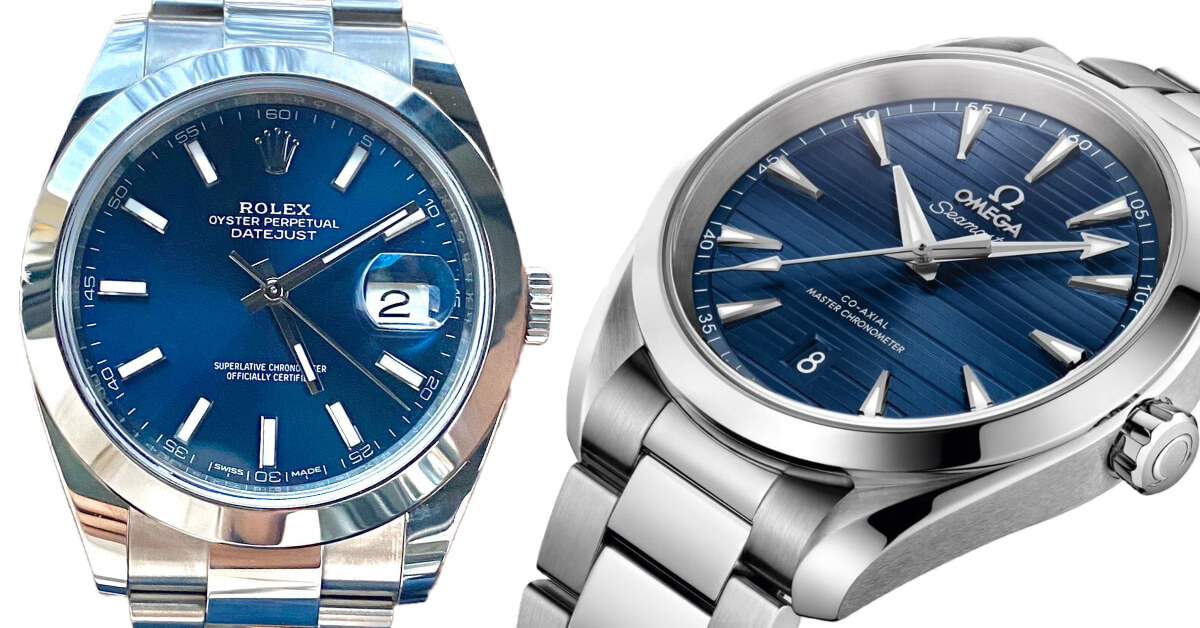
Omega is Rolex's historical rival and Tudor's current rival. Both statements are true at once, and choosing one over the other says more about which decade of watch collecting you grew up in than about the actual product. If your first "grail" was a Speedmaster in the 2000s because a Sub was out of reach, Omega is a Rolex-tier brand to you forever. If you came to the hobby after 2018 and you cross-shopped an Aqua Terra 41 against a Black Bay 58, Omega is in Tudor's competitive set.
Where each of us actually lands
Our take, on a Sunday, with a coffee and no reason to be diplomatic: Omega should be positioned as Rolex's rival at the Speedmaster + Constellation Observatory + precious-metal tier, and Tudor's rival at the Aqua Terra + Seamaster Diver 300 + Railmaster tier. It is a brand that runs across two competitive drawers, which is unusual but not unhealthy. The problem is that the perception hasn't caught up: enthusiasts still argue about Omega as a monolith, when the top-tier Omega and the mid-tier Omega genuinely compete for different buyers.
The real question is what Omega does about it. Does it lean harder into the Constellation Observatory and the Speedmaster Moonshine Gold to reinforce the Rolex-tier story? Or does it accept that the volume of the business runs through Tudor's price bracket and stops apologising for that? Our guess: the Observatory launch, the Moonwatch retail rises, and the way ADs push the precious-metal Speedmasters suggest Omega is trying to double down on the Rolex-adjacent story. The market will tell us in five years whether that worked.
The bit where we accept we might be wrong
The counter-argument is fair: Omega's engineering (silicon hairsprings, Master Chronometer certification, the Co-Axial escapement) is genuinely a step above Tudor's, and pricing overlap is a symptom of Rolex pushing its prices up rather than Omega drifting down. That is possible. Watch it for another two years and we will find out. If Omega's steel entry moves closer to €8,000 and Tudor stays where it is, the "Omega is Tudor's rival" argument dies. If the price overlap holds, it does not.
Either way, if you are shopping right now, do not overthink it: the €5,000 to €7,000 conversation is Omega vs Tudor, and the €10,000+ conversation is Omega vs Rolex. Both are real. Both are the correct comparison. Enjoy your Sunday.
Comments
No comments yet, be the first to weigh in.