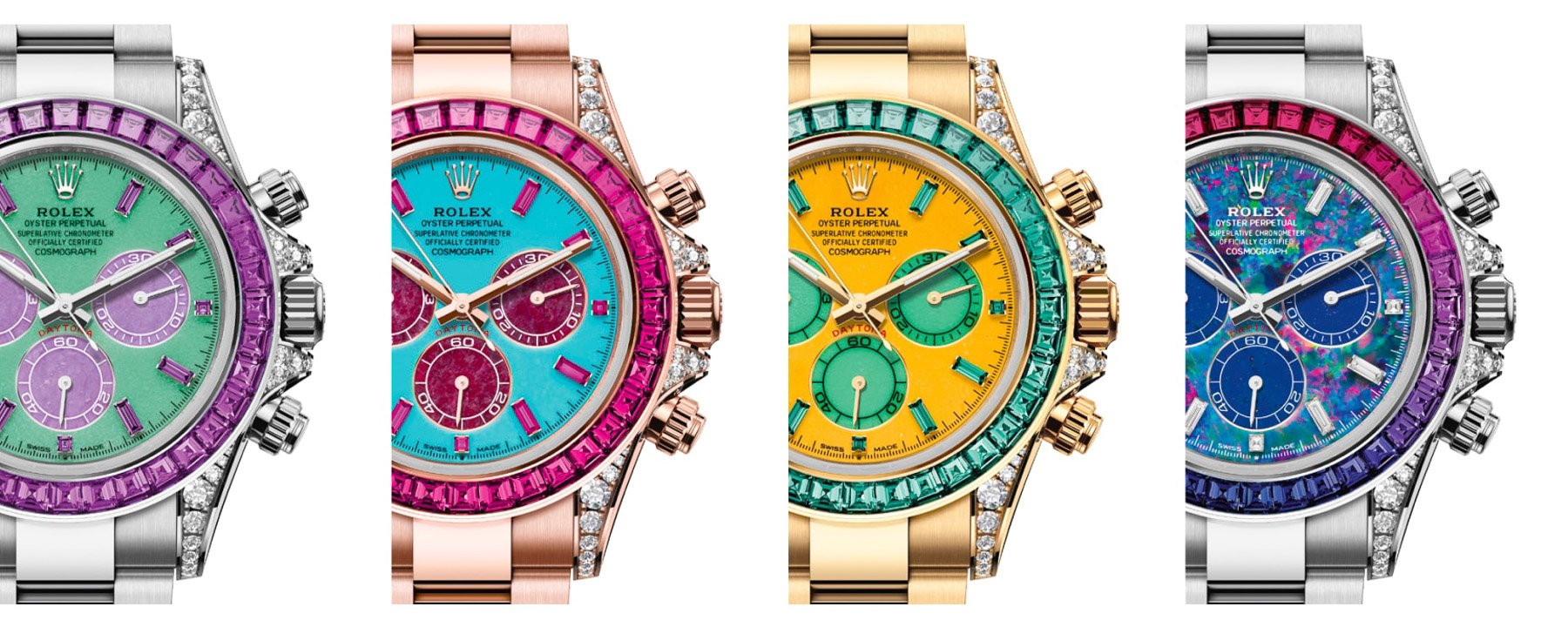
The Rolex Cosmograph Daytona was introduced in 1963 under the reference 6239, replacing the earlier Chronograph Antimagnetic ref 6234 that Rolex had produced in small numbers since 1955. By 1963 Rolex had already been supplying timing equipment to the Daytona International Speedway in Florida for several years, and the new chronograph was positioned specifically for professional racing drivers. The ref 6239 introduced the tachymeter scale engraved on the steel bezel rather than printed around the dial periphery - a layout change that enlarged the dial's usable area and became one of the defining Daytona design decisions. Early examples carried the hand-wound Valjoux 72 movement (re-branded Cal. 722 in Rolex spec), a steel case with straight un-polished lugs, and a matte dial with contrasting sub-dials.
The Daytona sold poorly for its entire first decade. Rolex dealers regularly discounted them, and several retailers reportedly included Daytonas as free gifts bundled with more desirable Submariner or Datejust purchases. Through the 1960s and early 1970s Rolex evolved the design gradually. The ref 6240 (1965) introduced the screw-down chronograph pushers and 50m water resistance that would define every subsequent Daytona case architecture. The ref 6241 returned to acrylic tachymeter bezels, and in the early 1970s the refs 6263 and 6265 established the classic Daytona combination of screw-down pushers with a steel or acrylic bezel. All hand-wound Daytonas of this era used variants of the Valjoux 72 and produced in total fewer than 25,000 pieces across a decade - tiny numbers that underpin the vintage-market values of today.
The transformation began with a dial variant that Rolex produced in small numbers between roughly 1969 and 1972: the so-called Paul Newman dial, named after the American actor and racing driver who was photographed wearing his ref 6239 with its exotic, Art Deco-influenced face. The dial featured a distinctive contrasting sub-dial design with square markers, a stepped outer track carrying Arabic minute numerals, and red printed accents that bore no resemblance to standard Daytona dials. Newman received his watch from Joanne Woodward in 1972 as a gift, reportedly inscribed on the caseback with the phrase “Drive Carefully, Me”, and wore the piece continuously through his racing career before passing it to his daughter's boyfriend James Cox in 1984. In October 2017, Cox consigned the watch to Phillips in New York, where it sold for $17.75 million - the world record for any Rolex at auction, and at the time the single most valuable wristwatch ever sold.
The modern Daytona era began in 1988 with the ref 16520, the first automatic-wound Daytona. For a brand famously committed to in-house calibres, Rolex took the unusual step of sourcing the movement from Zenith: the high-beat El Primero that Zenith had pioneered in 1969. Rolex modified the Zenith base extensively - re-regulating the frequency from 36,000 to 28,800 vph, replacing the date complication with a small-seconds sub-dial, swapping the escapement, and reworking roughly half of the components - but the Zenith origin was publicly acknowledged. The 16520 restored the Daytona to the cultural foreground. Waiting lists at authorised dealers extended to multiple years, and secondary-market premiums became a permanent feature of the collection for the first time.
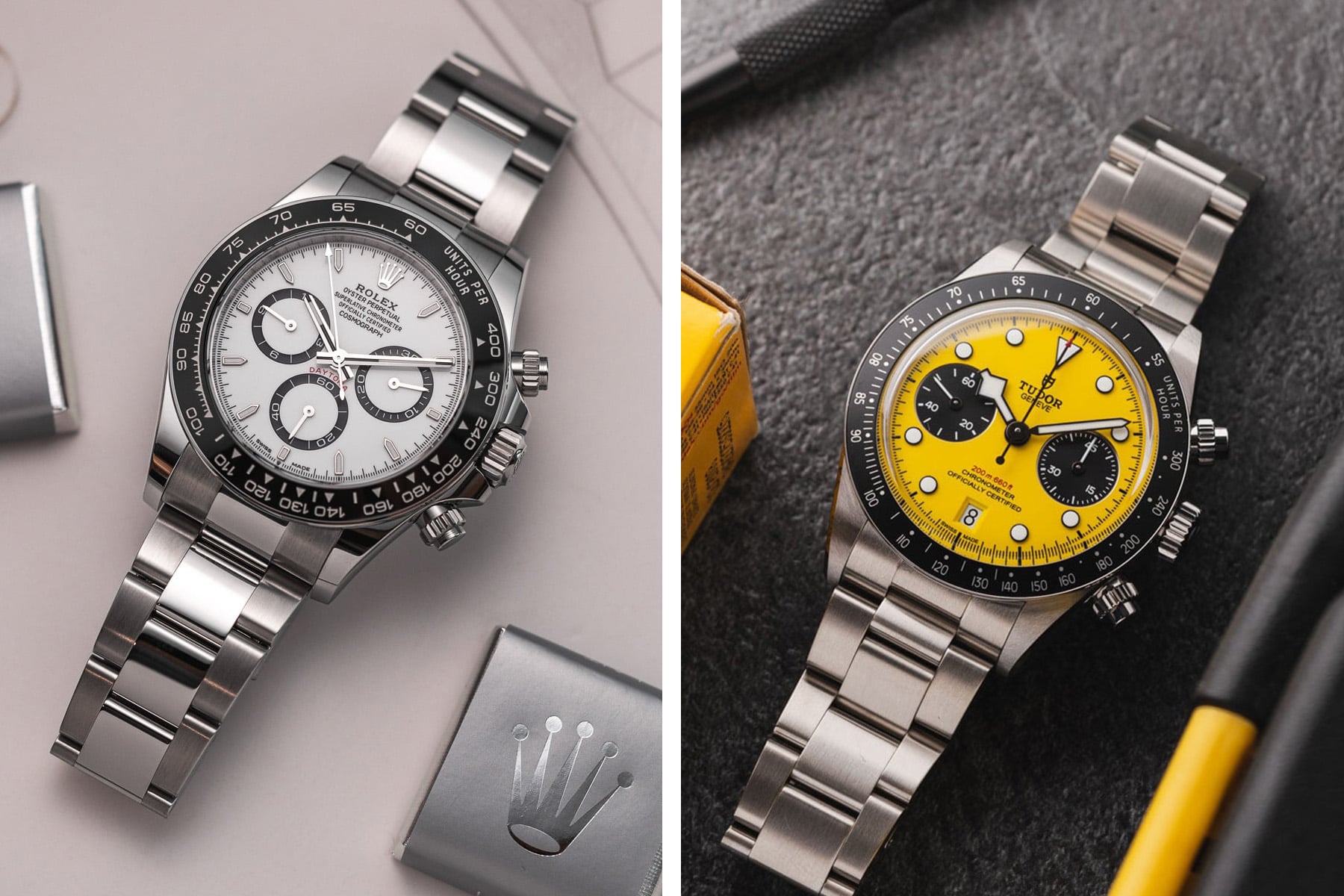
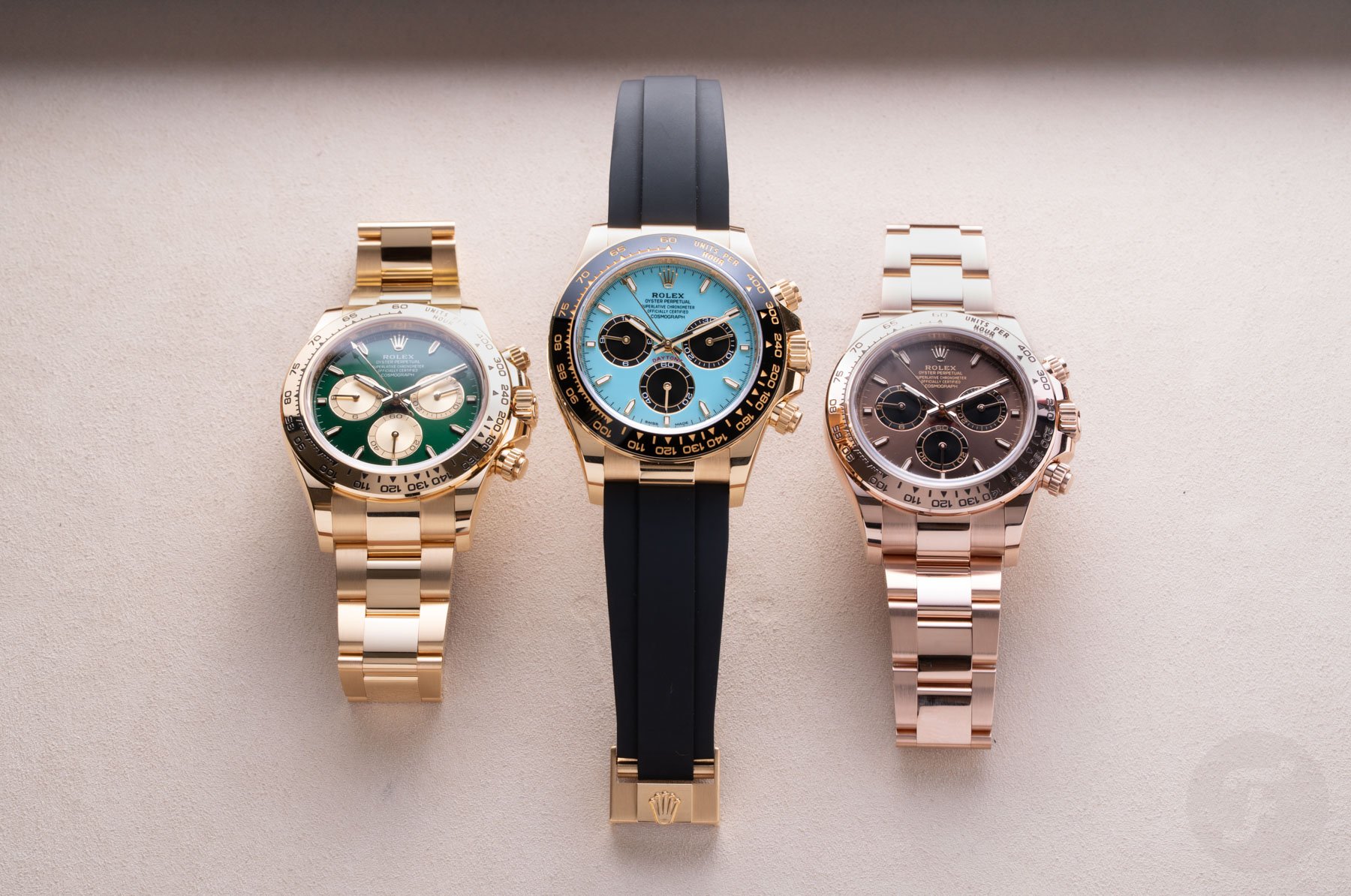
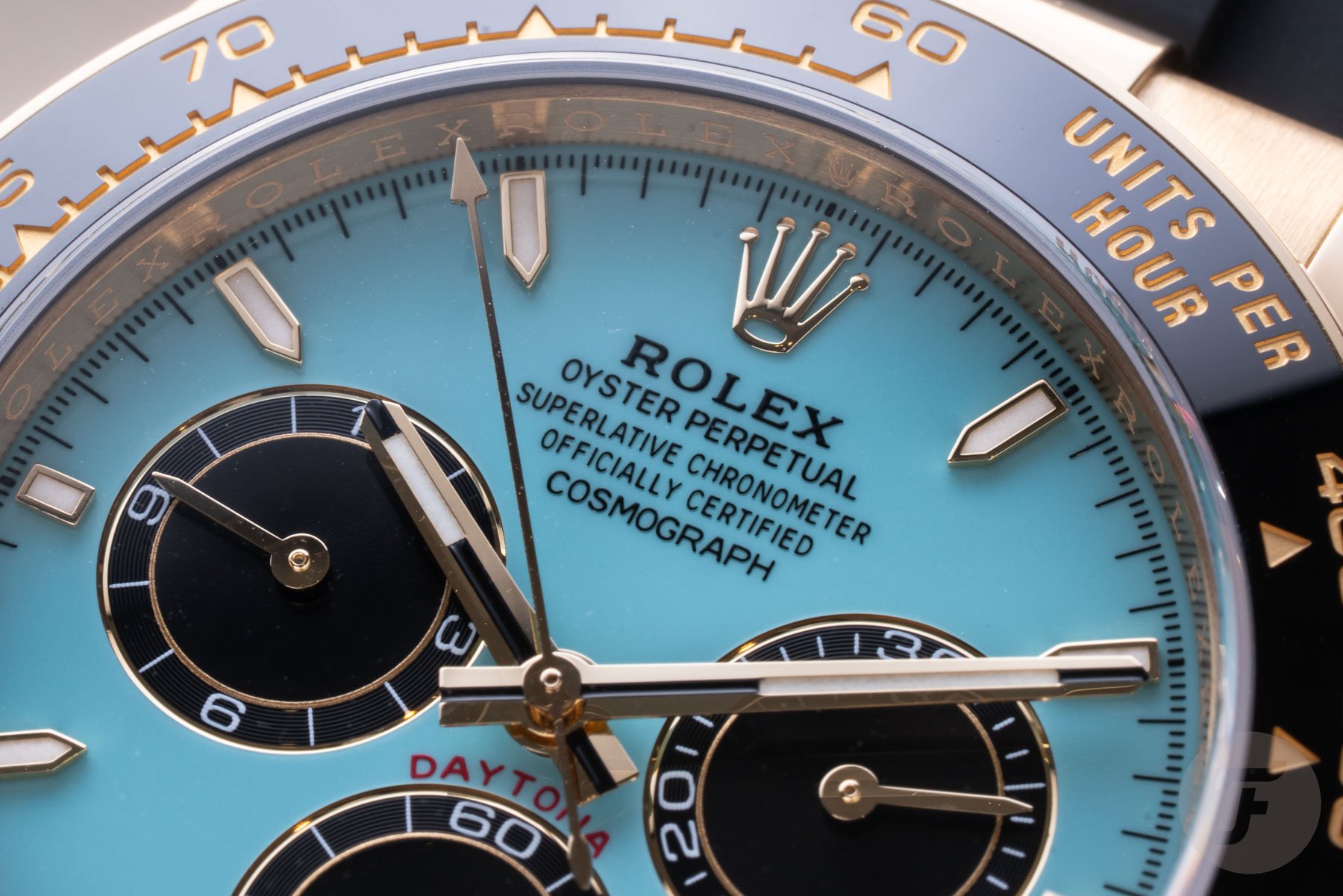
In 2000, Rolex replaced the Zenith base with its own fully in-house Cal. 4130, a chronograph with a column wheel, vertical clutch, and 72-hour power reserve that reduced the component count compared with the Zenith-based movement and became a benchmark of modern chronograph engineering. The ceramic-bezel era arrived in 2016 with the ref 116500LN at 40mm, whose black-or-white ceramic insert with Chromalight-filled tachymeter became the most waitlisted Rolex in history. The updated ref 126500LN launched in 2023 with a redesigned case exhibiting the lug-chamfer proportions of the vintage Daytonas, a new Cal. 4131 movement, and for the platinum version a sapphire exhibition caseback - a modernist concession from a brand that has historically rejected display backs. Sixty years after the 1963 launch, the Daytona retains the original architecture: a tachymeter-bezel chronograph with a professional-timing brief, now executed at the highest standards of modern Swiss watchmaking.



Comments
No comments yet, be the first to weigh in.