Deployant
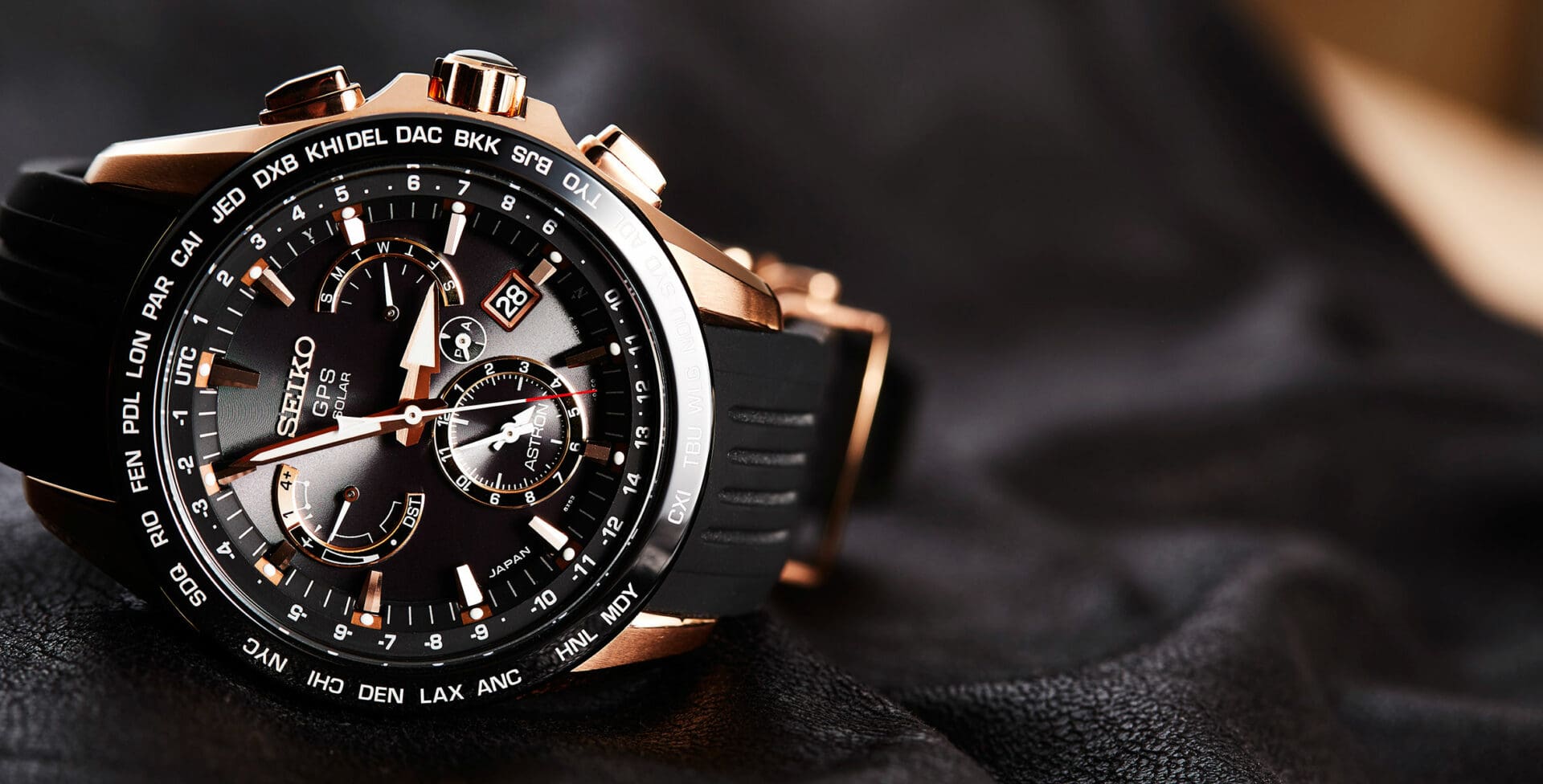
New and hands-on review: Seiko Astron GPS Solar Dual-Time 5X53
Seiko announces the world's smallest and thinnest GPS solar watch: the Astron 5X movement. We were in Nagano Prefecture to photograph and do our hands-on.
3,189 articles · 24 videos found · page 2 of 108
1969-1985 industry collapse triggered by the Seiko Astron. Cost Swiss watchmaking two-thirds of its workforce; rebounded via Swatch Group consolidation and Biver's Blancpain.
Christmas Day 1969: Seiko launches the world\'s first quartz wristwatch and detonates the Swiss watch industry.
Deployant
Seiko announces the world's smallest and thinnest GPS solar watch: the Astron 5X movement. We were in Nagano Prefecture to photograph and do our hands-on.
Time+Tide
Yes, the technology almost single-handedly destroyed the Swiss watch industry, but whether you want to admit it or not, quartz watches are brilliantly impressive, and they have been the main proponents in democratising timepieces as we know them today. Ever since the ingenious battery-powered Seiko Astron first burst onto the scene on December 25, 1969, … ContinuedThe post Fully charged: 4 of the best quartz watches of 2019 appeared first on Time+Tide Watches.
Teddy Baldassarre
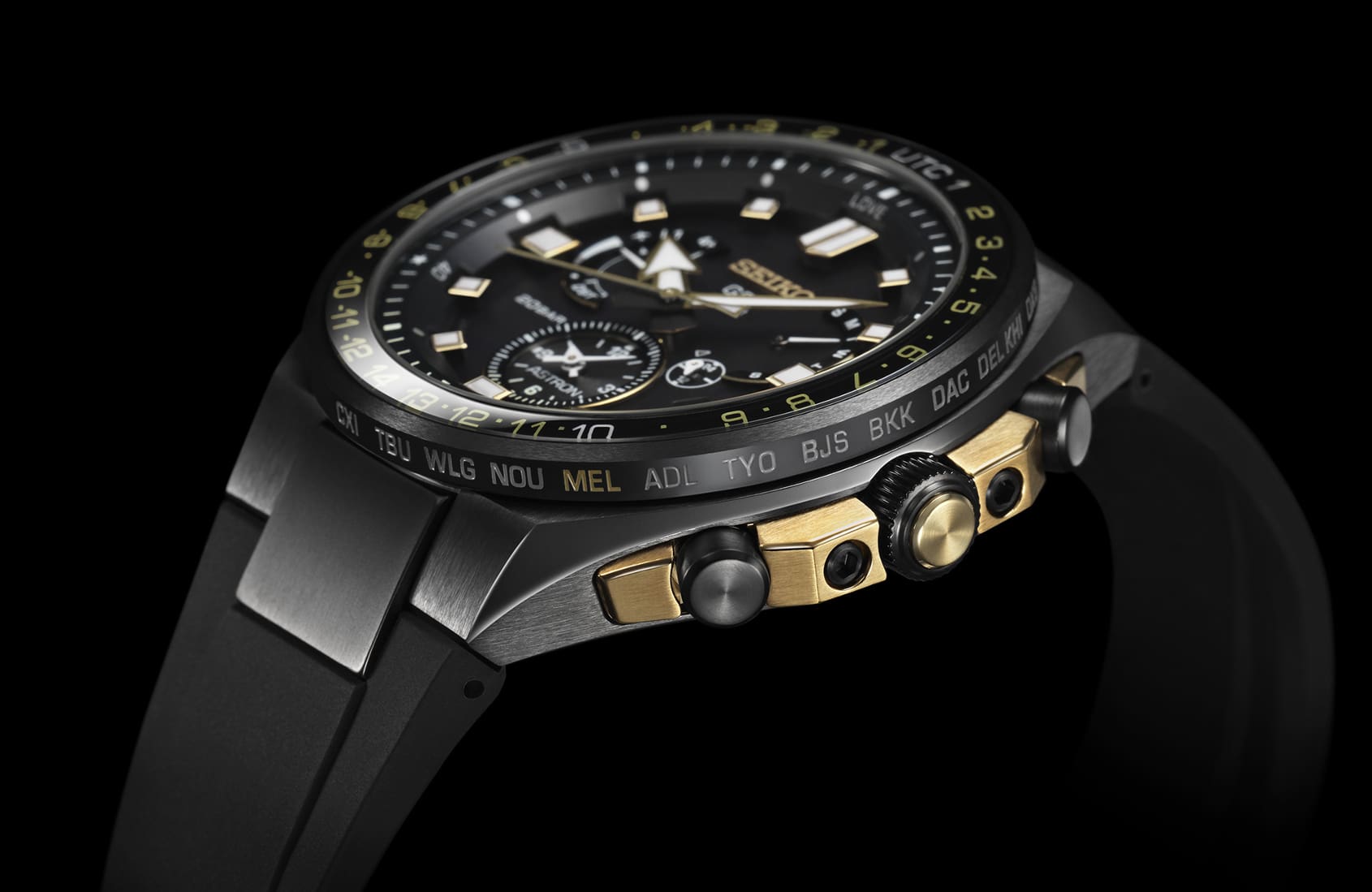
Since its high-profile revival in 2012, the Seiko Astron has continuously evolved in both its technical capabilities and in its size and overall aesthetics. As I explore in greater detail in this little treatise on the Astron models and their esteemed history, the founding member of this modern, solar-powered, GPS-equipped Astron family debuted in an imposing 47mm case in steel, with one dial option, in matte black. Since then, Seiko has refined the elements that necessitated the large dimensions and limited colorways — i.e., reducing the size of the quartz movement’s GPS-reception antenna and improving the efficiency of the dial’s solar cell — and the result has been a plethora of intriguing interpretations. The latest and perhaps most distinguished in terms of colorway dropped just recently. The Astron GPS Solar SSJ029 and Astron GPS Solar Chronograph SSH171, both limited editions of 1,500 pieces, feature glittering, violet-hued dials that Seiko says are inspired by “cherry blossoms blooming under the stars.” Both of the new watches have cases and bracelets made from titanium and treated with an extra-hard, scratch-resistant black coating that emphasizes the night-sky motif that these models are shooting for aesthetically. The cases are 42mm in diameter, 12.4mm thick, and 47.9mm lug to lug — the result of the aforementioned streamlining since the oversized original’s debut. The dials’ gradient purple colors are enhanced by a sprinkle of starry glitter...
Teddy Baldassarre
Among today’s Seiko watch models and collections, it’s fair to say that the Seiko Astron does not receive nearly the amount of love from enthusiasts and collectors as do its contemporaries, like the Prospex and Presage models and even the budget-friendly 5 Sport series. And yet I believe a substantial case can be made that the Astron — at least, the first watch to bear that name, way back at the collection’s inception in 1969 — is the most important watch of the 20th Century. The first watch to the market with a quartz movement, the Seiko Astron was a game-changer for the entire watch industry, with an impact that is still being felt today. When Seiko revived the Astron in 2012 after a long hiatus, it was with the recognition that the model represented a quantum leap in watchmaking technology and the determination to take it to the next level. Seiko has fulfilled that promise with subsequent editions of the modern Astron, which brought GPS technology into watchmaking much as the original brought quartz. Here is the story of the Seiko Astron and its 50-plus-year journey to the cutting edge of technology. The Road to Quartz: 1952 - 1968 The quartz watch movement, as with many other groundbreaking inventions, did not emerge from a single burst of creative vision, but ultimately proved to be the most workable version of many such mechanisms, all aimed toward addressing the same industry-wide challenge. As I explore in greater depth in my article on the History of Tim...
Time+Tide
Seiko releases two new limited edition Astron GPS Solar models with colored dials inspired by quartz crystals.
Video
Get your Urban Gentry coffee mug, #wristwatchcheck tee, and more official merch:
Hodinkee
If there's such thing as a next-level quartz watch, then it's the GPS-powered, ultra-complicated Astron.
Two Broke Watch Snobs
A closer look at the best chronograph watches of 2026 so far, from the titanium TAG Heuer Monaco to the Seiko Astron, Bulova Lunar Pilot, and more.
SJX Watches
In the run-up to the holidays, Seiko facelifts its high-spec, multi-function quartz watch with the Astron GPS Solar refs. SSJ039 and SSH187 - limited editions of its satellite-linked models. While not available in stores until January, the new references make their public debut almost exactly 56 years to the day when the original Astron, the world’s first quartz wristwatch, was launched on December 25, 1969. Initial thoughts Despite pioneering efforts to develop quartz watches in Switzerland, and the commercialisation of category-defining products like the Swatch, the alpine nation has tended to lag a step behind its rivals from the land of the rising sun when it comes to quartz technology. As quartz watches matured and the underlying technology became commoditised, much of the Swiss watch industry redoubled its focus on mechanical watches, seemingly content to cede quartz leadership to brands like Seiko and Citizen. For their part, the dominant Japanese brands have continued to develop quartz watches with conscientious enthusiasm, bringing solar charging, radio frequency and satellite-based connectivity, and ultra-precise oscillators to maturity. In that context, the Seiko Astron is the embodiment of more than half a century of quartz leadership, and combines several of the brand’s strengths in two distinct limited edition models. Though the four-figure prices may come as a shock to buyers more familiar with offerings from brands like Apple, Garmin, and Casio, the A...
SJX Watches
Piaget pays tribute to the pop-art pioneer and prolific watch collector with the Andy Warhol Watch Collage Limited Edition in the best way it knows how – with an exotic stone dial. Like the watch owned by Warhol himself, the Collage has a black onyx dial, but in between the onyx is yellow serpentine, pink opal, and green chrysoprase, forming a precious stone puzzle carefully assembled by hand. To bring things full circle, this 50 piece limited edition has a yellow gold case, the same alloy Warhol himself wore, and a metal that’s absent from the regular production Any Warhol lineup. Initial Thoughts The first Swiss quartz watches hit the market mere months after the Seiko Astron, powered by the CEH Beta 21 – a large and rectangular movement that gave the oversized watches it powered a distinctive look that I am fond of. Piaget’s ref. 15101, launched in 1972, was one of the most appealing Beta 21 designs by my reckoning. The renowned American artist must have agreed with that assessment as he purchased one in 1973, which Piaget bought back at auction after Warhol’s death. It is also worth noting that Yves Piaget, president of Piaget since 1980, knew Warhol personally. Andy Warhol with Yves Piaget. Image – Piaget The marquetry dial of the Collage puts Piaget’s expertise to good use. It is surprisingly creative, and is not based on a specific Warhol work as already done many times before. Rather, Piaget attempted to recreate Warhol’s process to create a new wor...
SJX Watches
Citizen marks 30 years of its up-market The Citizen collection with two limited-edition watches featuring washi paper dials inspired by Japanese nature. Both use solar-powered quartz movements accurate to ±5 seconds per year, housed in titanium cases treated with ultra-hard Duratect coatings. Initial Thoughts Citizen’s somewhat clumsily named The Citizen sub-brand is 30 years old but little known outside Japan and enthusiast circles. Most The Citizen watches are distinguishable by an eagle crest on the dial, as well as their obvious quality. While the line has since grown to include mechanical watches, which are quite good, it remains a quartz-first brand – which is good as its quartz offerings are excellent and amongst the most advanced in the world. While often compared to the Grand Seiko cal. 9F models, The Citizen’s quartz offerings have more functions, and thus have more in common with the three-hand Seiko Astron 3X models, or Casio’s premium G-Shocks. These share solar charging, a perpetual calendar, and a power saving made which pauses the hands to save energy while not in use, like F.P. Journe’s Elegante. But unlike GPS-reliant Astrons and G-Shocks, Citizen’s high end quartz movements are fully autonomous, and accurate to within five seconds per year with a maximum deviation of two seconds per month during normal use. More important still, The Citizen’s traditionally styled offerings are much easier on the eyes than any G-Shock or modern Astron, stri...
Video
On this channel, we review watches that are available for purchase on TeddyBaldassarre.com
Worn & Wound
If you like your watches complicated and your timezones varied, chances are you’re already aware of the Seiko Astron GPS Solar line, first launched in 2012. No, the watch doesn’t shout haphazard driving directions at you. Instead, its latest models use GPS technology and a solar-sensitive dial to automatically update the time according to your geographic position up to twice a day. But Seiko wasn’t done there-almost exactly a year on from the introduction of the Caliber 5X83, the first pairing of Dual-Time tech with a chronograph function, Seiko has unleashed four new Astron GPS Solar Dual-Time Chronographs. Each of the four new watches-references SSH175, SSH177, SSH179 and limited-edition SSH180-features a titanium bezel with a sapphire crystal insert, adding a touch of practicality and elegance to the already robust profile of the Astron. An imposing 44mm mirror-polished titanium case houses the Caliber 5X83 movement, which promises a litany of advanced features, most prominent of which is the aforementioned GPS-controlled time and time zone adjustment. A world time function, perpetual calendar correct to the year 2100, automatic DST adjustment, AM/PM and signal reception indications, accuracy of +/- 15 seconds per month, and more round out the slate of functions. Of course, the titular chronographs also loom large on the dial, with a 1/20th second counter at 12 o’clock and a 12-hour counter with hours and minutes at 6 o’clock during chronograph operation...
Teddy Baldassarre
One of the most iconic and beloved watch brands in history, Seiko is ubiquitous among newcomers, seasoned watch collectors, and everyone in between. Choosing one watch from a brand which has a catalog with such breadth and depth is not an easy task but the team here at Teddy was asked to do just that. Unsurprisingly, the answers ranged from contemporary dress watches to niche limited editions paying tribute to Sci-Fi classics. So, without further ado, here are our picks for our favorite Seiko watches. Let us know what you think and share your own in the comments. Mark Bernardo: Seiko Prospex SBDY025 "Save the Ocean" Edition How does one choose a “favorite” Seiko? As someone who writes about watches for an audience that appreciates all different kinds of watches, I’ve always found superlatives like “favorite” and “best” to be daunting. At the watch-industry trade shows I’ve attended over the years, I have often been posed with the question of what were my favorite new releases. My responses, invariably, have tracked not necessarily with my personal tastes but with the watches that made for the most interesting stories for my watch-savvy readers. And when it comes to Seiko, its history is chock full of interesting stories — the first Japanese-made chronograph watch in 1964 and first Japanese divers’ watch in 1965; the original Seiko Astron, the first quartz watch, in 1969, and its successor, the Astron GPS model, in 2012, to name just a handful. There has...
Worn & Wound
Seiko has recently released two references in their Astron GPS Solar collection. Both models, highlighting the beauty of the night sky, showcase not only the ever-evolving design elements of Seiko, but also the technical prowess of the Japanese brand. First on the list is the Seiko Astron SSH157J1, which has a classic design where the color choices for this watch can really pop. The titanium case is offset by a black ceramic bezel which, in turn, is complemented by the transparent light-blue molded dial, designed to reflect the starry sky and changes depending on the wearer’s wrist position. The watch is equipped with a dual-curved sapphire crystal, providing clarity and scratch resistance. And at 43.3 mm, it’s a watch with presence that would still be great as part of your daily rotation. In contrast, the Seiko Astron SSJ027J1 is a bit more contemporary. Geometric cases have become more popular over the years and this reference is no exception, showing how a new design can be eye-catching without looking too ostentatious. The SSJ027J1 combines the same colorway as the SSH157J1 (titanium, light-blue, and black) in a more subtle way. This watch clocks in at 41.2mm, giving it some presence on the wrist as well. The SSH157J1 is powered by the Caliber 5X53 GPS Solar movement, which means the watch can adjust to the exact time anywhere in the world using GPS signals that the watch connects to throughout the day. The watch also features a perpetual calendar, automatic time...
SJX Watches
Seiko just unveiled the Astron GPS Solar 2024 Limited Editions SSH157J1 and SSJ027J1. Both feature a transparent, patterned dial inspired by the starry night sky and a multi-faceted angular titanium case with contrasting satin and mirror-polished surfaces. Though styled like conventional watches, they are high-tech and run on Seiko’s proprietary GPS solar movement, which is accurate to +/- 15 seconds per month and has six months of power reserve. Initial thoughts Well liked for its value-minded offerings, Seiko does well with watches like the new Astron GPS. They are practical, high-quality watches that have some of the stylistic glamour of pricier timepieces thanks to the facetted case and integrated bracelet. Seiko Astron GPS Solar 2024 Limited Editions SSJ027J1. Featuring a reasonable prices of US$2,200 and US$2,500 respectively, the new Astron pair offers are amongst the more expensive electronic watches but executed as well as mechanical offerings in the same price segment. The titanium are finished well and the moulded sky-blue dials with applied indices are unusual elaborate for electric watches. Putting the high-tech movement aside, the quality of the dial and case are good for the price range. Bang for your buck The Astron GPS Solar models offer a chronograph function and run on a GPS solar movement with a power reserve of about 6 months. They are each equipped with different movements, with the SSH157J1 offering additional functionalities like the world time a...
Worn & Wound
This year marks the 100th anniversary of the Seiko brand. Now I know, you’re saying, “Hey Griffin, didn’t Seiko celebrate its 110th anniversary last year?” Well, yes. And no. It’s complicated, okay? Alright, it’s not that complicated. The brand that would become Seiko was founded in 1881 by Kintarō Hattori. They released their first pocket watch - the Timekeeper - in 1895 and they followed that up with their first wristwatch - the Laurel - in 1913. Last year’s celebrations marked the 110th anniversary of that watch. This year’s centenary celebration commemorates the first time the name Seiko was used on a watch dial, something which didn’t happen until 1924, and Seiko has promised nine limited edition watches as part of that celebration. True to that effort, we’ve already seen a recreation of the 1924 Seiko watch released as part of the Presage lineup, alongside special editions of the 62MAS-inspired Marinemaster and Prospex divers, and a new version of the Speedtimer. Now Seiko is bringing the Astron to the party and releasing a brand new model with a never-before-seen combination of features and complications. Leading the pack is the aforementioned SSH156 Astron GPS Solar Kintarō Hattori Limited Edition, a bold black and gold-tone titanium multi-time zone chronograph with an integrated bracelet and full Astron Solar capability. The watch is powered by the all-new Caliber 5X83 movement, the first Seiko Astron movement to include a subdial at ...
Video
🛒 Affiliate Offer:
Worn & Wound
Last year, Seiko celebrated their 10 year anniversary of the Astron GPS Solar collection by totally revamping its dial design with a dual time subdial configuration and constructing the case and integrated bracelet system out of titanium. The idea behind the refresh was to pave the way for a new generation of Astrons with a more fluid approach to how the watch is designed while still maintaining its signature features. To kick off this brand new decade of Astron GPS Solars, Seiko looks to continue its contemporary trend by debuting a series of watches sporting an off-center subdial design and angular case while keeping its bedrock solar GPS movement at its core. The cornerstone features of the Seiko Astron GPS Solar are its 3X and 5X series movements that are capable of automatically adjusting the time based on your current GPS coordinates. The new Seiko Astron GPS Solar in particular, houses their Caliber 3X62, equipped with 6 months of power reserve on a full charge, an accuracy rating of +/- 15 seconds per month and a host of other timing applications. As long as the dial is exposed to the sun, the Caliber 3X62 automatically connects to a GPS satellite twice a day to provide accurate time based on your current location. If for any reason the has not seen the light of day, a built-in smart application allows the Astron GPS Solar to remember the time of the last manual connection and attempts a following GPS connection. In ‘Power Save’ mode, which is enabled when the ...
Seiko has a long history in chronographs, including their first manually wound model from 1964, and the iconic 6139 – the first automatic chrono to hit the market in 1969. That was also the year of the world’s first quartz watch, the Seiko Astron. Naturally, the brands have therefore had a lot of experience producing … ContinuedThe post HANDS-ON: The Seiko Prospex Speedtimer Solar Chronograph offers retro vibes with grab-and-go convenience appeared first on Time+Tide Watches.
Deployant
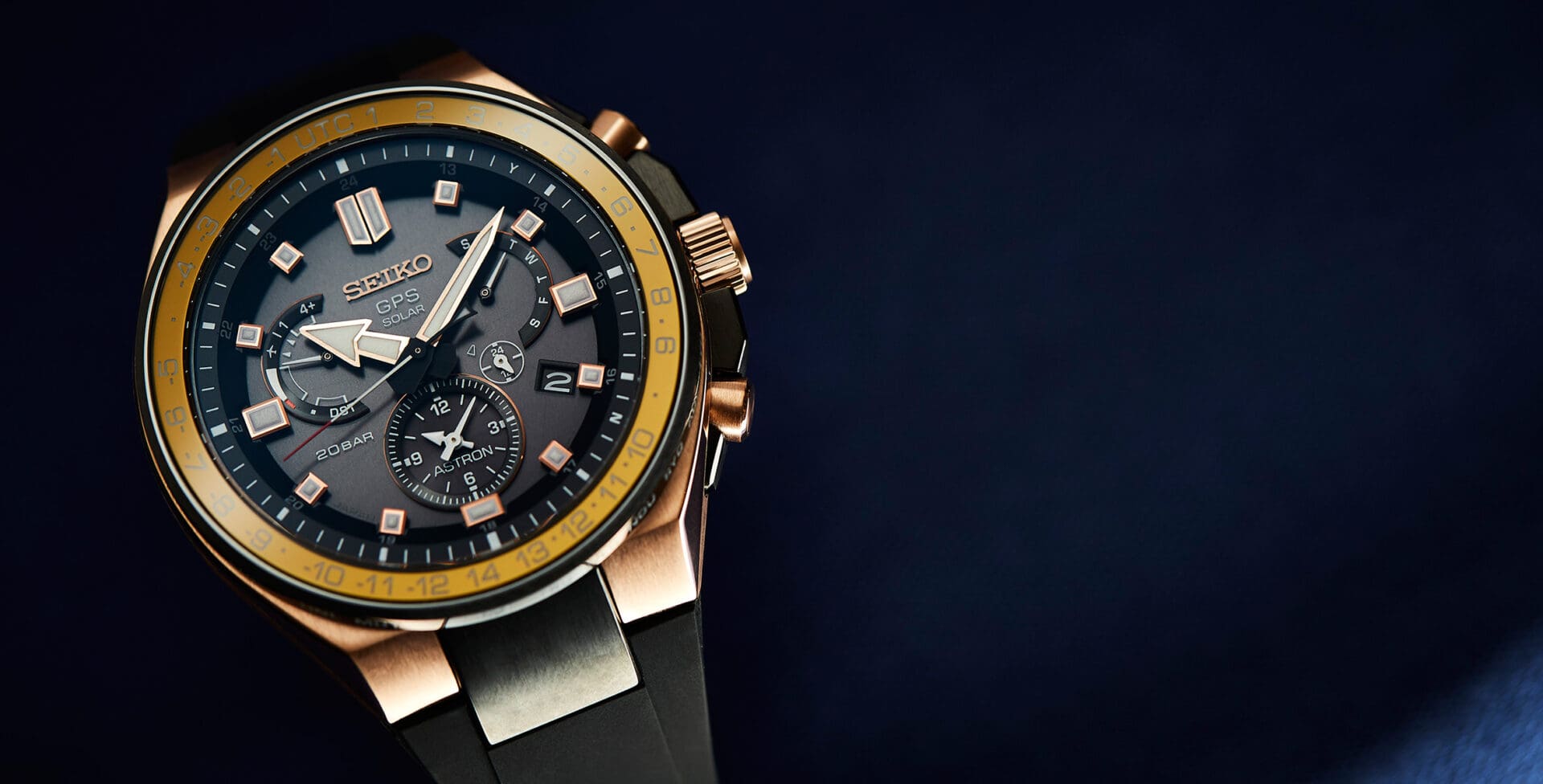
Seiko Astron GPS Solar Dual Time
Time+Tide
Seiko returns to the GPS-enabled Astron line with a slimmer movement and a more approachable overall design with three new models.The post Seiko’s newest Astron GPS Solar 3X62s are the most conventional-looking, easy-to-operate GPS Astrons yet appeared first on Time+Tide Watches.
Time+Tide
It’s fair to say that Seiko has dropped quite a few limited edition anniversary timepieces in 2019, and you definitely could’ve been mistaken for thinking that surely the Japanese watchmaker had nothing left in their product arsenal … and then they released this – the Seiko 1969 Quartz Astron 50th Anniversary Limited Edition. As the … ContinuedThe post INTRODUCING: The Seiko 1969 Quartz Astron 50th Anniversary Limited Edition appeared first on Time+Tide Watches.
Video
🛒 Affiliate Offer:
Deployant
Seiko releases the Seiko Quartz Astron 50th Anniversary Limited Edition Caliber 3X22.With the good looks of the oringal Astron, but with a new movement.
Time+Tide
We’ve spent a bit of time this week going back and forth over the finer points of Seiko’s latest Executive Sports Astrons, from the blingy SSE170J to the tennis-y SSE174J. Today, we’re having a look at another member of the family, which is, I have to say, my pick of the bunch: the blue-detailed SSE167J. … ContinuedThe post VIDEO: Seiko’s latest Astron is big, blue and very cool appeared first on Time+Tide Watches.
Monochrome
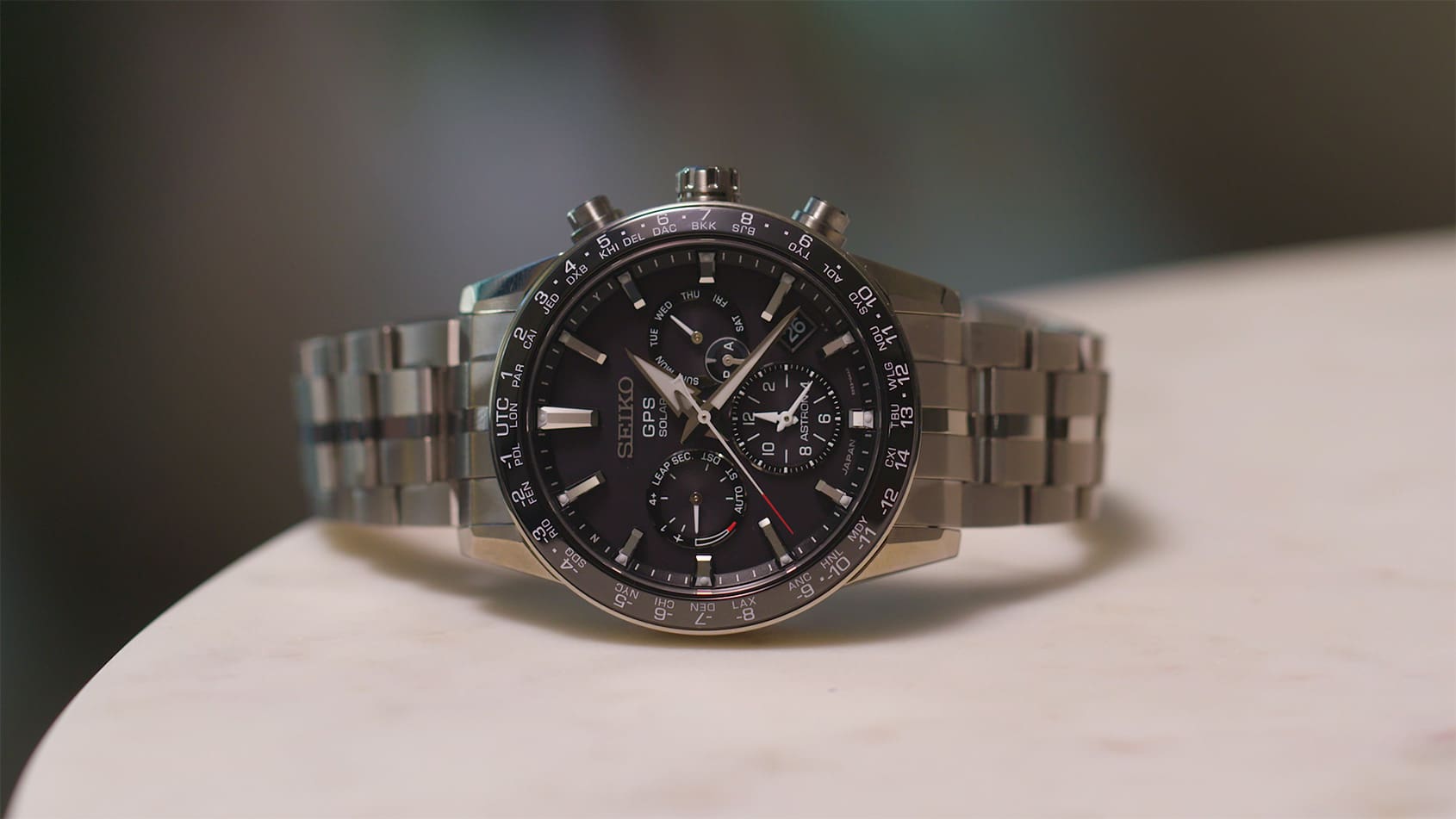
The Quartz Crisis of the 1970s and 1980s was a defining moment for the industry, to say the least. Following Seiko’s Astron in 1969, the first quartz watch to hit the market, a huge swathe of traditional brands closed down as cheap, extremely accurate and virtually maintenance-free Japanese quartz watches hit the streets. Add to […]
Worn & Wound
This year marks the 145th anniversary of Seiko, and while 145 isn’t exactly the most notable round number anniversary, it’s still, well, a very long time. And as we’ve mentioned countless times in these pages, the watch industry simply doesn’t let an anniversary year go to waste. Seiko has just announced a new collection of watches in the Astron line to mark the occasion, because of course it makes a lot of sense to commemorate longevity and a proud history with the most modern contemporary line in the catalog. Right? Kidding aside, the Astron holds a special place in the Seiko collection for a few reasons. It was the name of the brand’s very first quartz watch, famously introduced on Christmas Day in 1969. It was a watch, and a technology, that not only changed the company, but the watch industry altogether. It ushered in the Quartz Crisis across most of the watchmaking world, except of course in Japan, which rose to a level of prominence in watchmaking as a result of quartz. Today, the Astron is special as it is reserved for the most newfangled Seiko technology available, very much in keeping with the tradition inherent in its name. That means, primarily, tech forward GPS enabled timekeeping, as well as the use of Seiko’s solar technology. Astron watches typically inhabit a very contemporary design language, which tends toward sporty, angular, and often oversized. The anniversary watch introduced this week is the new GPS Solar Dual Time Chronograph, ref...
SJX Watches
Seiko is marking its 145th anniversary by continuing to push the envelope for high-end quartz. The Astron GPS Solar Dual-Time Chronograph is a series of four new references featuring a new multi-function quartz calibre, a streamlined case, and a push-button interchangeable strap system compatible with both the standard titanium bracelet and a range of silicone straps. Initial thoughts Since 1969, Seiko has been at the forefront of quartz technology, and since 2012 the brand has commercialised a range of GPS-synced solar-powered quartz watches under the Astron banner — named in honour of the groundbreaking 1969 original. The contemporary Astron models have taken quartz timekeeping about as far as it can go. Left on it’s own, it’s not the most accurate quartz watch, but the satellite link keeps the time in sync with network time and automatically adjusts to local time when travelling. Reference HAB002. Given the amount of technology packed inside — including a solar power unit — the Astron has always been a big watch. At 43.4 mm, the new Dual-Time Chronograph is not a small watch, but at just 12.4 mm thick it’s about 1 mm thinner than its predecessor, which is a welcome improvement. The bigger news, however, is outside the case: a new interchangeable strap and bracelet system. Bracelets have long been an achilles heel for both Seiko and Grand Seiko. The latter made big strides this year with a new bracelet for the Spring Drive UFA Ushio 300 Diver, and now Seiko ...
Video
A special thank you to all the channel members:
Question, suggestion, or just want to say hi? Drop a note.