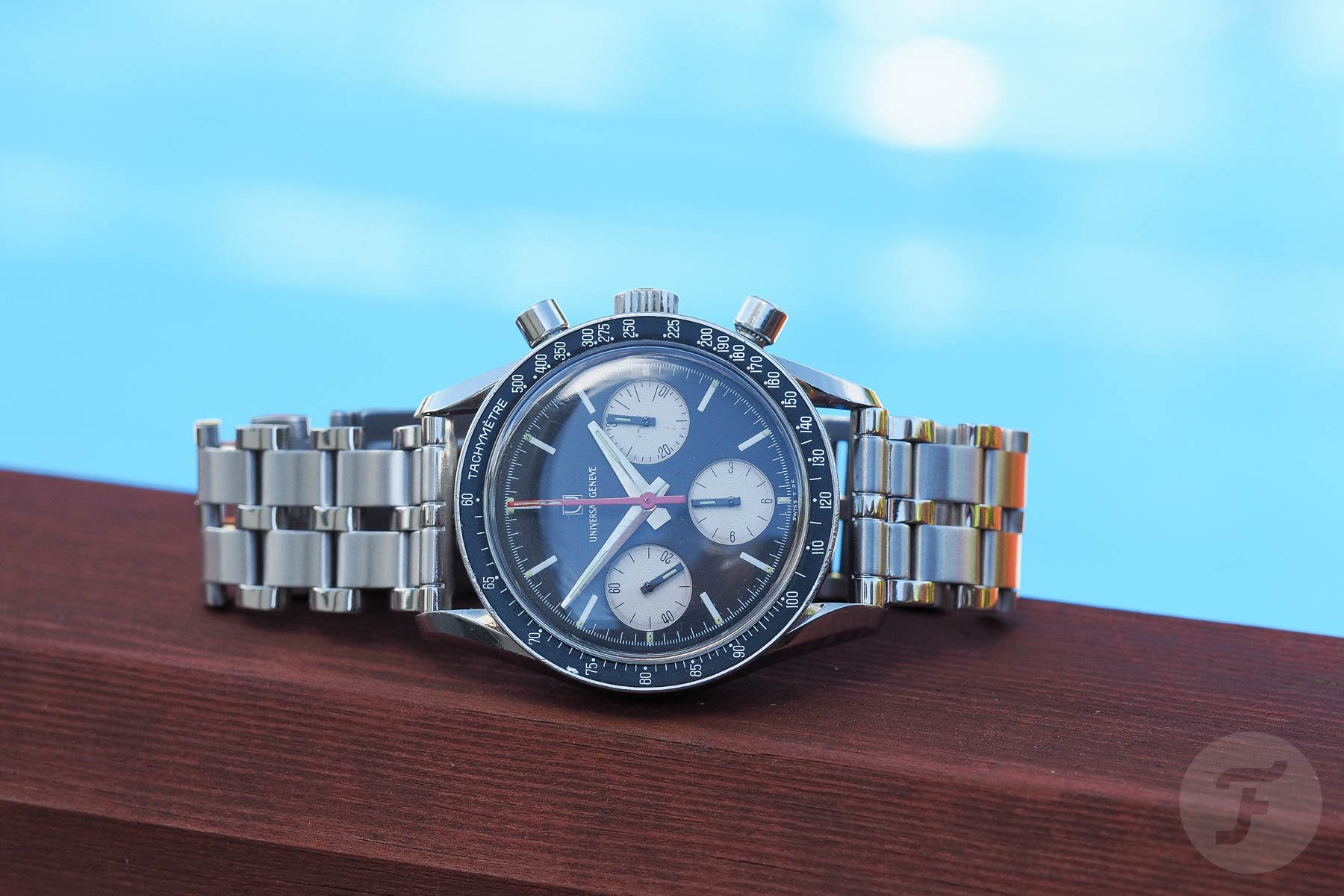
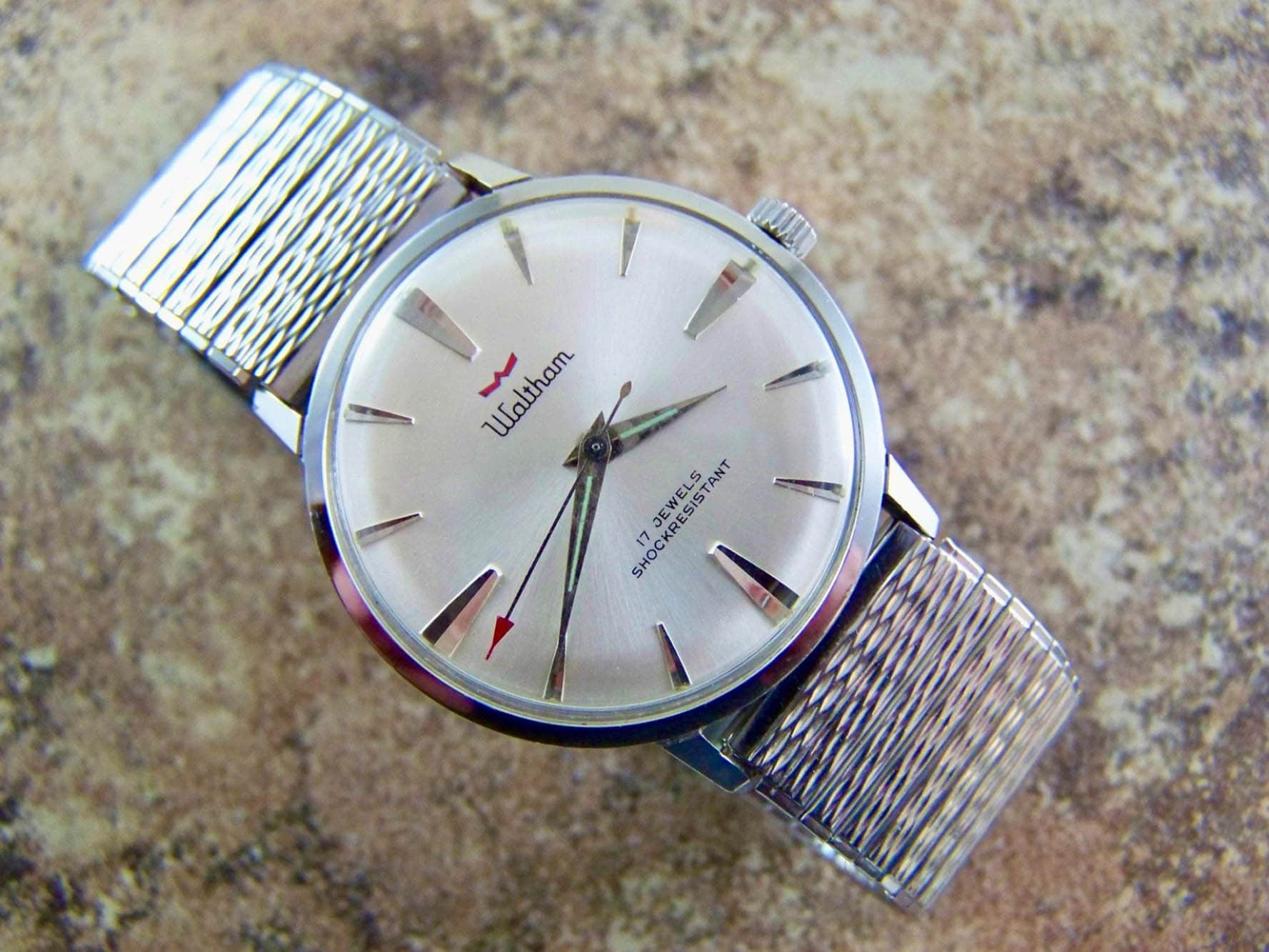
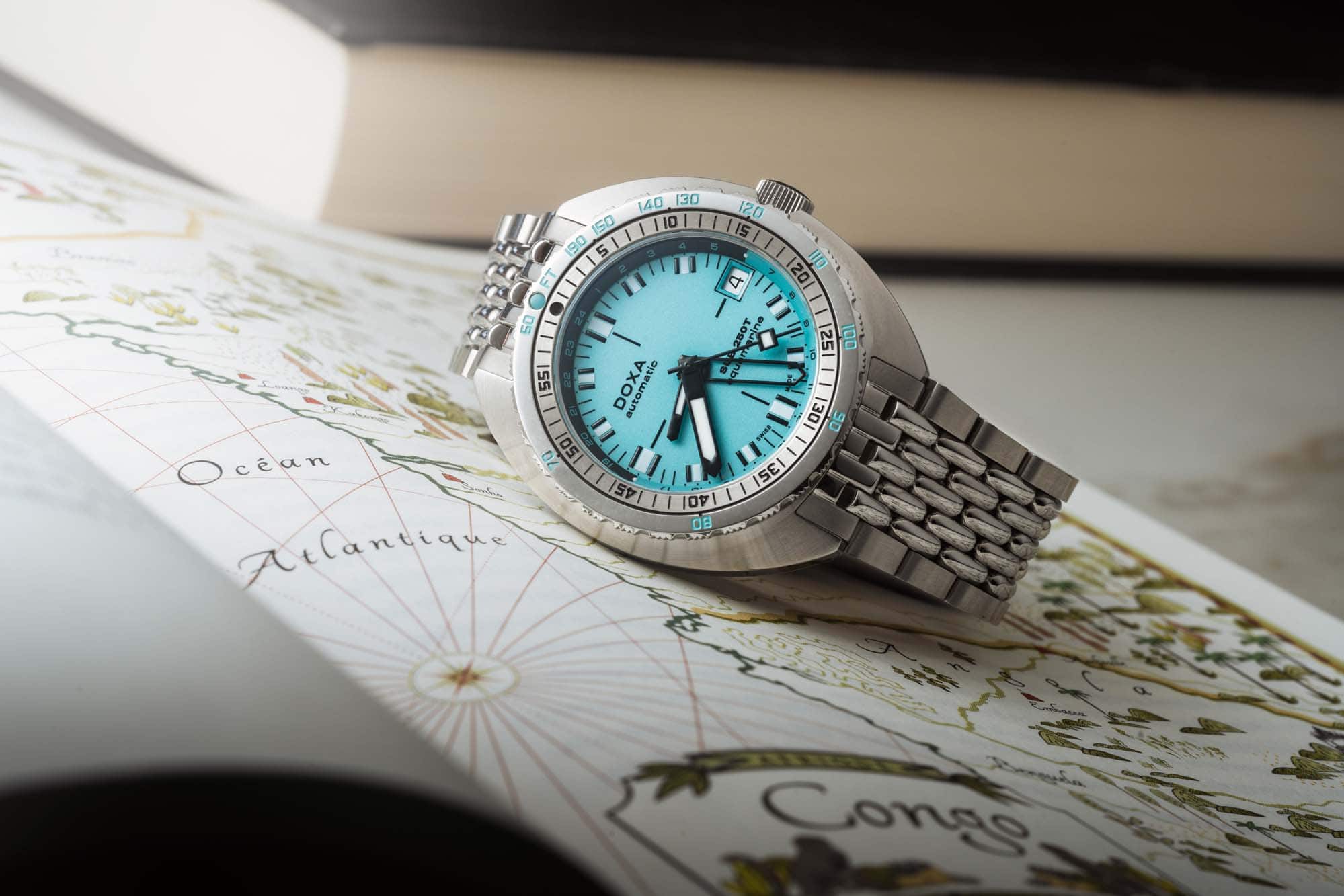
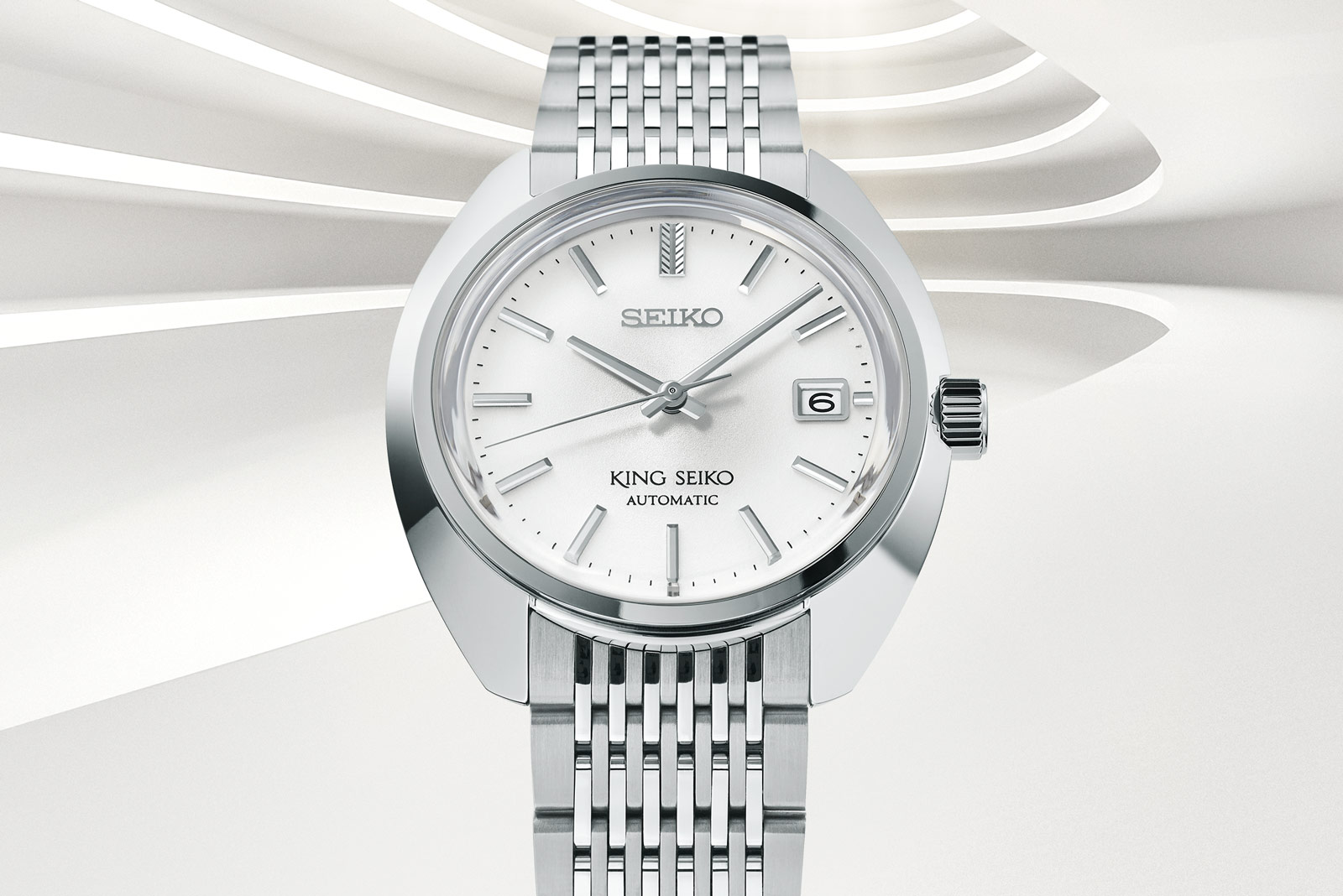
A beads of rice bracelet is constructed from small, rounded, discrete bead-shaped steel links arranged in a regular grid pattern, typically 7-9 rows wide. The links are often hollow (stamped from sheet steel) for lightness, and the visual effect is of a fine fabric of small spheres or oblongs, evocative of grains of rice strung along the wrist. The form was widespread in mid-century Swiss watchmaking; the original makers were Gay Frères (Geneva), NSA, Novavit, and various smaller bracelet specialists who supplied the major Swiss watch houses on contract.
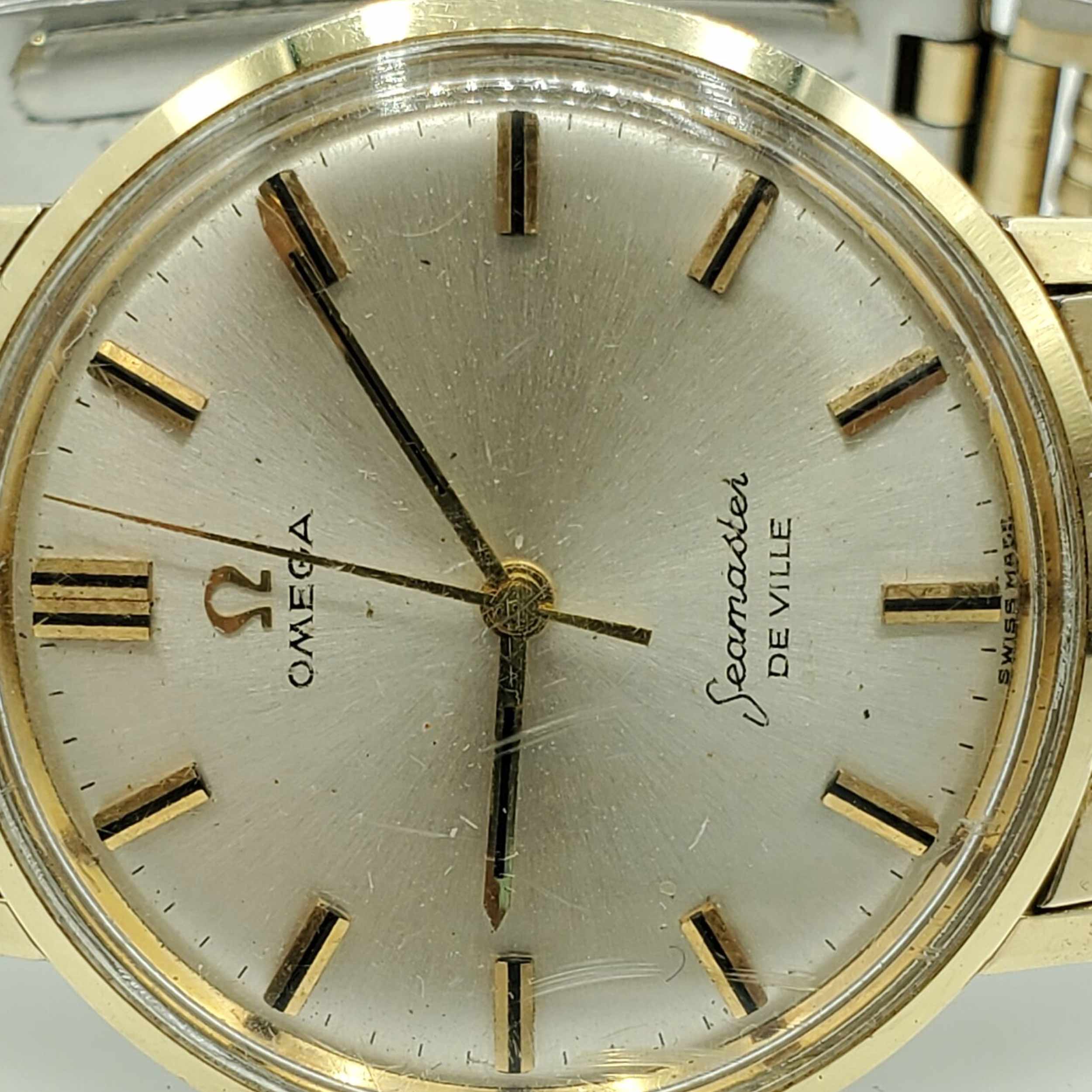
The peak production period was the 1940s-1970s, when beads of rice bracelets were stocked by virtually every Swiss watchmaker as a dressy alternative to the Oyster-style flat-link bracelets. Specifically: vintage Rolex Oyster Perpetual, Bubble Back, and early Datejust references were sold on Gay Frères beads of rice from the 1940s onward; Omega Seamaster and Constellation references used beads of rice through the 1950s-60s; Longines Conquest, IWC Ingenieur (pre-Genta), Universal Genève Polerouter, and Eberhard Extra-Fort all routinely shipped on beads of rice. The bracelet was a category, not a brand-specific design.
"A vintage Submariner on a Forstner beads of rice is the closest a modern collector can get to wearing the watch as it left the boutique in 1965. The bracelet is the time machine, not the watch."- Hodinkee Reference Points, vintage Rolex bracelet guide
Because the bracelets were typically third-party supplied (Rolex did not make their own in-house beads of rice for the early period; they bought from Gay Frères and others), most vintage beads of rice carry the maker's stamp on the underside of the clasp rather than the watch brand's. Gay Frères stamps "G.F." with various date codes; NSA stamps "NSA" with serial numbers; Novavit uses its own logos. This is the canonical vintage authentication signal: a vintage Rolex on a "Rolex"-stamped beads of rice bracelet is suspicious because Rolex did not stamp the bracelets they bought from Gay Frères until much later.
The form essentially disappeared from new production by the late 1970s as the major brands moved to in-house bracelet manufacture and standardised on flat-link designs (Oyster, Jubilee, Engineer). Original beads of rice bracelets in good condition are now collector items: a complete Gay Frères beads of rice bracelet for a vintage Rolex 6694 Oyster Perpetual sells for $800-$1,500 on the secondary market; for a Tudor Submariner ref. 7016/0 on its original Gay Frères BOR, the bracelet alone can be $2,000+ if condition is correct.
The modern revival began around 2014-2015 as the vintage Rolex and Omega market boomed. Forstner (US, founded 1928, revived with new owners 2017) is the primary modern producer of period-correct beads of rice bracelets, with strict adherence to original 1950s-60s tooling and link counts. Strapcode (Hong Kong) and Uncle Seiko produce more affordable variants for Seiko, Hamilton, and microbrand divers. Hex (UK) supplies British vintage. The bracelets are typically $60-$200 at the entry tier and $300-$500 at the period-correct top.
On the wrist the beads of rice has a distinctive feel: lighter and more flexible than an Oyster, and visually quieter than a Jubilee. It pairs particularly well with vintage 36-38 mm divers and field watches; it looks slightly out of scale on modern 42 mm+ sport watches. The combination of vintage Rolex Sub on Forstner BOR is currently the most-cited modern pairing in collector vocabulary, with the bracelet adding a softness and texture to the wrist that the Oyster is too utilitarian to provide.



Comments 1