A standard pin-and-buckle watch closure has the buckle visible on top of the wrist when worn; the strap loops through the buckle frame and the pin pierces a fixed hole. The construction is utility-functional but produces a visible interruption in the strap line at the buckle position. For dress watches where visual continuity is part of the aesthetic, the pin-and-buckle reads as casual / utility rather than premium.
A butterfly clasp solves this with a two-flap folding mechanism. Two metal flaps are attached to the strap (or bracelet) ends; when fastened, the flaps fold inward toward each other and lock at the centre via a button or pressure-fit; the locked clasp sits under the wrist while the strap top reads as a continuous unbroken line. The visual transformation is significant: a butterfly-clasp dress watch reads as a jewellery object; the same watch on a pin buckle reads as a functional accessory.
"The butterfly clasp is invisible. That is the entire point. Under the wrist there is nothing; on top of the wrist there is only the watch."- Watch retailer on dress-clasp positioning
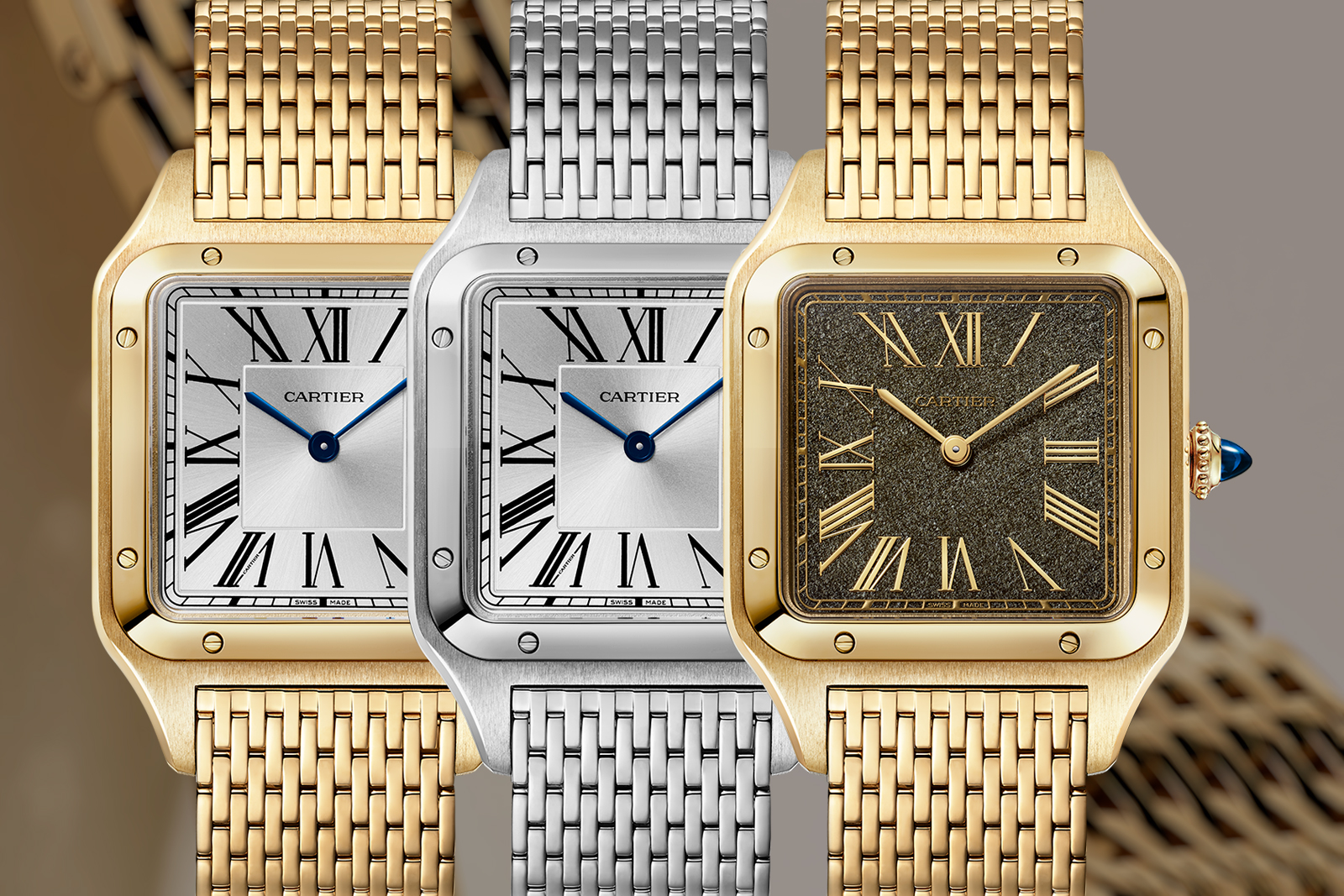
Standard usage: butterfly clasps are standard on dress watches across haute horlogerie. Patek Calatrava leather straps; Cartier Tank leather and bracelet variations; Vacheron Patrimony; Breguet Classique; Lange Saxonia. The clasps are also standard on integrated bracelets: AP Royal Oak, Patek Nautilus, GP Laureato; on these the butterfly clasp continues the tapisserie / horizontal-embossed dial visual language uninterrupted around the wrist.
Aftermarket use: butterfly clasps are widely available as upgrade purchases from premium leather-strap makers (DeLugs, Camille Fournet, Hirsch, JPM Mathieu). A standard pin-and-buckle leather strap can be retrofitted with a butterfly clasp; the upgrade typically costs USD 80-200 and provides immediate visual elevation. Aftermarket butterfly clasps come in steel, gold-plated brass, and (rarely) solid gold for premium configurations.
Trade-offs vs pin-and-buckle: butterfly clasps require pre-set sizing; the wearer cannot adjust per-wear as with a pin buckle. The wrist must fit the strap precisely; if the wearer's wrist size changes (weight gain/loss, summer/winter swelling), the strap requires re-sizing at a watchmaker. The pin-and-buckle's 5-8 holes accommodate ~10mm of wrist circumference range; the butterfly clasp accommodates ~3-5mm via the side-link adjustment. For extremely tight or loose wrists, the pin-and-buckle remains the more practical option.




Comments 2