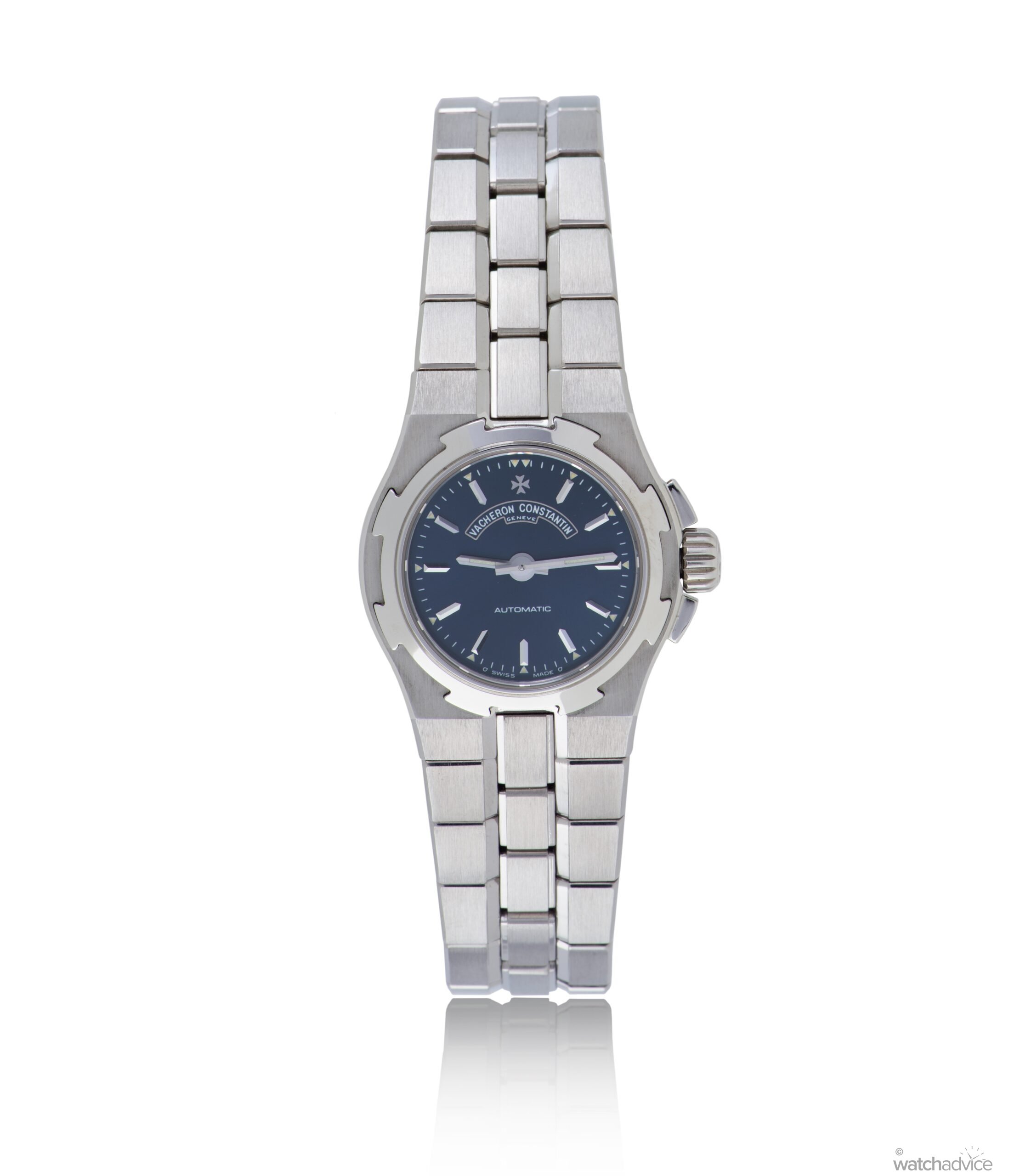
Quickset is mechanical convenience: a way to advance the date display on a watch without having to also move the hour and minute hands. On a quickset movement, the crown has three positions: pushed in (winding), pulled out one click (the "quickset position", rotate to step the date), pulled out two clicks (set the time, hands move freely, seconds-hand hacks if the movement supports it). On a non-quickset ("direct-set") movement, the crown has only two positions: pushed in (winding) and pulled out (set the time); to change the date, you spin the hour hand forward through 24 hours, watch the date roll over at midnight, then back to the correct time. On a watch that has stopped for a week, this means rotating the crown roughly 84 full turns to set the calendar.
The mechanism is a small intermediate wheel that the second crown position couples directly to the date disc, without engaging the centre wheel that drives the hands. Designing this took longer than expected; the date complication itself entered serial production in 1945 (the original Rolex Datejust ref. 4467), but for the next 32 years setting it was a manual exercise. Adapting the keyless works to support a quickset position required redesign of the setting lever, the yoke, and the intermediate date wheel; it also added complexity that conflicted with the simple two-position keyless of dress watches that prized thinness.
"Before 1977, owning a Datejust meant 84 crown rotations every time you forgot to wind it for a week. After 1977, it meant five seconds and one click. The first 32 years of the Datejust were the rough draft."- Hodinkee Reference Points, Datejust history, on the Cal. 3035
The breakthrough was Rolex's Cal. 3035, introduced in 1977 on the Datejust ref. 16013 (yellow gold), 16014 (steel + white gold bezel), and 16030 (steel). The 3035 was Rolex's first volume-production movement with quickset; it ran at 28,800 vph (vs the 19,800 vph of the previous Cal. 1570) and offered a 42-hour reserve. The Cal. 3135 succeeded it in 1988 and ran across the entire steel Datejust, Submariner, Sea-Dweller, GMT-Master II, and Day-Date catalogues for 32 years. Quickset became the de-facto modern standard. ETA incorporated it into the 2824-2 (1982 revision), and from there it spread to the entire Swiss volume-mechanical market via Sellita's SW200 clone (2003).
Some movements include quickset day in addition. The Rolex Day-Date Cal. 3055 (1977) and modern Cal. 3155 let you push the crown to position 2, rotate clockwise to advance the date, rotate counterclockwise to advance the day. The Cal. 3186/3285 GMT-Master II adds independent local-hour quickset: position 2 jumps the local hour hand in 1-hour increments forwards or backwards independently of the 24-hour GMT hand and the running minute and seconds hands; the practical effect is that crossing a time zone is a five-second adjustment without re-syncing seconds. Perpetual calendar and annual calendar watches use a corrector pusher recessed into the case for each calendar function (date, day, month, leap-year), since their multi-function calendar gear trains can't use a single quickset path.
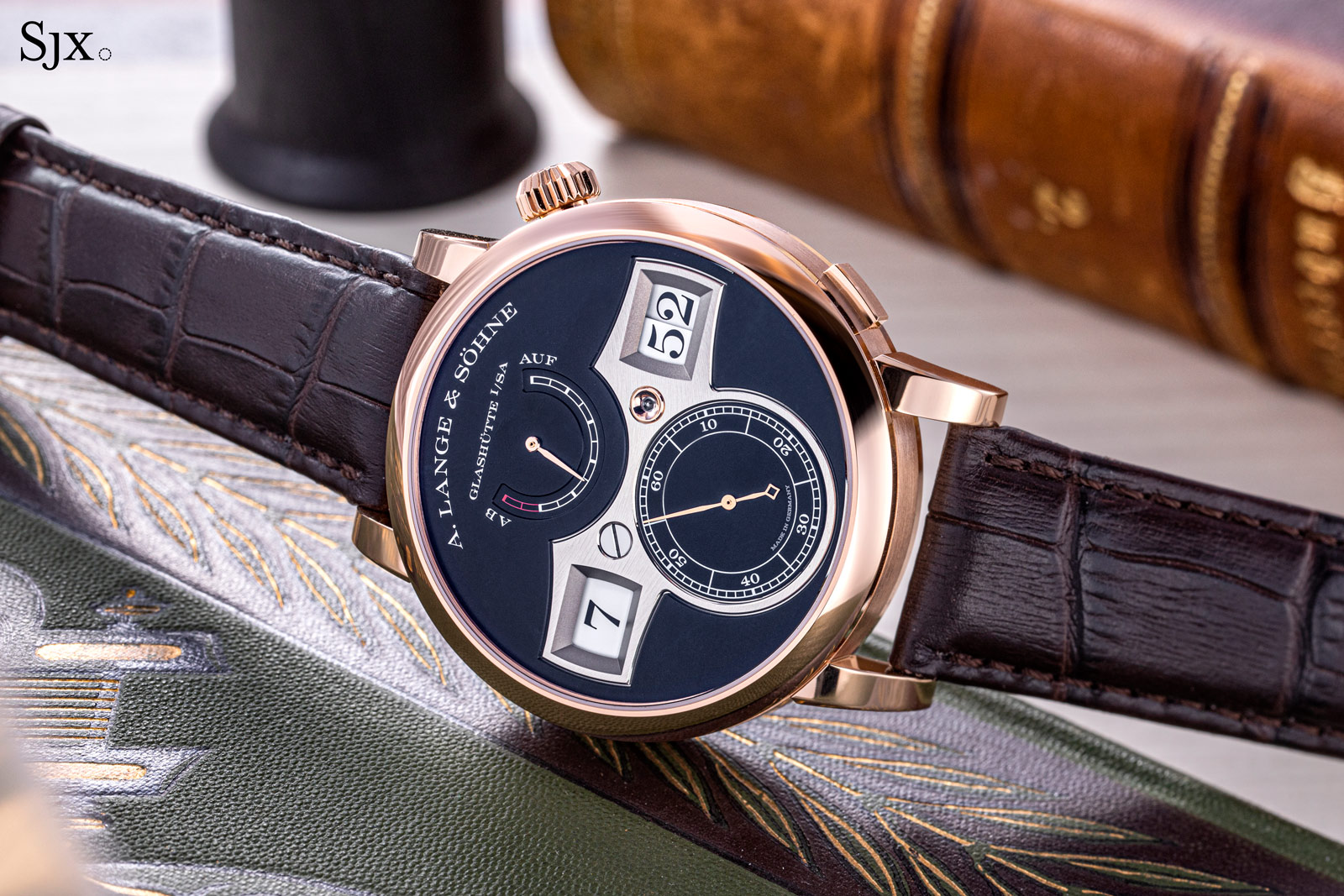
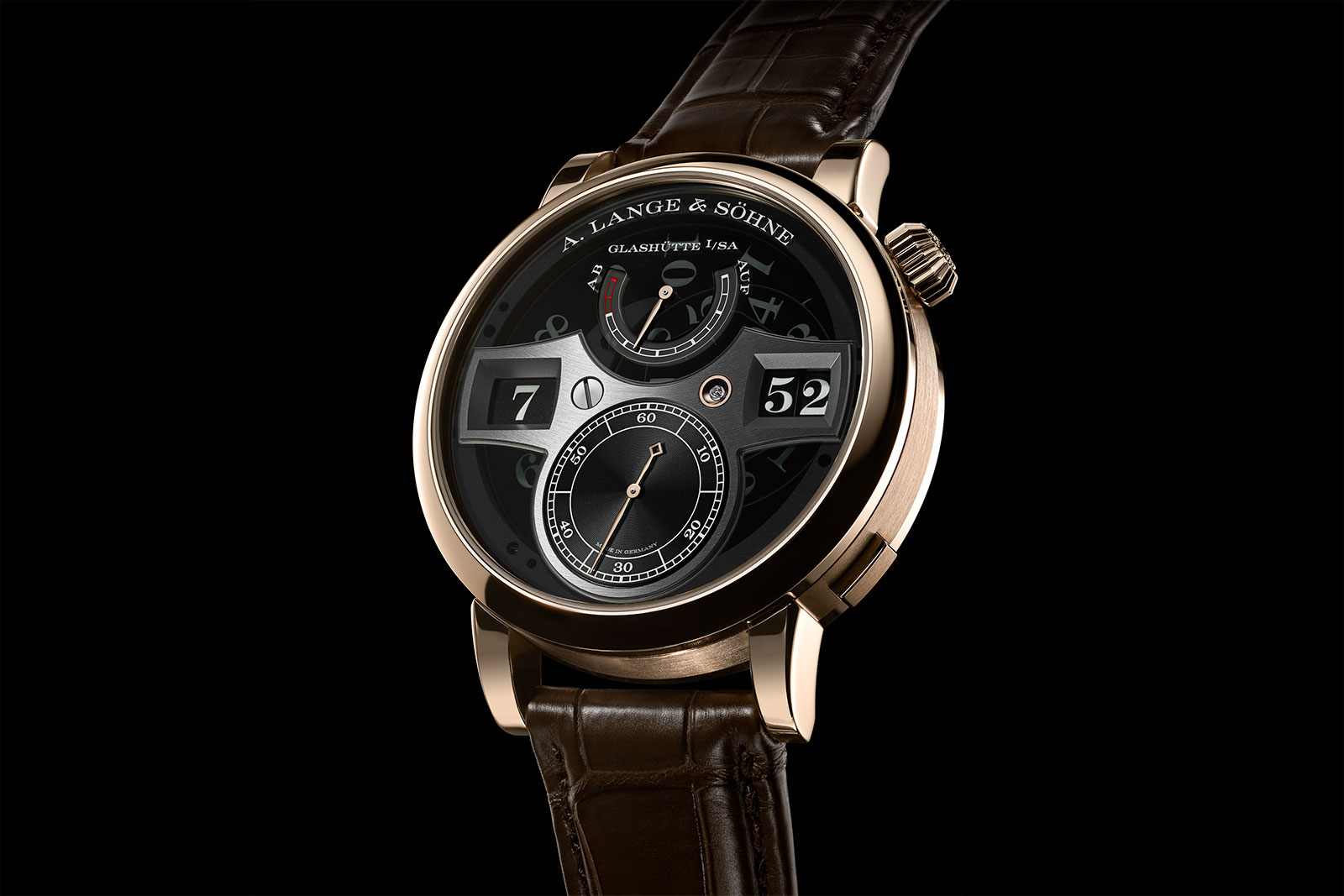
Notable non-quickset watches still in modern production. The Patek Calatrava 5196P with the Cal. 215 PS (manual) is direct-set; date-equipped variants of the same family use the Cal. 240 microrotor, also direct-set. A. Lange Saxonia Outsize Date and Lange 1 use a corrector pusher rather than quickset. JLC Reverso Tribute Duoface small-seconds is direct-set. Most manual AP dress references are direct-set. The reasoning is design-philosophical: a quickset wheel adds a gear-train element that the watchmaker has to integrate into the architecture, and for thin-dress haute horlogerie it is sometimes simpler to omit it. For a daily-wear watch that runs continuously, quickset is essential; for a haute-horlogerie watch that lives in a drawer and gets set on demand, it is a nice-to-have.
Practical owner advice: never use the quickset between roughly 10 PM and 2 AM on most movements. During those hours the date-changing mechanism is partially engaged with the gear train; forcing the date through a quickset rotation can damage the date disc or shear the intermediate wheel. The standard procedure is: set time to a "safe" hour like 6:00, use quickset to step the date forward to one day before today's, then advance time forward through midnight to roll the date naturally and reach the correct time. Modern movements (Cal. 3235 from 2015, the Patek 26-330, the AP 4302) have protected quicksets that decouple safely at any hour, but the old habit, formed on the 3035 and 3135, remains the safe default.

Comments 2