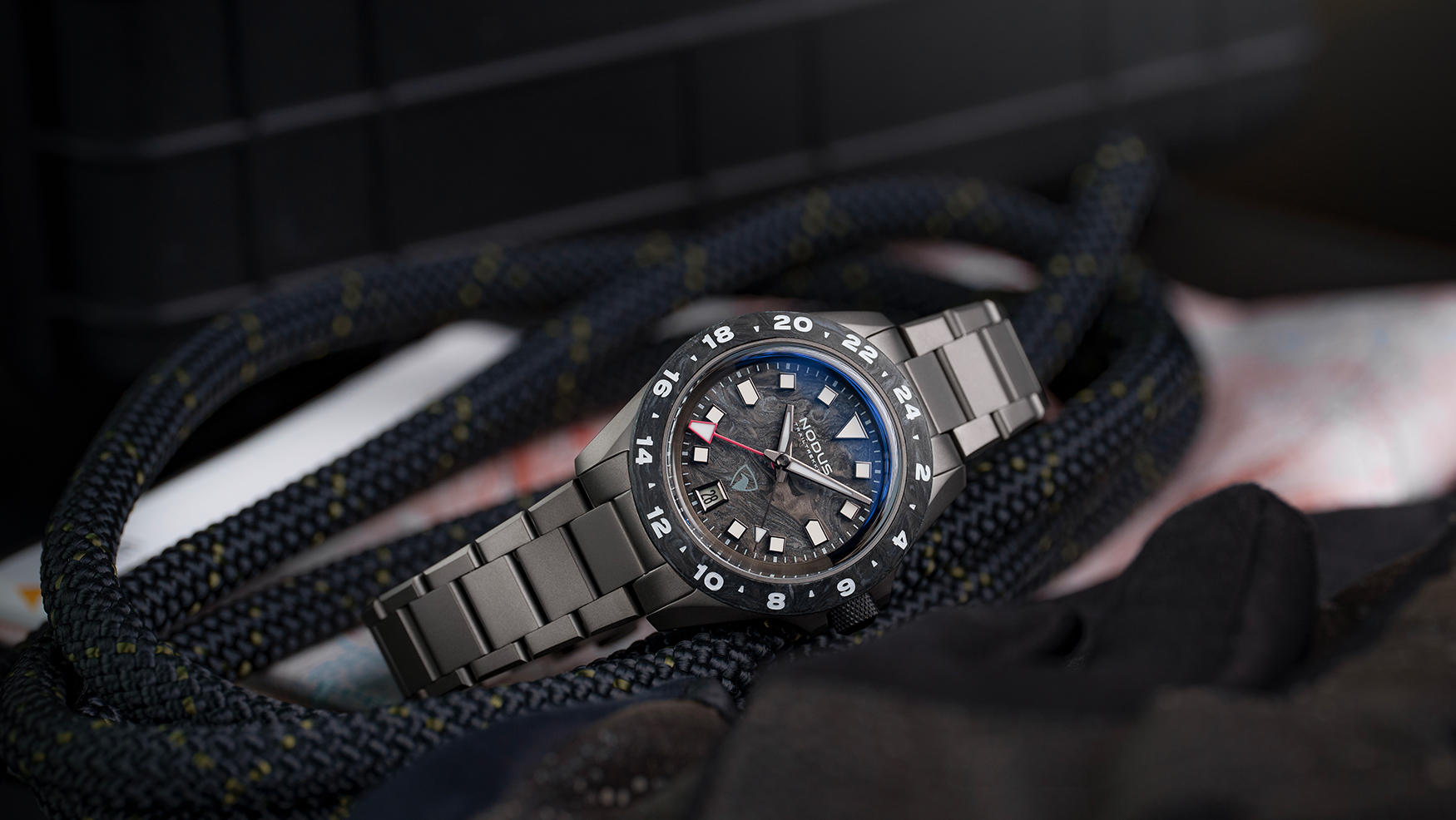
Carbon-fiber composites are woven or layered carbon fibres bonded with epoxy resin, then cured under heat and pressure into rigid solid forms. The aerospace and motorsport industries have used carbon-fiber composites since the 1960s; modern Formula 1 monocoque chassis, military aircraft, and racing-bike frames are all carbon-fiber. The watchmaking application emerged in the early 2000s as luxury brands sought new materials for technical and aesthetic differentiation.
Conventional carbon fiber in watchmaking uses long-fiber unidirectional or woven cloth bonded with epoxy. The cured surface shows a visible parallel fibre pattern (uniformly aligned for unidirectional, criss-cross for woven cloth). Brands using conventional carbon include early Audemars Piguet Royal Oak Offshore Carbon references; the visual is highly recognisable but the manufacturing process limits case thickness control.
"Carbon fiber on a wrist used to mean an F1 driver. Now it means an Audemars Piguet client."- Watch industry observation
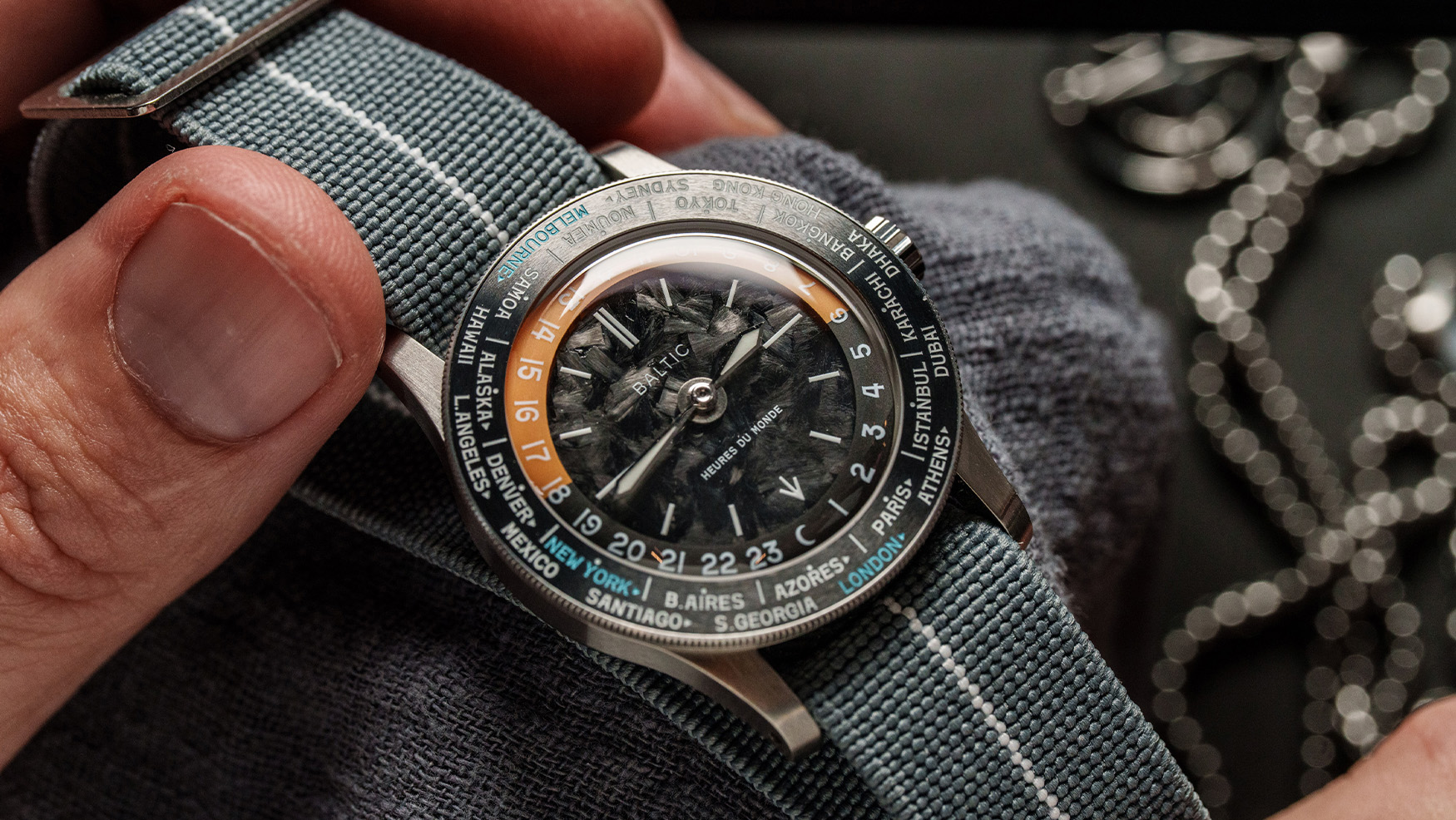
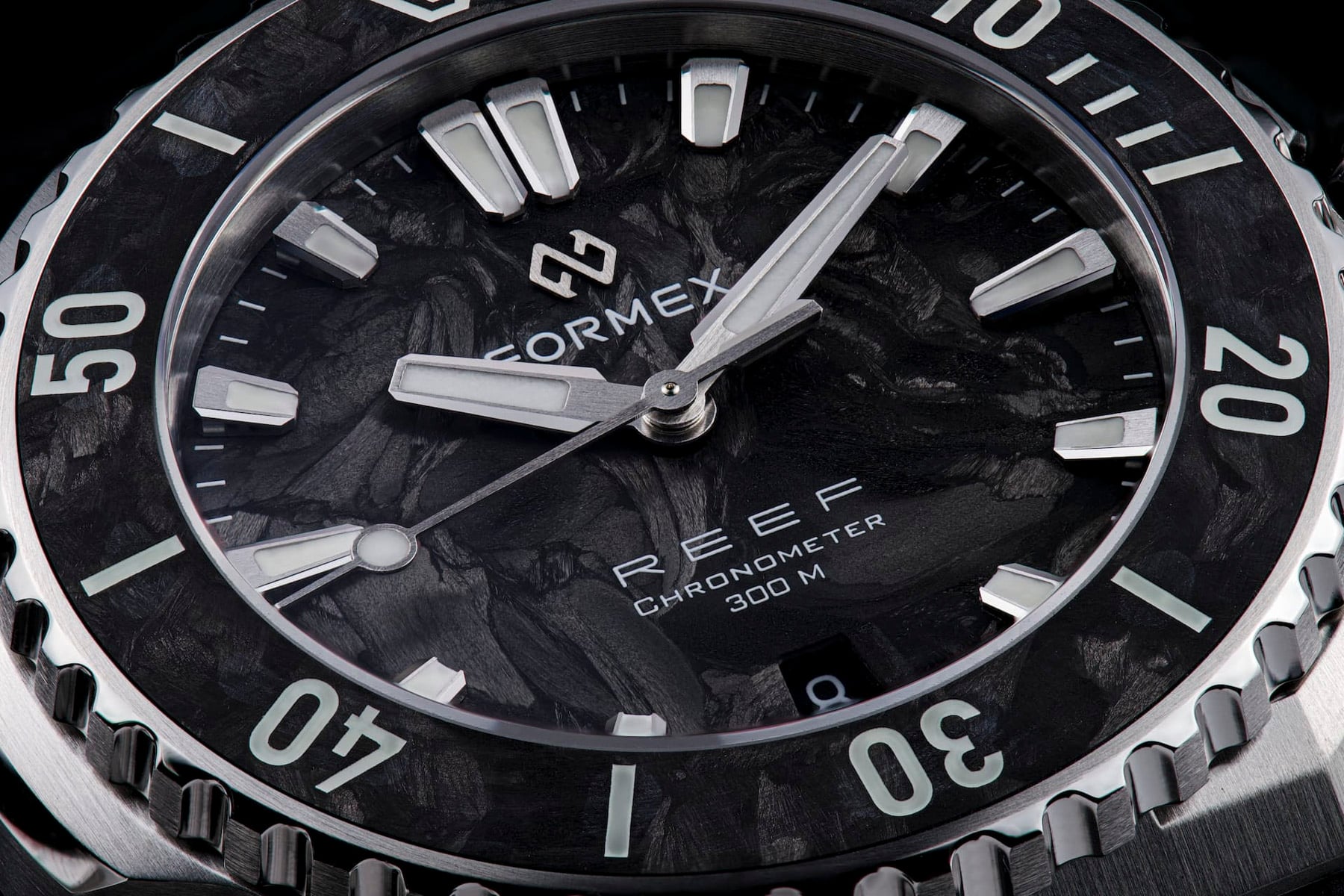
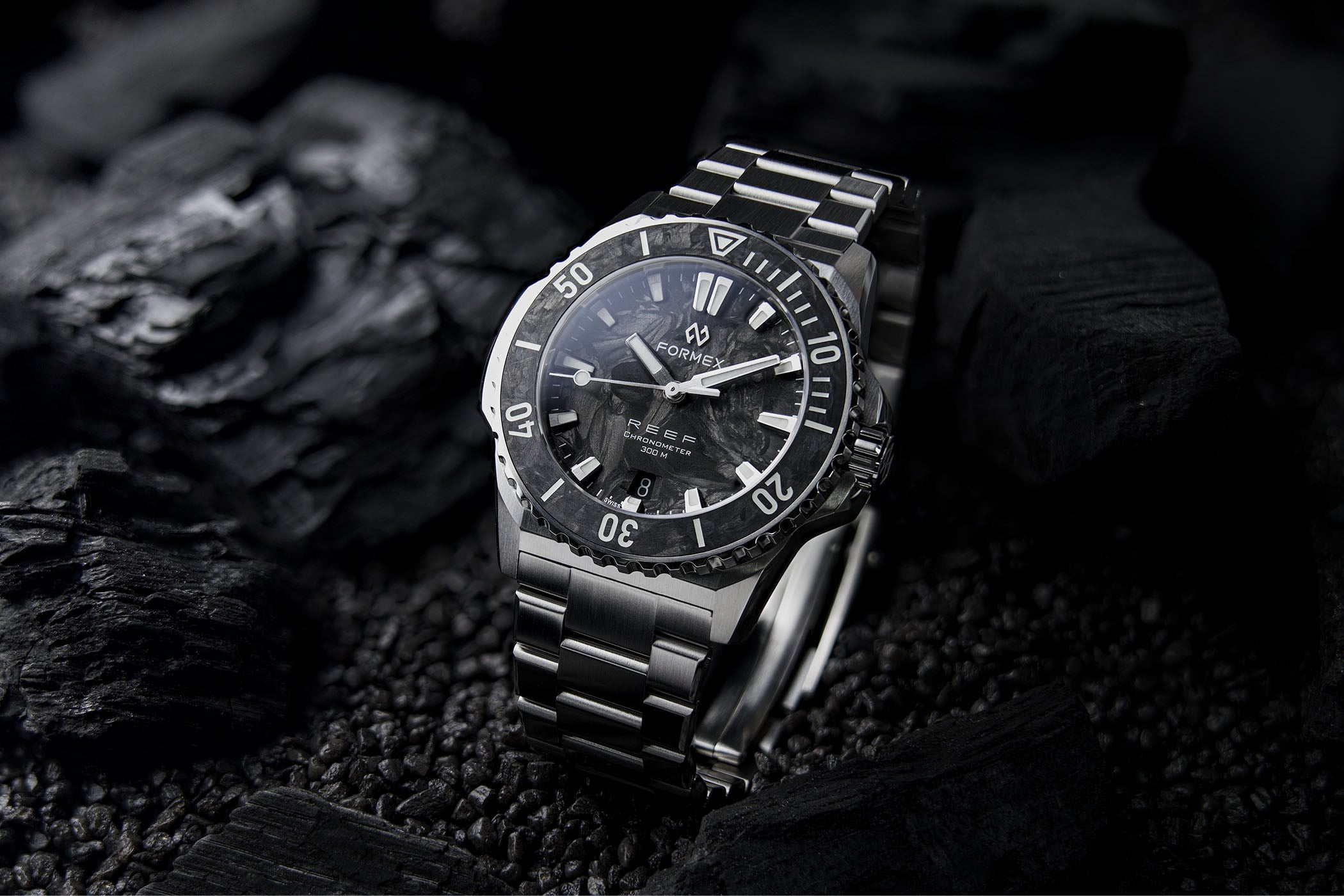
Forged Carbon, pioneered by AP in 2010 for the Royal Oak Concept, uses short-fiber random compression: chopped carbon fibres mixed with resin are pressed under high temperature into the case mould; the cured material has a marbled-grain appearance resembling forged metal but at carbon-fiber weight. Each forged-carbon case is visually unique (the fibre orientation is essentially random); the technique has been licensed and adopted by other brands including Panerai Carbotech and Hublot All Black Carbon.
NTPT Carbon (North Thin Ply Technology) is the proprietary carbon technology used by Richard Mille across the modern catalogue. The process: extremely thin carbon-fiber sheets (30-45 microns thick) are layered alternately with offset orientations and bonded; the cured composite shows a distinctive striated multilayer pattern on the case surface. NTPT is significantly more expensive per unit than standard carbon fiber but produces visually richer cases; Richard Mille has effectively trademarked the NTPT aesthetic.
For buyers, carbon-fiber cases are aesthetic + practical: the case is extremely lightweight (a 45mm AP Royal Oak Offshore Carbon weighs as much as a 36mm steel watch), chemically inert (no nickel, no rust), and visually distinctive. Trade-offs: carbon-fiber cases are sometimes brittle under sharp impact (vs ductile steel that deforms but holds); refurbishment is essentially impossible (a chipped corner cannot be machined back); and cost is significant (carbon-fiber cases typically add CHF 2-10k+ over equivalent steel references in the same brand).




Comments 1