Ask ten enthusiasts what the most iconic watch ever is and eight of them say Rolex Submariner. The other two say Speedmaster or Datejust and then admit under mild pressure that they meant Submariner. Seventy-two years, one silhouette, more product-placement than any other watch in film history, and the single most recognised dial on a wrist anywhere from Zermatt to Jakarta. Time to actually answer the question rather than assume it.
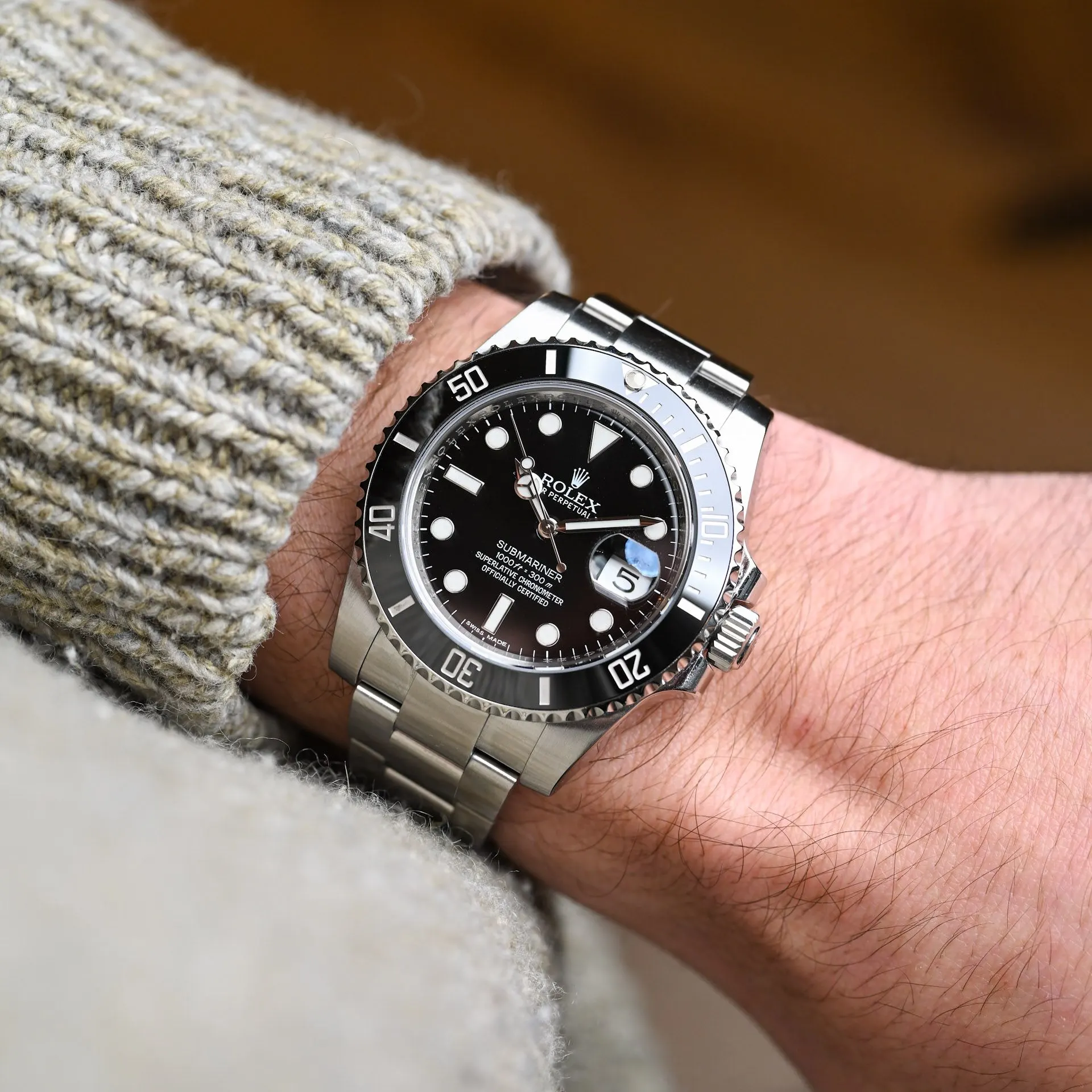
1953: the year that fixed the diver forever
Rolex delivered the first production Submariner in 1953 and officially launched it at Baselworld in 1954. The founding reference was the 6204: 37mm steel case, rotating bezel, Oyster case with screw-down crown, "Submariner" printed on the dial for the first time in watchmaking history, 100 metres of water resistance. It was not the first dive watch (Blancpain shipped the Fifty Fathoms the same year), but it was the first dive watch that also read as a piece of design.
The technical validation came almost immediately. In 1953, physicist Auguste Piccard's bathyscaphe descended to 3,131.8 metres with a Rolex Deep Sea Special strapped to the outside of the hull. The watch surfaced running perfectly. That single stunt became the Submariner's marketing foundation for the next twenty years.
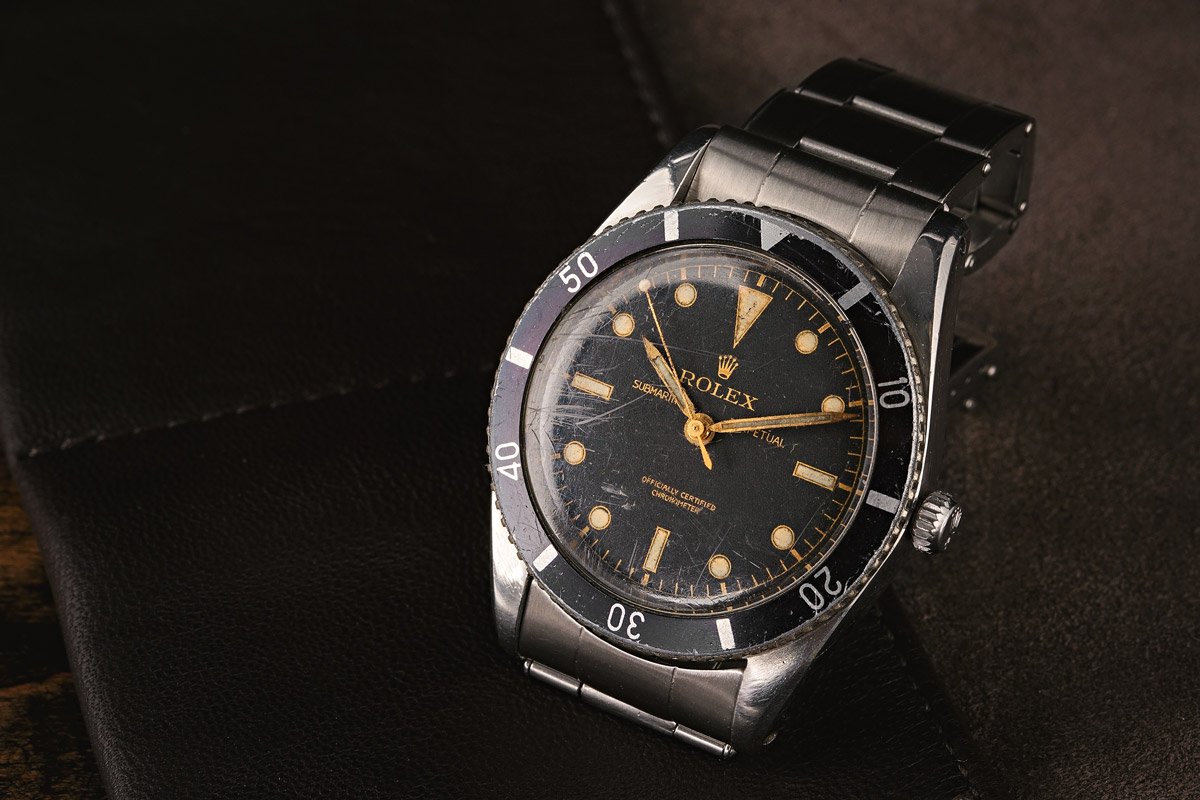
The design language that never needed a rewrite
The 1953 case shape is fundamentally what you get on the modern 126610LN: round steel Oyster case, unidirectional rotating bezel with a 60-minute scale, dot-at-12 hour markers, baton indices, the famous Mercedes hour hand, the arrow-tipped seconds. The dial changed to add the depth rating (6536/1 in 1956), the case grew from 37mm to 40mm to 41mm, ceramic replaced aluminium on the bezel (2010), and the movement went from cal. 1030 to 3130 to 3135 to 3235. Everything else is exactly what the 1953 buyer got.
That is the definition of an iconic design: every change is a refinement, no change is a reinvention. Compare that with any other dive watch. Seamaster went through the Bond-era redesign, the Aqua Terra split, the Planet Ocean expansion. Fifty Fathoms did the vintage-reissue cycle at 42mm, 40mm, 38mm. Even the Tudor Black Bay has already had three case-size shakeups since 2012. The Submariner has stayed exactly what it always was, and every attempt to argue otherwise runs into a photograph of a 1968 5513 that reads as a modern watch.
The James Bond decade that made it a household name
The 1962 film Dr. No put Sean Connery in a reference 6538 "Big Crown" Submariner on a black ribbed leather strap, with the crown at 9 o'clock (mirror-flipped in one scene, an editing gaffe that Rolex-nerd Bond fans still love). It became the first major watch product-placement in cinema. From that moment the Submariner stopped being a diver's tool and started being the watch a man of action wore. Bond wore Subs through From Russia with Love, Goldfinger, Thunderball, You Only Live Twice, and Live and Let Die. Not the Speedmaster on the moon, not the Reverso in the Officers' Mess. The Submariner in Dr No.
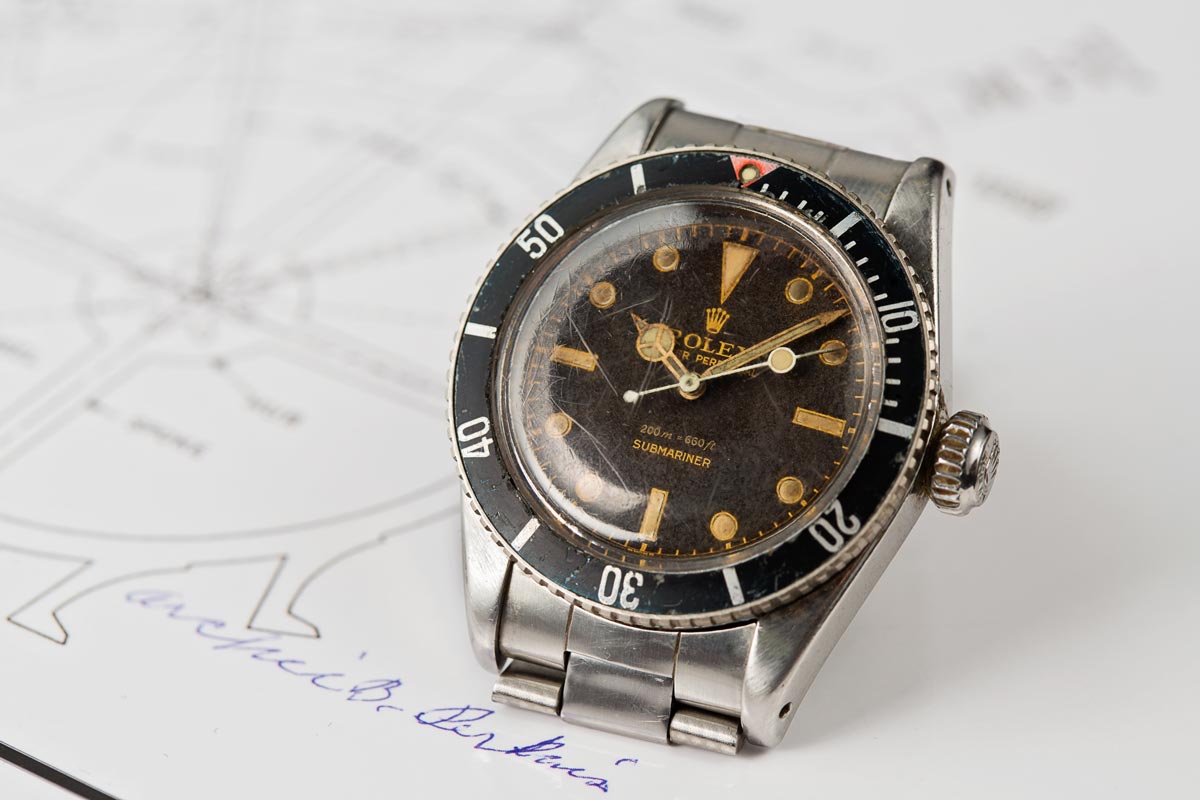
Every reference matters, briefly
- 6204 (1953-1955): founding reference, 37mm, 100m, first "Submariner" text.
- 6205 Series 2 (1954): introduced the Mercedes hour hand. This is the piece where the Submariner started looking like a Submariner.
- 6200 / 6538 (1955-1958): 200m, big crown, Bond-era references.
- 5508 / 5510 / 5512 / 5513 (1958-1989): the long run. 5513 alone was in production for 27 years and became Steve McQueen's Submariner. Standard-setting dive watch for a whole generation.
- 1680 (1969-1980): first Submariner with a date and Cyclops. Introduced the "red Sub" dial that Chrono24 collectors still lose sleep over.
- 16800 / 16610 (1979-2010): sapphire crystal, high-beat cal. 3035/3135, unidirectional bezel with the modern lug shape. The Submariner most collectors grew up wanting.
- 16610LV "Kermit" (2003-2010): 50th anniversary green bezel. First green-bezel Sub. Cult status.
- 116610LN / 116610LV (2010-2020): first ceramic Cerachrom bezel. "Maxi" case with wider lugs. The Sub that closed out the aluminium era.
- 124060 / 126610LN / 126610LV "Starbucks" (2020-present): case grew to 41mm with slimmer lugs, cal. 3235 with 70-hour reserve, ceramic bezel refined again.
Not just Bond: the roll-call
Cinema is the loud version of the story. The quiet version is that a photograph of a Submariner on the right wrist has anchored every "important watch" list for six decades:
- Jacques-Yves Cousteau wore an early Submariner while directing The Silent World in 1956.
- Chuck Yeager, the first man through the sound barrier, wore his at 45,000 feet in 1956.
- Steve McQueen, the actual King of Cool, wore a 5513 on and off camera; his personal ref sold at auction for enough to buy a house.
- Robert Redford, in almost every 1970s film that gave him a wrist shot.
- Roger Moore, Timothy Dalton, Pierce Brosnan in Bond continuity until Omega bought the property in 1995.
- Every second Formula 1 driver, Wall Street trader, and yacht-club member since roughly 1974.
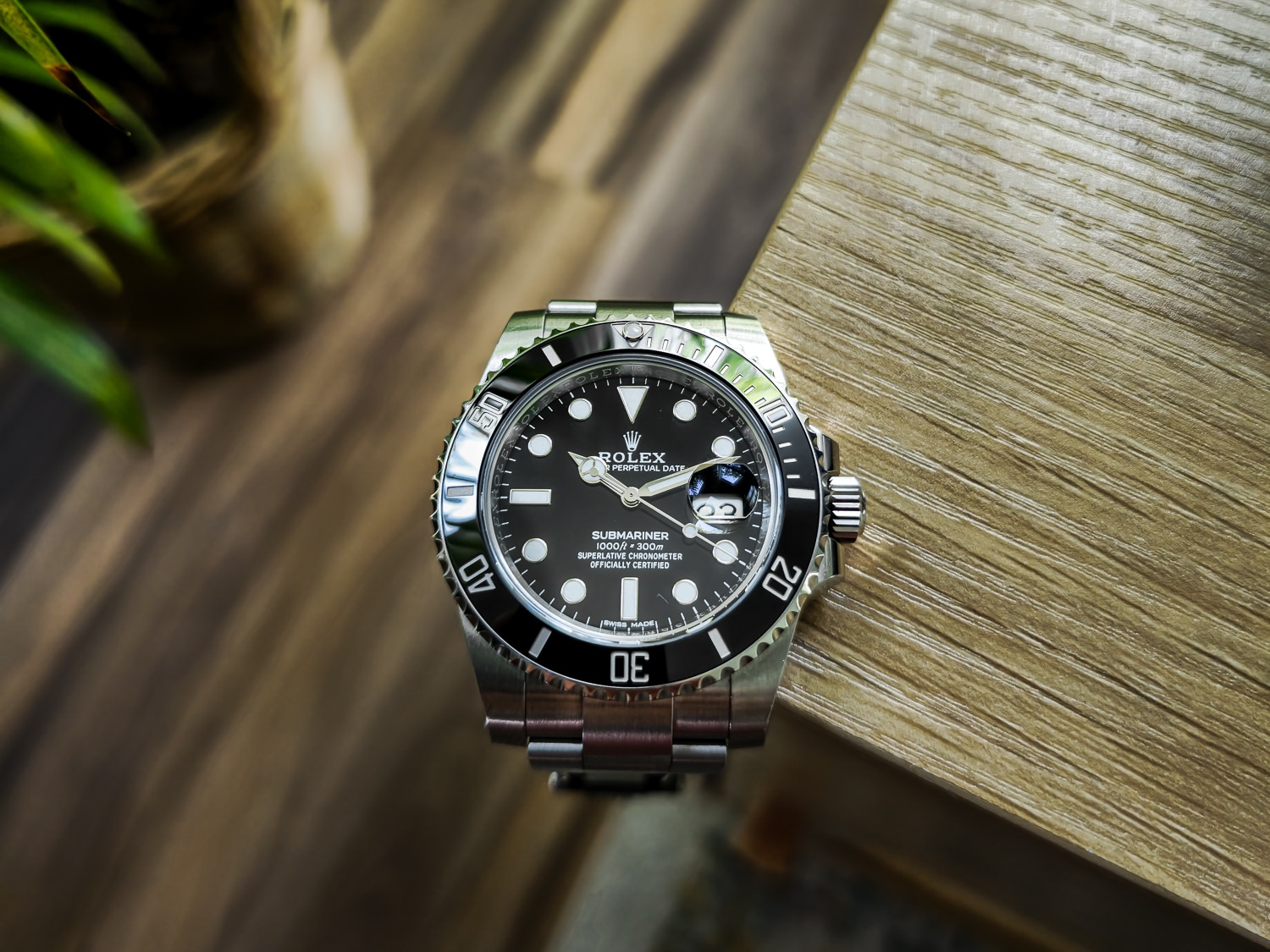
The "everyone has one" question
Right, the elephant. Is it bad taste to wear a Rolex now? You see them at the campsite, in the office, on the bloke waiting for the bus, on Instagram influencers with three-digit follower counts. The AD waiting list ran hot from 2017 to 2023, prices went stupid on the grey market, and the whole thing acquired a whiff of trying-too-hard that the Rolex crown wearer of 1975 would have found undignified.
Here is the honest answer. A watch that has been designed the same way for seventy-two years, that reads instantly correct on every kind of wrist, and that has genuinely earned its cultural weight through Bond, Cousteau, McQueen, and about forty million real divers over three generations - that watch is not made less good by the fact that a lot of people also want one. Popular is not the same as tasteless. The Submariner survived being on Sean Connery's wrist in 1962, and it will survive being on your neighbour's wrist in 2026. If wearing something a lot of other people also wear bothers you, the answer is not to look down on the Sub. The answer is to buy something else and enjoy the fact that other people don't get it. Fine watches are big enough for both.
What the current Submariner actually is
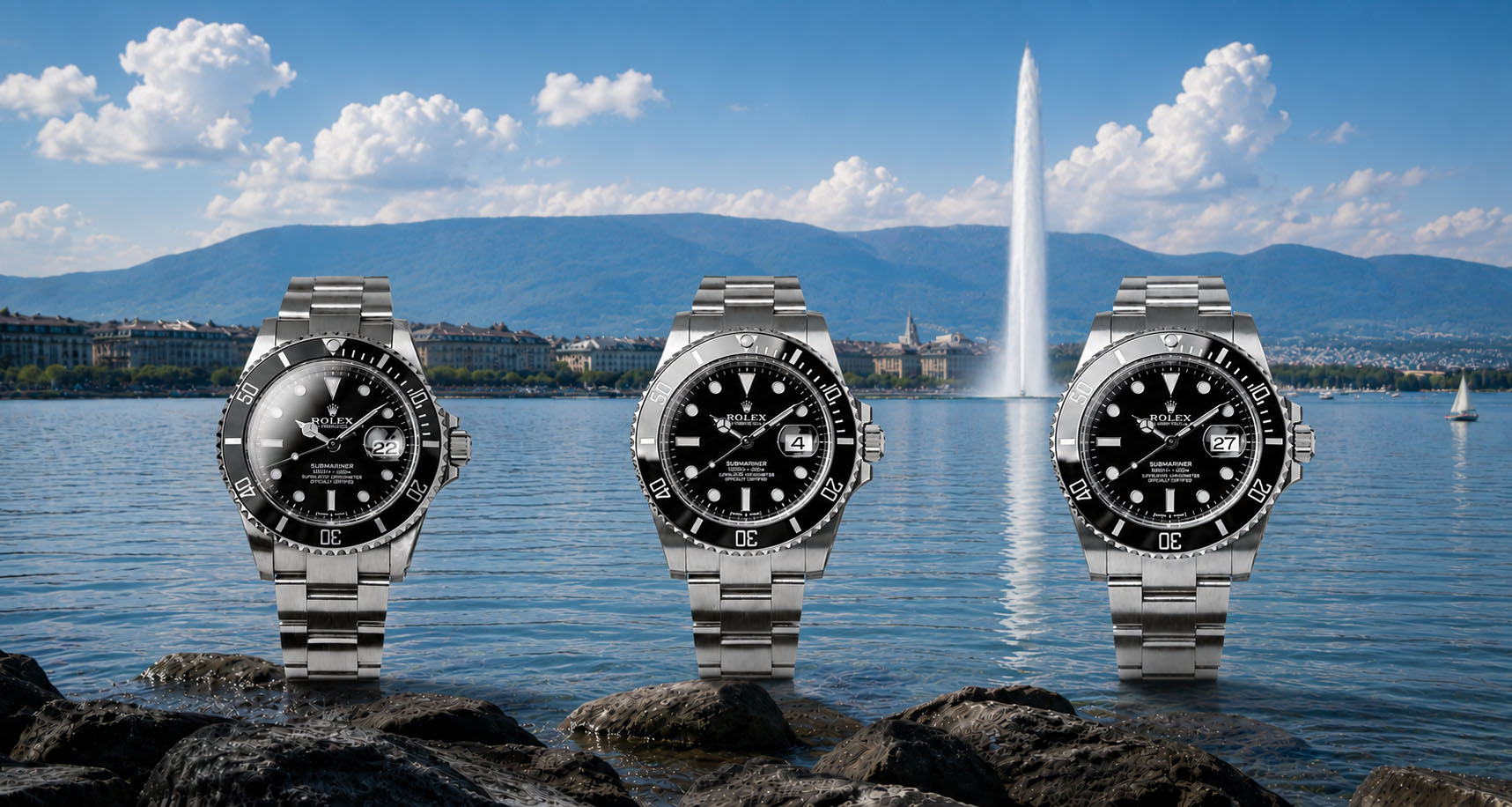
The 2020 refresh moved the case from 40mm to 41mm with narrower lugs, dropped the older cal. 3135 for the modern cal. 3235 with a 70-hour power reserve and Chronergy escapement, and pulled the whole line onto ceramic Cerachrom bezels. The current lineup:
- 124060: no date, black bezel and dial. The pure-tool Sub, the closest modern equivalent to a 5513.
- 126610LN: date, black ceramic bezel, black dial. The default Submariner.
- 126610LV "Starbucks": date, green ceramic bezel, black dial. The current colour play.
- 126618LN / 126618LB: yellow-gold, black or blue ceramic bezel. For the collector who has already spent the money.
So, is it the most iconic watch ever?
Two honest answers depending on how you count. If iconic means "most recognised across all watch buyers, non-buyers, and people who don't know what a bezel is," yes, unequivocally. Nothing else comes close. Show a picture of a modern Sub to a hundred random people on the street and half of them can name it or at least name the brand. Do the same with a Nautilus, a Speedmaster, a Reverso, a Royal Oak, and you'd struggle to hit ten percent.
If iconic means "most important to the history of watchmaking," the answer gets harder. The Speedmaster went to the moon. The Reverso invented a case type. The Nautilus rewrote sports-watch pricing. The Datejust invented the date window. The Submariner did not invent the dive watch (Fifty Fathoms did) and it did not invent any single mechanical feature that changed the industry.
What the Submariner did was harder. It defined what a watch should look like for two full generations of buyers, and it has held that definition unchanged long enough that its silhouette is genuinely universal. Every dive watch since 1953 is a Submariner argument in one direction or another. Every "grail watch" list starts with it and often ends with it. If you had to nominate one wristwatch as the single most iconic in the history of the wristwatch, honestly, it is very hard to name anything else.
Buy one, don't buy one, cross-shop a Tudor Black Bay 58 or a Longines Legend Diver instead. All fine calls. But do not pretend the Submariner is not the answer to the question. It is, and it has been for a long time.
Comments
No comments yet, be the first to weigh in.