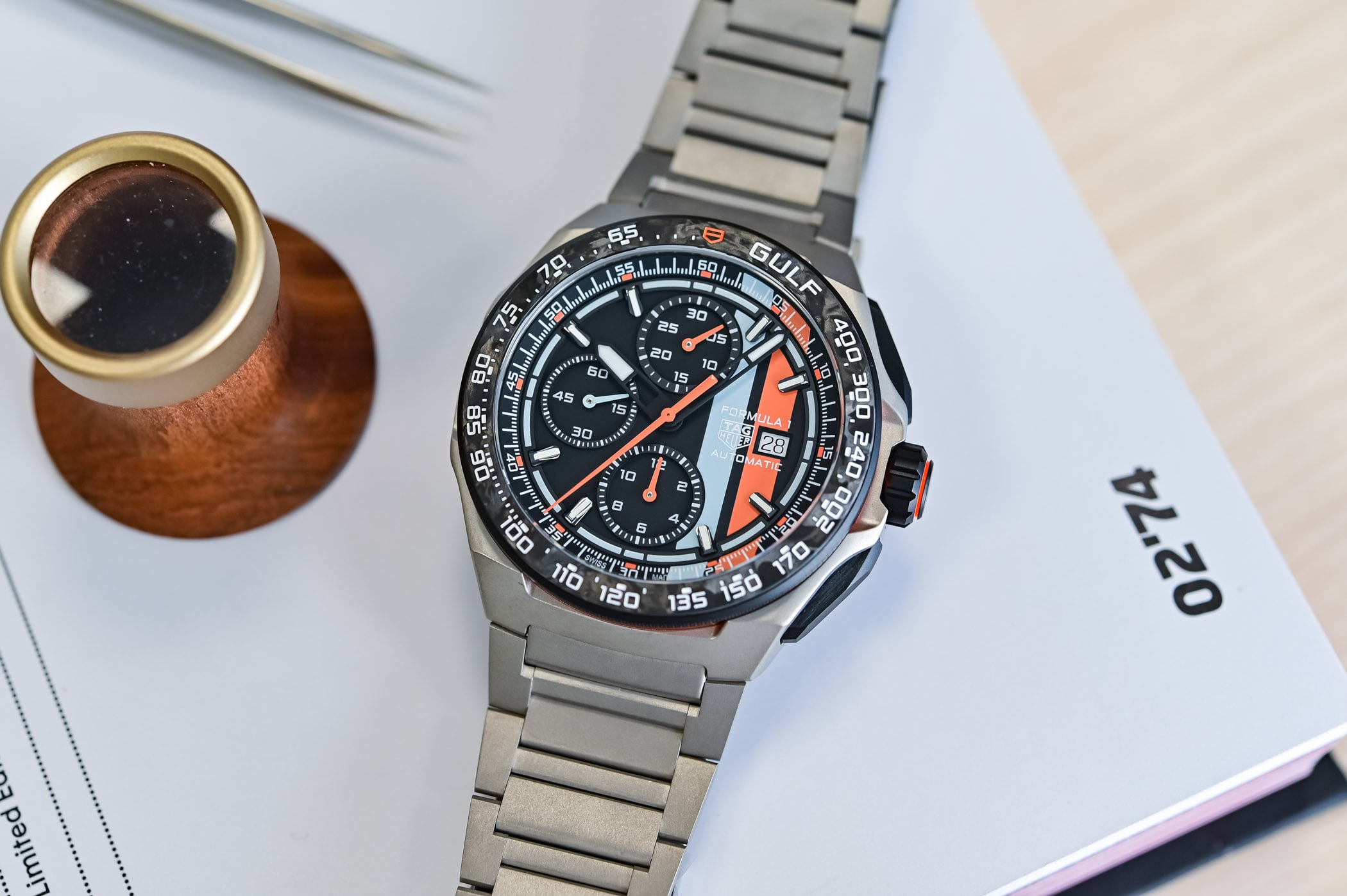
Edouard Heuer was born on 13 March 1840 in Saint-Imier, the small town in the Bernese Jura that would later also become the birthplace of Longines. His father was a shoemaker who lost the business in the economic upheavals of the 1840s, and the family was in difficult circumstances during his childhood. Heuer apprenticed locally as a watchmaker through his teens, and in 1860, aged just 20, founded his own workshop in Saint-Imier under the name Heuer & Cie.
From the start the firm specialised in chronographs, the timing complications then in heavy demand for industrial, scientific, and sporting use. By the late 1860s Heuer was producing chronograph pocket watches with a reputation for accuracy and serviceability; the firm grew quickly enough to relocate to larger premises in Brügg (1864) and then Bienne (1867), the city where Rolex, Omega, and Tissot would later concentrate.
"The chronograph is the watch of work. We do not measure idle time; we measure the moment when something happens." (1865 firm prospectus)- Edouard Heuer, founding-era catalogue note
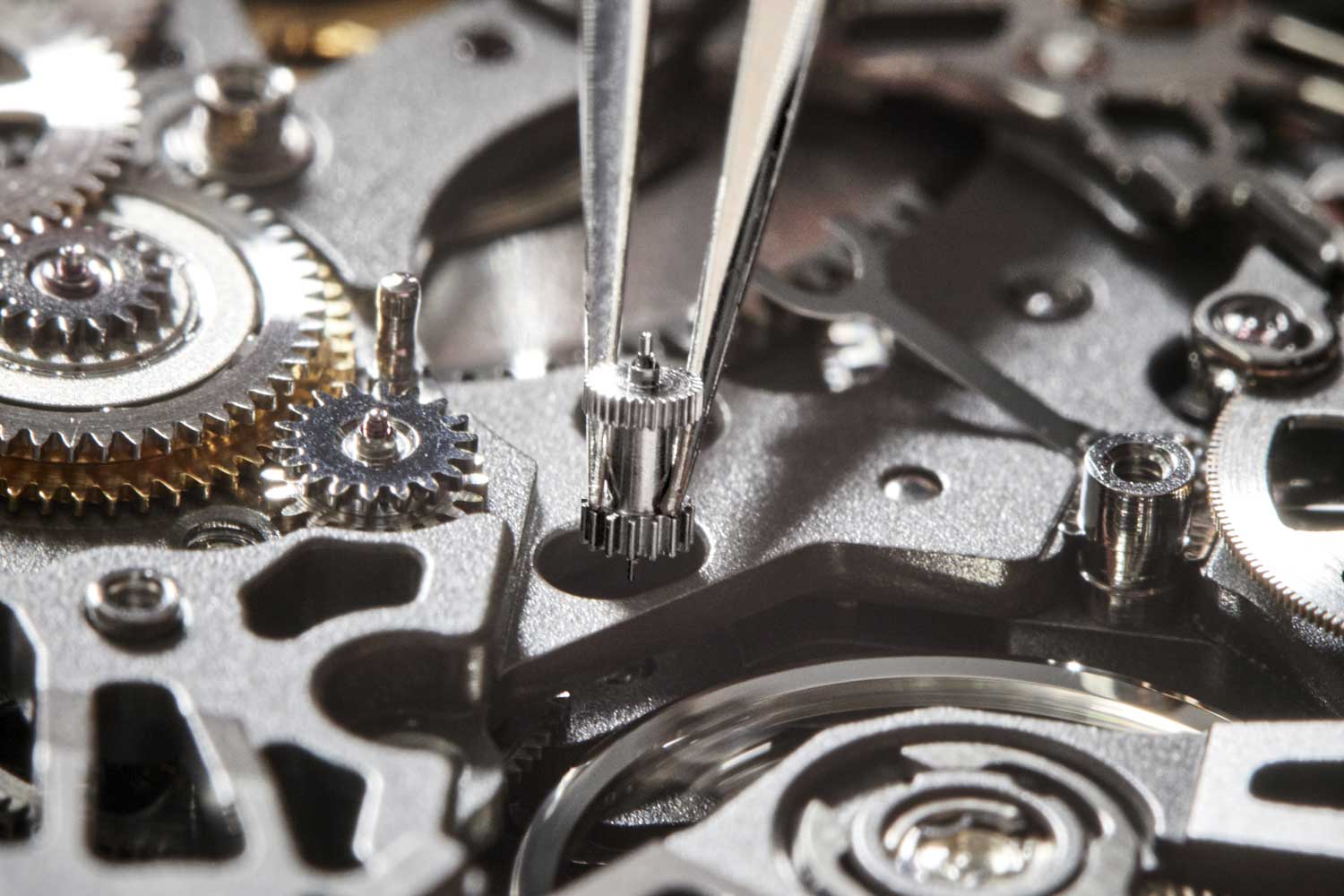
His most consequential technical contribution was the oscillating pinion, patented in 1887. The oscillating pinion is the part that engages and disengages the chronograph seconds wheel from the running gear train when the start/stop pusher is pressed. Before the oscillating pinion, chronograph engagement was done with a horizontal coupling clutch that pushed two wheels together horizontally; this approach was prone to misalignment and required precision setup. Heuer's pinion pivoted at an angle, presenting the gear teeth in a controlled engagement that was far more reliable and cheaper to manufacture. The mechanism is still used today in the Valjoux 7750, the Sellita SW500, and many other modern Swiss chronograph calibres; on a 7750 dial, the chronograph clicks you hear when starting and stopping the timer are still produced by an oscillating pinion of essentially Heuer's 1887 design.
Beyond the technical work, Heuer set the firm's commercial direction toward sport and motor-racing timing. Heuer chronographs were used at the Olympic Games of 1920 (Antwerp), 1924 (Paris), and 1928 (Amsterdam) as official timing equipment, and the firm's dashboard timers, screwed into rally car and aircraft instrument panels, became standard kit through the 1930s-1960s. Edouard died on 15 May 1892 in Bienne, aged just 52, but the sport-timing tradition he set continued unbroken into his sons' and grandsons' tenures.
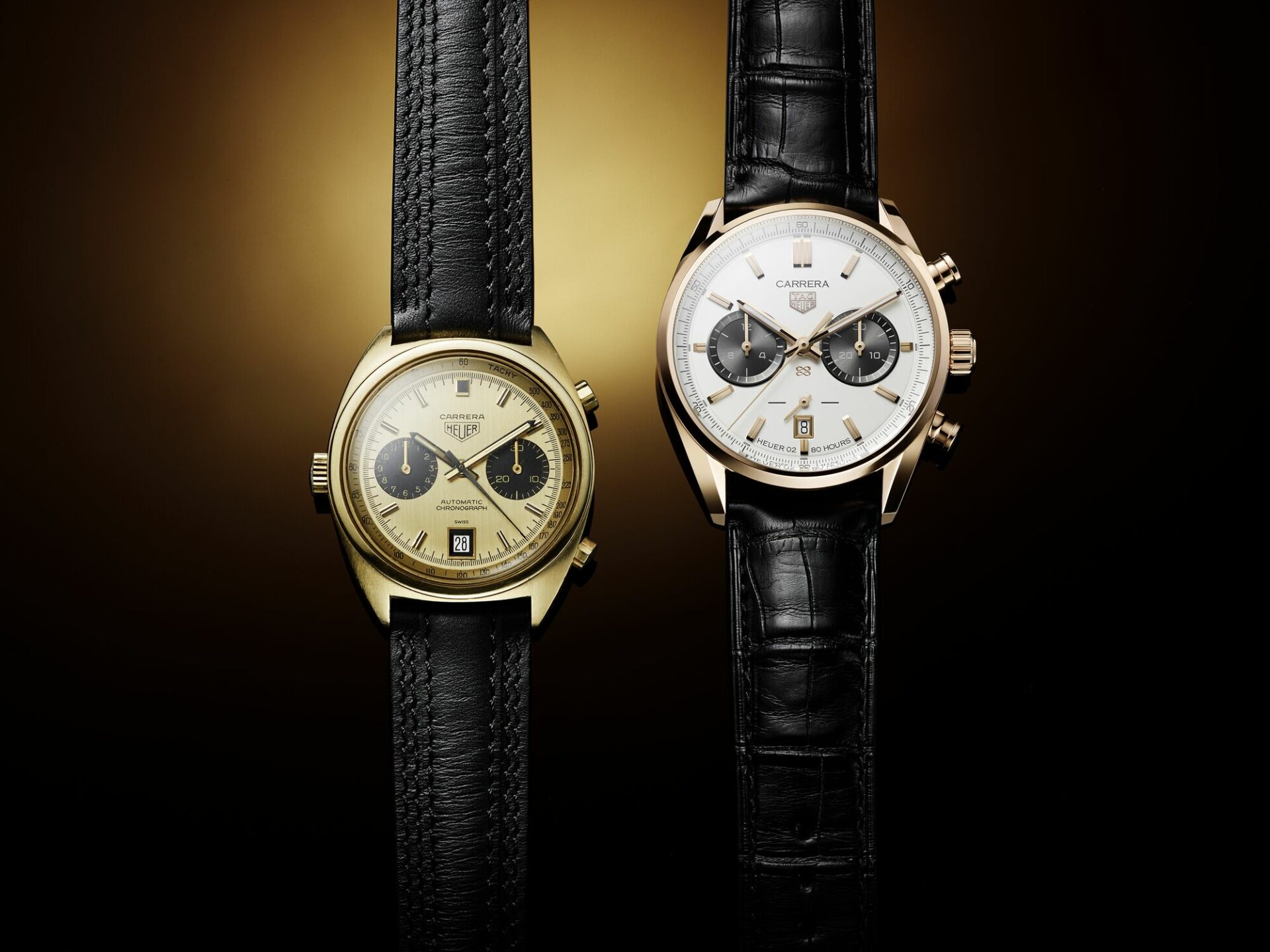
The firm passed through three generations of Heuer family ownership before the quartz crisis of the 1970s nearly killed it. Jack Heuer (Edouard's great-grandson, born 1932) ran the firm during the crisis and produced the iconic Carrera (1963) and Monaco (1969) but was forced to sell to the TAG Group (Techniques d'Avant Garde) in 1985. The renamed TAG Heuer was bought by LVMH in 1999 and is today a flagship of the LVMH watches division.
Edouard's direct legacy on a modern wrist: the oscillating pinion in every Valjoux 7750-powered chronograph (Breitling Navitimer, IWC Pilot Chrono, Sinn 103, Tudor Black Bay Chrono, Hamilton Khaki Chrono, Tissot PRX Chrono, dozens more). The mechanism's design has survived 138 years essentially unchanged because Heuer's 1887 geometry was correct from the first prototype.


Comments 3