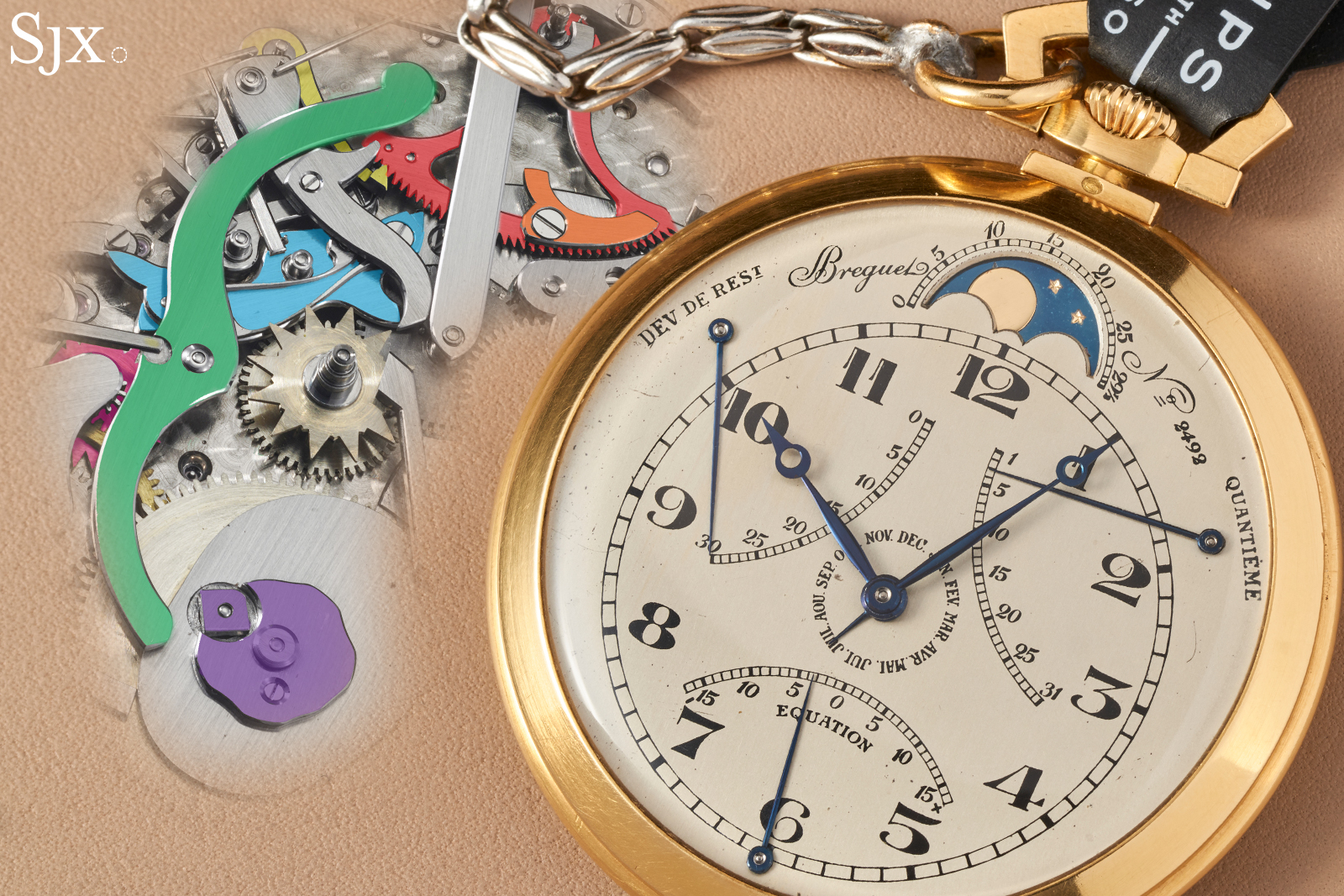
The equation of time is the astronomical phenomenon that true solar noon, the moment the sun crosses the local meridian, varies through the year by up to +16 minutes or -14 minutes from mean solar noon (the average noon shown by every modern clock). The difference is caused by two effects. First, the Earth's elliptical orbit around the sun: in early January Earth is at perihelion (closest to the sun) and moves through space slightly faster than average; in early July at aphelion it moves slightly slower. Second, the tilt of Earth's axis (23.5°): the sun's apparent path along the ecliptic is not aligned with the celestial equator, and the projection onto the equator (which is what we read off a clock) accelerates and decelerates through the year. The combined effect, the equation of time, has zeros at four specific dates each year: around 16 April, 14 June, 1 September, and 25 December.
For most of human history the equation of time was a working concept rather than a complication. Civil time was set by sundials; astronomers and navigators used tables showing the daily difference between sundial time and clock time so they could synchronise. The earliest mechanical equation of time mechanisms appeared on marine clocks around 1717 (Edward Cockburn) and 1720 (George Graham), driven by a kidney-shaped cam (the cam profile is the equation curve over the year) that pushed a small hand back and forth across a scale. The mechanism was useful at sea, where a marine chronometer ran on mean time but a noon-sun observation gave solar time; comparing the two via the equation of time scale gave a longitude check.
"The equation of time is the moment a watch reminds you that the sun does not keep our schedule. Twenty-five December: the sun is exactly on time. Three days later, it is already running ahead."- Patek Philippe brand brochure on the Caliber 38-72 EoT mechanism
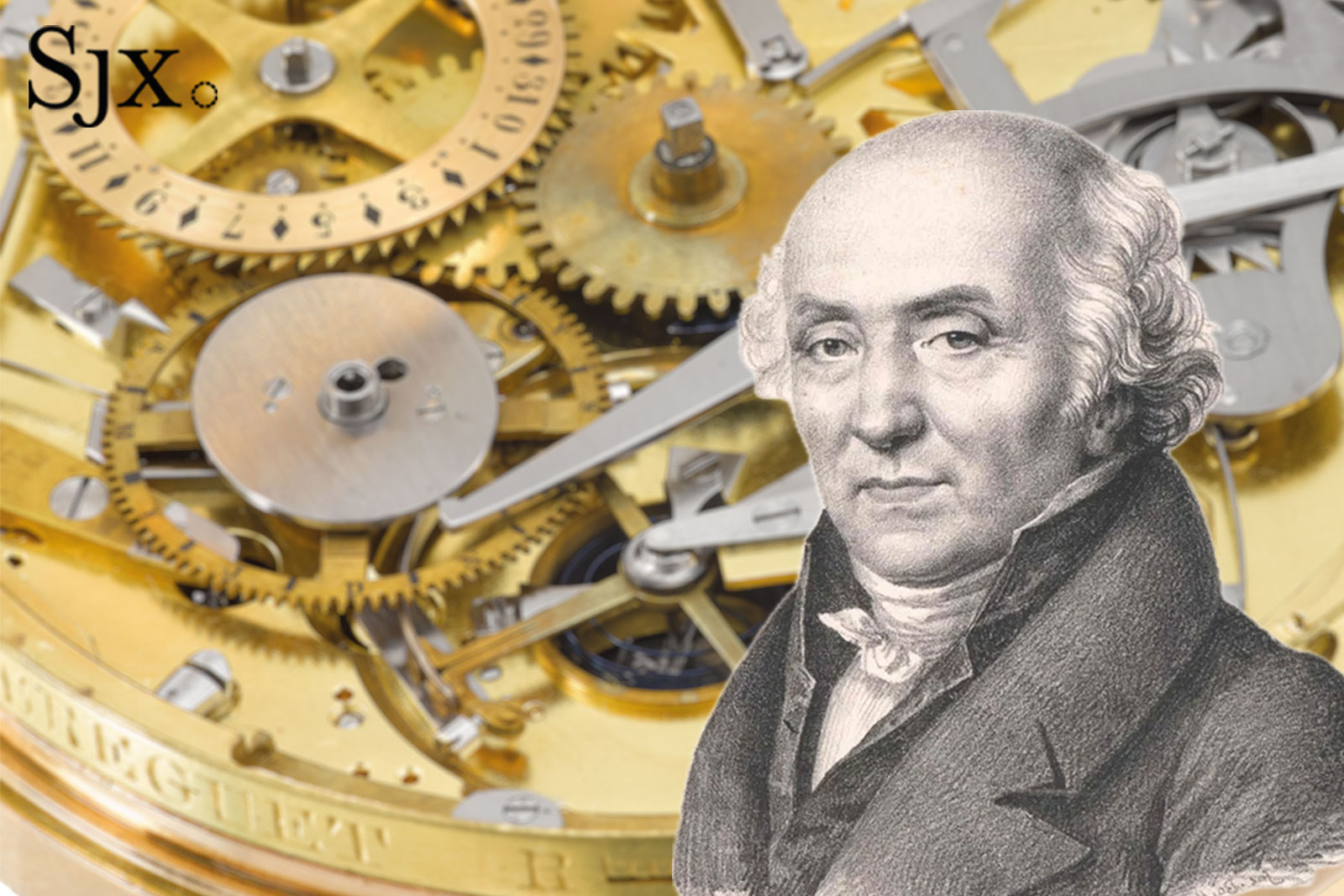
On wristwatches the equation of time appeared first on Breguet pocket watches and the famous No. 160 "Marie Antoinette" (commissioned 1783, completed 1827), which integrated an equation cam with the perpetual calendar mechanism. Patek Philippe applied it to a wristwatch for the first time in 1941 in the Calatrava ref. 1518 (perpetual calendar with chronograph) followed by the ref. 5016 grand complication. The standard implementation became a small sub-dial with a hand pointing left or right of zero, marked in minutes from -15 to +15.
There are two distinct display variants. The "running" equation of time (in French, "équation marchante") uses a separate hand on the main dial that runs continuously offset from the regular minute hand by the daily equation value; one hand reads mean time, the other solar time, and you read each directly. The running version is mechanically demanding (it requires a continuously moving differential geared to the kidney cam) and rare; Blancpain's "Équation du Temps Marchante" (2004) and Breguet's ref. 3477 are the modern references. The more common implementation is the "sector" equation of time: a sub-dial with a hand pointing to the day's offset against a -15/+15 minute scale.
Modern equation-of-time complications are nearly always paired with a perpetual calendar; the same kidney cam is geared to the date wheel that already exists in the perpetual mechanism. Major modern references include the Patek Philippe ref. 5016 (1996, minute repeater + tourbillon + perpetual + retrograde + EoT), the Patek ref. 5396 (annual calendar + EoT, 2007), the Audemars Piguet Royal Oak Equation of Time (2003), the Jaeger-LeCoultre Master Grande Tradition Tourbillon Cylindrique, the Vacheron Constantin Patrimony Equation Marchante, and Blancpain's Carrousel Tourbillon Equation. Production is in the dozens to low hundreds per year per reference; the equation of time is exclusively a high-complication piece.
In practical use the equation of time has no modern function. Civil time is mean solar time by international convention; the world runs on it. The complication's purpose today is romantic and educational: it makes the geometry of the solar system visible on the wrist. The kidney cam (called the analemma when plotted on a graph) is one of the few mechanical complications whose existence is justified almost entirely by aesthetics, and the watch literature's sentimental treatment of it reflects that. Andreas Strehler's ultra-precise equation cam, hand-cut to the third decimal of a minute, is widely cited as the most accurate equation of time mechanism in modern watchmaking; it appears on Maîtres du Temps and a small number of haute-horlogerie commissions.




Comments 1