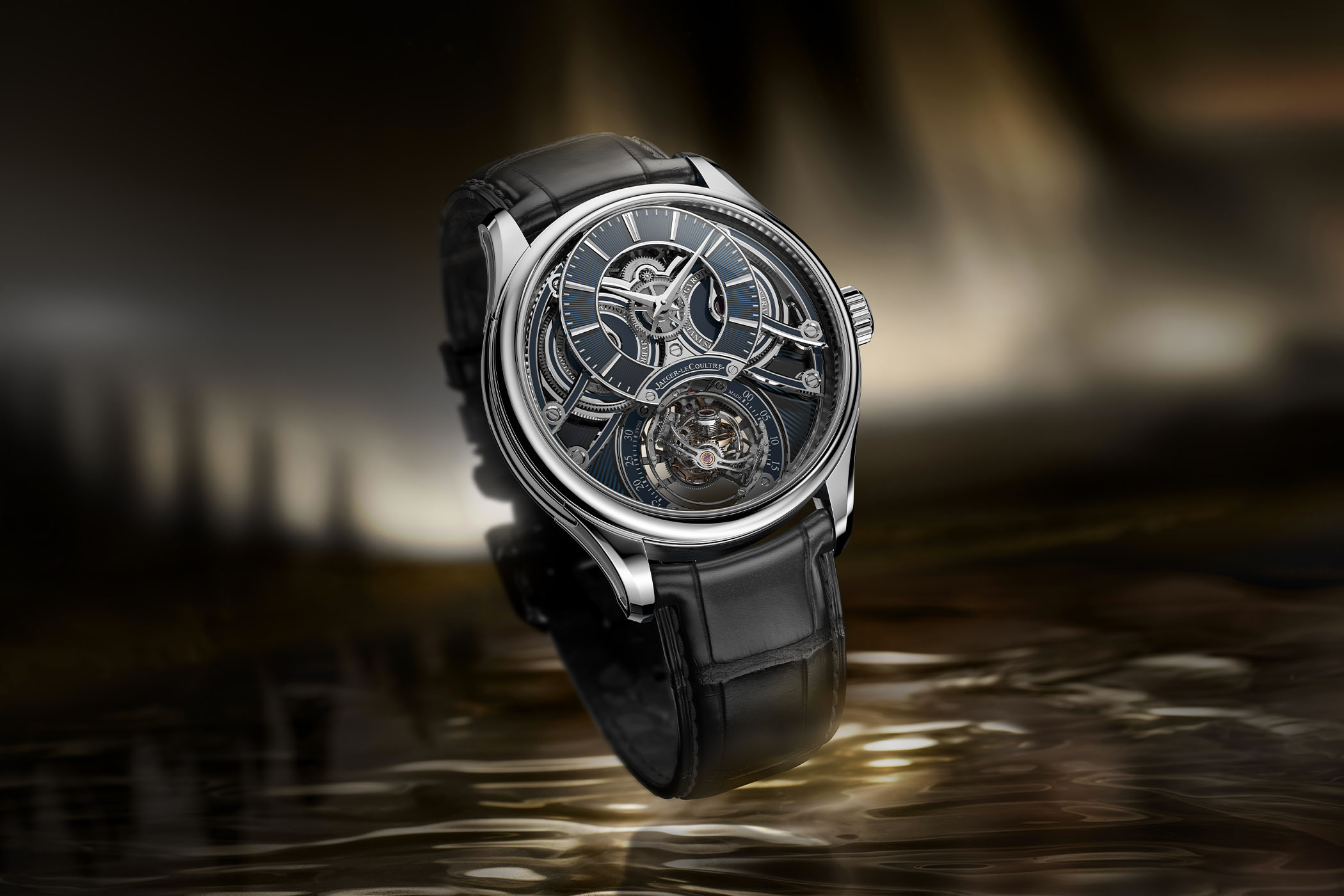
A jewel bearing is the most counter-intuitive part of a mechanical watch: a precision bearing made out of gemstone. The steel pivot at the end of each rotating wheel in the going train turns inside a hole drilled through a tiny disc of synthetic ruby or sapphire. Without these jewels, the soft steel pivot would dig into the brass or steel of the bridge plate within a few months of wear; with them, the same pivot can run for fifty years on a single service.
Why corundum? Corundum (the mineral family that includes ruby and sapphire) has a Mohs hardness of 9, beaten only by diamond. Its coefficient of friction against polished steel is roughly half that of steel-on-steel, and a tenth that of steel-on-brass. It is also chemically inert: it does not oxidise, does not corrode, and holds watch oil in its polished hole through capillary action, so the lubricant stays where it is needed. Steel bearings would need re-oiling every few months; jewel bearings keep their oil film for five to ten years.
How a jewel bearing is made. Since 1902, watch jewels have been entirely synthetic, grown using the Verneuil flame-fusion process: a flame melts a fine stream of alumina powder (aluminium oxide), which crystallises into a single corundum boule. The boule is then sliced, ground, drilled, and polished into the final bearing shape. A modern watch jewel is around 1.5 to 2 mm across and 0.2 to 0.3 mm thick; the central hole is sized to within a few microns of the pivot diameter.
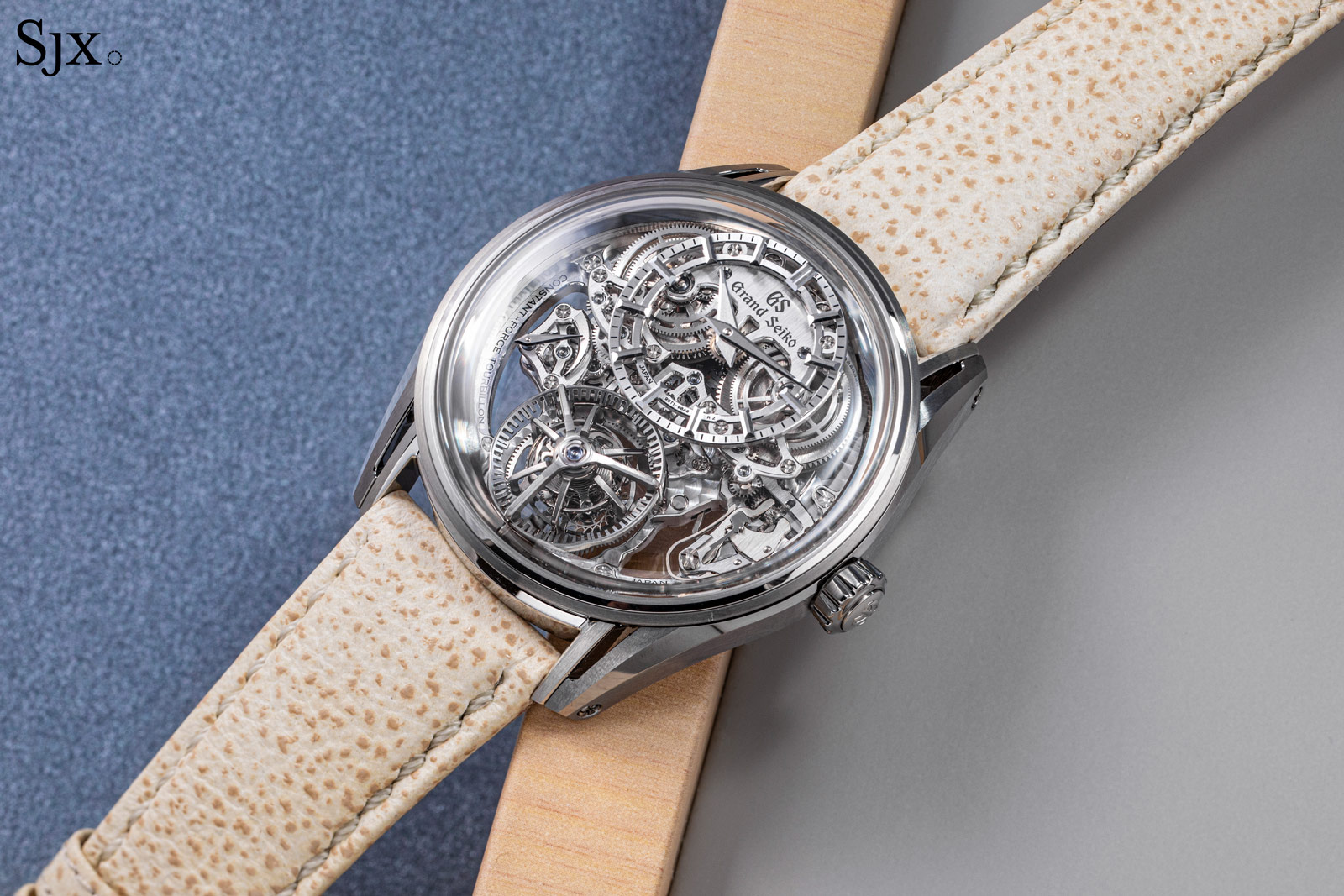
Where jewels sit in a movement. A standard mechanical watch has jewels at every pivot in the going train: the two pivots of each train wheel (8 jewels for the four-wheel train), the balance wheel (2 pivots + 2 impulse-jewel cap stones + 1 roller jewel = 5), the pallet lever (2 pivots + 2 pallet stones = 4), the escape wheel (2). That is the classic 17-jewel hand-wound movement. An automatic adds bearings for the rotor and the winding train (typically 8 more), bringing the total to 25-31. A chronograph adds 6-12 more for the chrono module; a perpetual calendar adds 4-6 for the calendar plate.
Jewel count and marketing. The "23 jewels" or "31 jewels" engraving on a movement is a holdover from a 1960s American/Japanese marketing era when manufacturers competed on raw jewel numbers. The current ISO 1112 standard defines what counts as a functional jewel; counts above ~25 reflect complication count rather than base quality. A 17-jewel hand-wound ETA will keep time as well as a 31-jewel competitor of the same era. The number is a useful proxy for movement complication (a 44-jewel watch almost certainly has a chronograph or QP) but a poor proxy for accuracy or longevity.
Modern alternatives. A few brands experiment with non-corundum bearings: silicon (Patek Pulsomax escape wheel and pallet fork) and DLC-coated steel (Audemars Piguet) sometimes replace jewels at specific positions. None has displaced the basic corundum jewel as the wear-surface of choice for the going train. A two-pound machine running for five years on twenty microns of oil at the pivot tip is still corundum's job, and it has been since George I's reign in 1714.


Comments 1