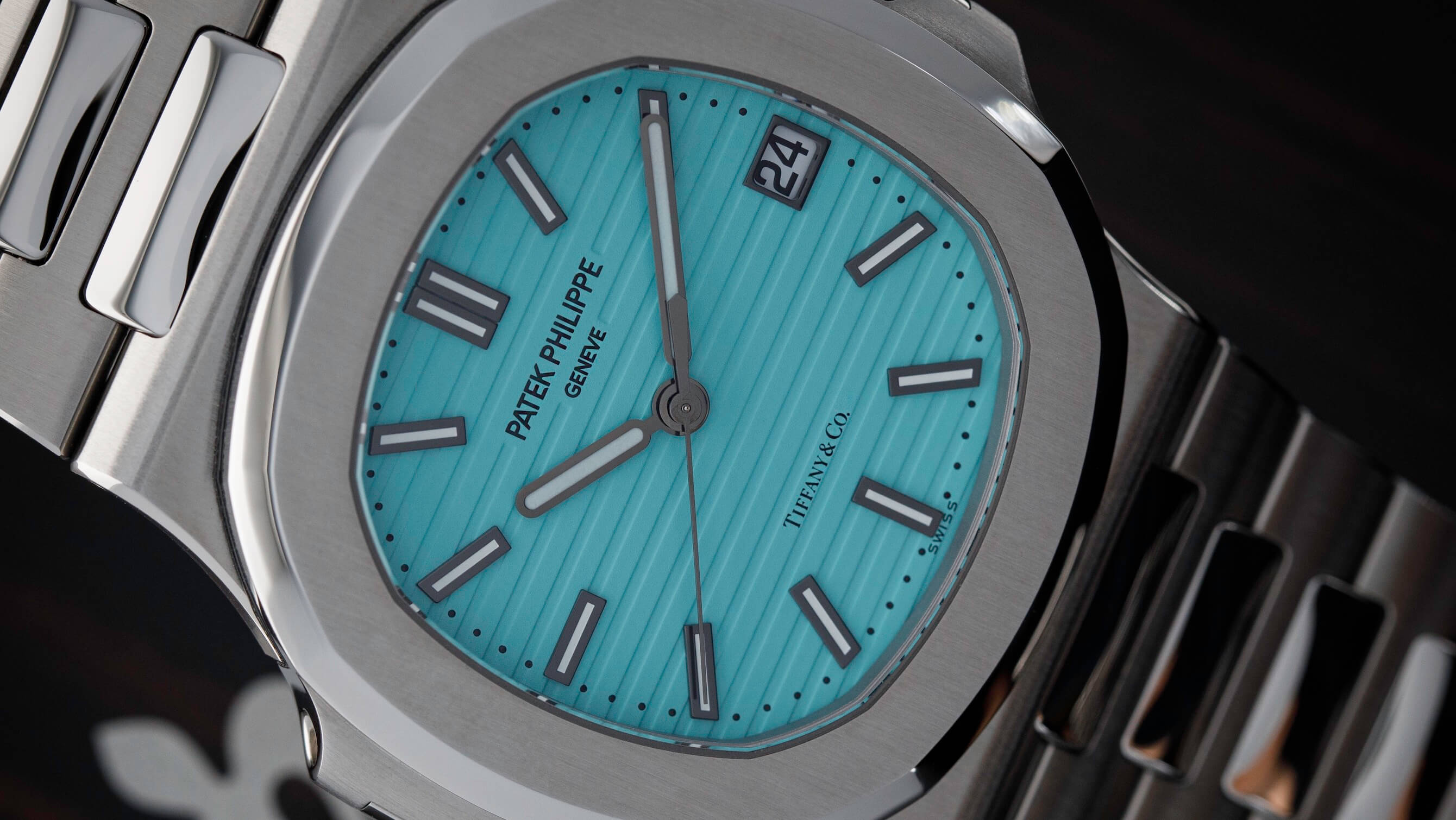
Tiffany & Co. opened its New York store on Broadway in 1837 and began retailing fine watches almost immediately, building relationships with the leading European manufactures of the era. The most consequential partnership was struck in 1851, when Tiffany became the exclusive American retailer for Patek Philippe, a relationship that has continued unbroken for more than 170 years. Under the partnership, Patek supplied blank dials to Tiffany's New York store, and Tiffany applied its own co-signature alongside the Patek Philippe logo before the watch was sold to the customer. The same arrangement extended to Rolex, Audemars Piguet, Jaeger-LeCoultre, Cartier, Hamilton, and a handful of others through the 20th century.
Vintage Patek Calatrava, Nautilus, perpetual calendar, and Reference 2499 watches with Tiffany stamps are the most highly prized of the entire Tiffany corpus. The Patek 2499 "Tiffany" is a benchmark grail: a perpetual-calendar chronograph with the Tiffany dial signature, of which only a small number were sold through Tiffany over the 1950-85 production run. Auction prices for clean examples regularly cross $1 million, and the rarest cross $2-3 million. Standard signed-Tiffany Patek dress watches (Calatrava 96 Tiffany, ladies references, etc.) trade at 2-3x the equivalent un-stamped Patek price.
"Tiffany & Co. is the only retailer in the world whose name on a Patek Philippe dial reliably adds value at auction. Every other co-signed retailer has mostly been forgotten. Tiffany has not."- Aurel Bacs, Phillips Watches Geneva sale-room comment
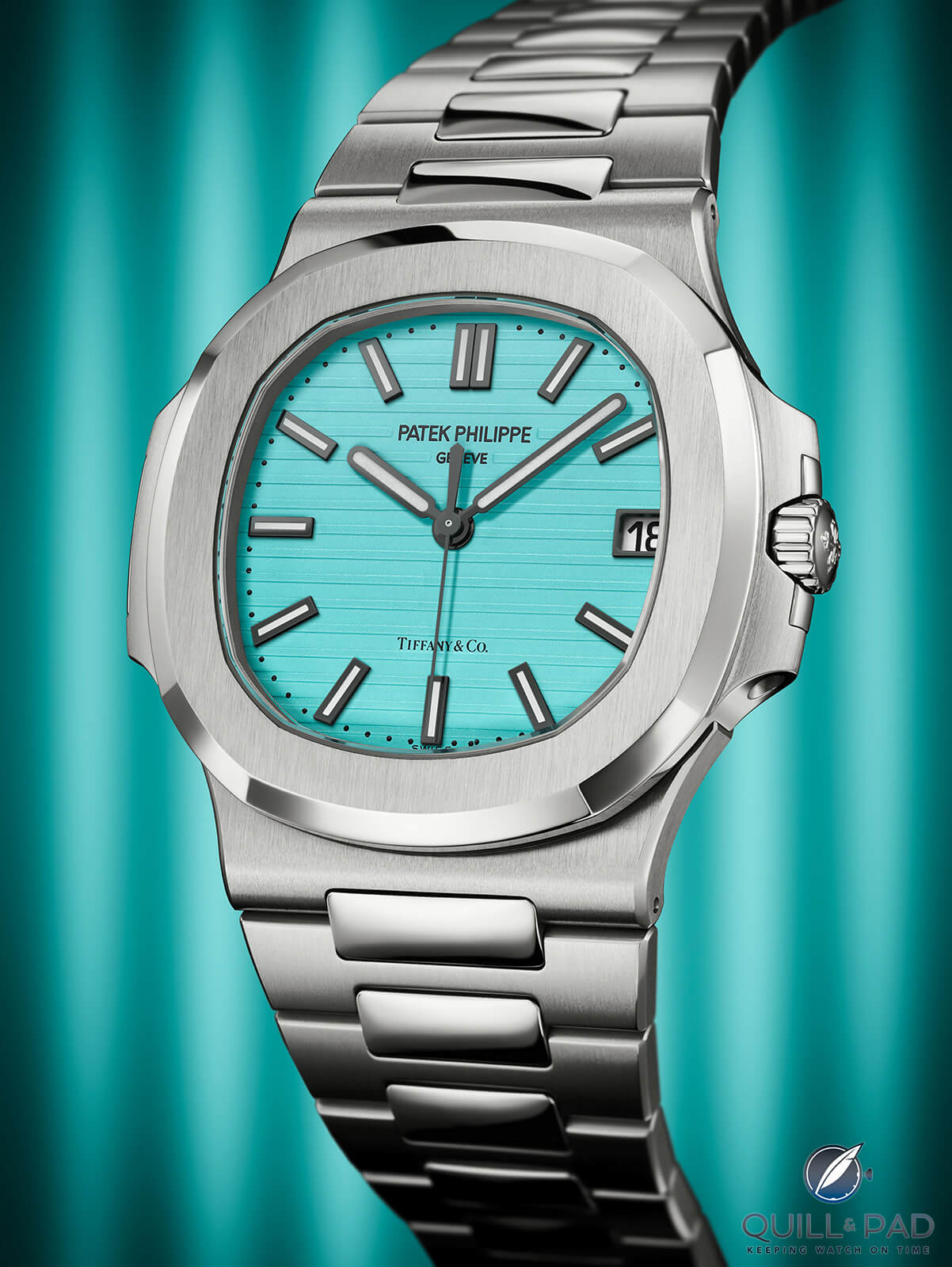
In December 2021, Patek Philippe and Tiffany announced the Nautilus ref. 5711/1A-018 "Tiffany Blue", a 170th-anniversary collaboration limited to 170 pieces, with Tiffany's signature robin's-egg blue ("Tiffany Blue") dial co-signed Patek Philippe and Tiffany & Co. Retail price was approximately $52,635. The 169th example sold at Phillips Watches in New York on 11 December 2021 for $6.5 million, the highest-ever auction price for any modern Patek Philippe and the moment that defined peak Tiffany-stamped collector mania. The watch came onto the market right at the apex of the 2017-2022 vintage market boom, and the result is widely viewed as the symbolic peak of the era.
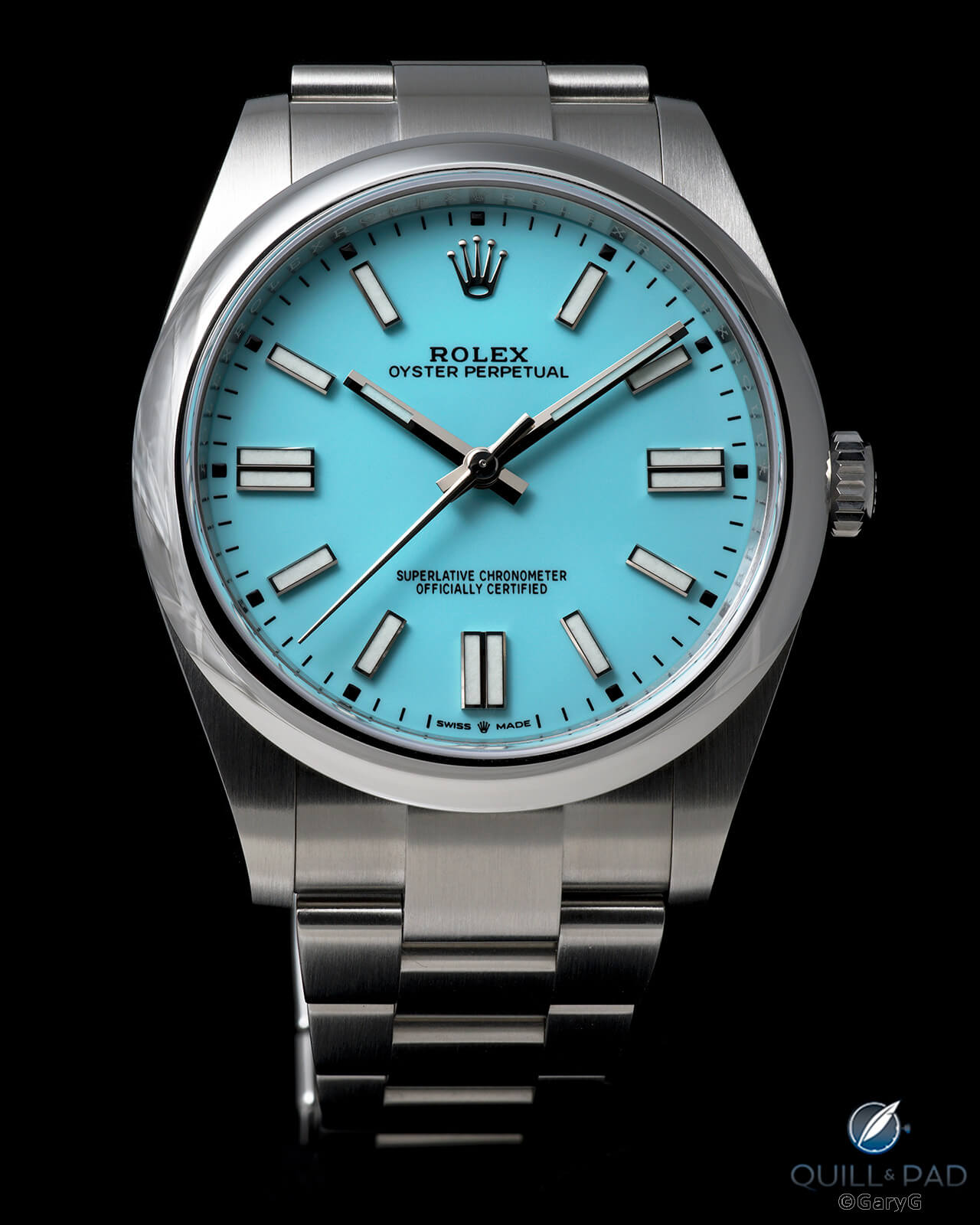
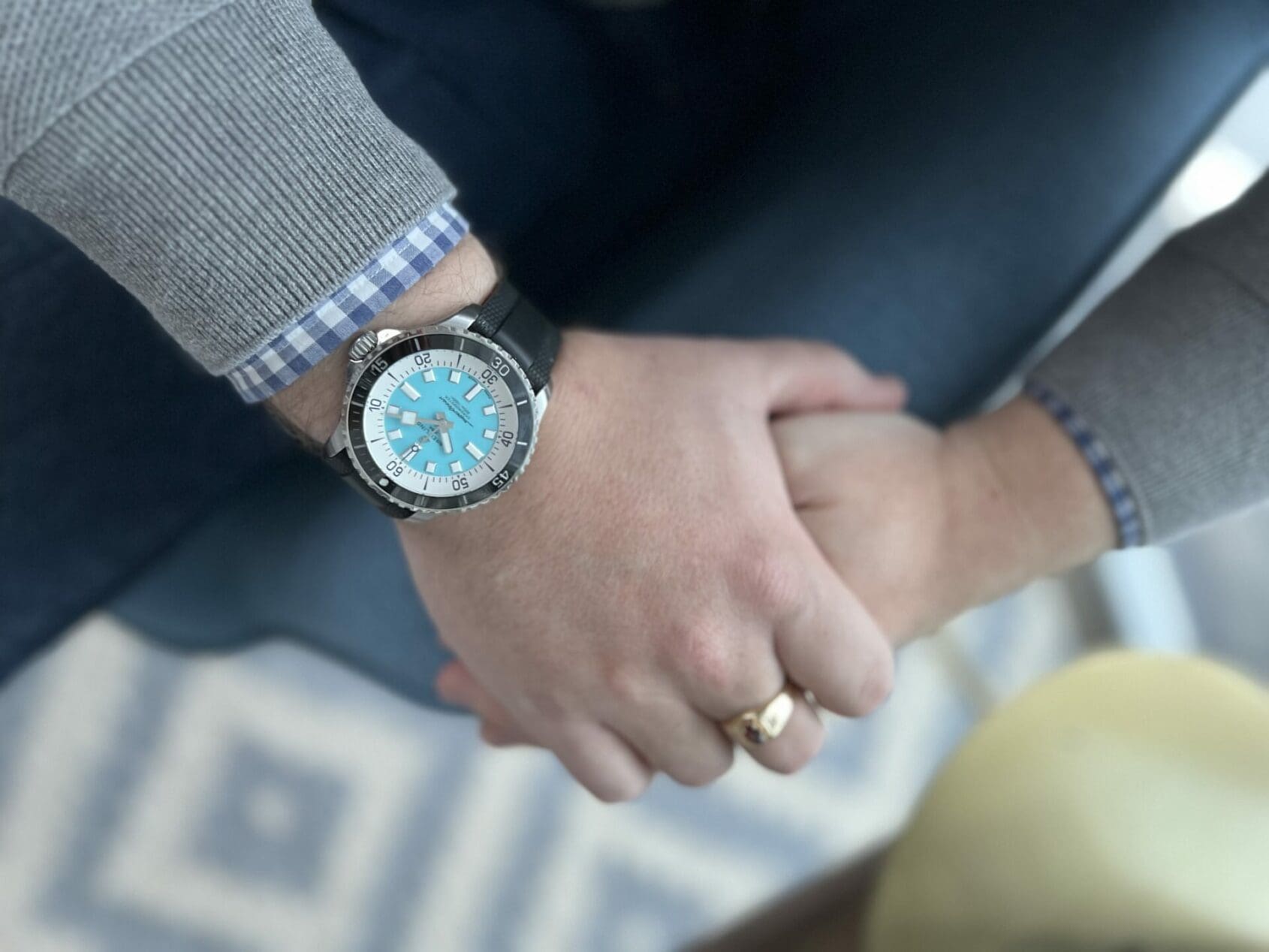
The Tiffany retail partnership extended well beyond Patek. Rolex watches with Tiffany dial signatures were sold from the 1960s through the early 2000s, when Rolex tightened distribution and ended the third-party dial-co-signature programme. Tiffany-stamped Datejusts, Daytonas, Submariners, and Day-Dates trade at significant premiums today; a Tiffany-dial Daytona ref. 16520 is one of the most sought after of any modern Rolex. Tiffany-signed Audemars Piguet, Jaeger-LeCoultre, Cartier, and Hamilton watches also exist, generally at lower premiums than the Patek and Rolex equivalents but still well above the standard reference price. The Aquanaut 5168G "Tiffany Blue" (a 2022 follow-up) and various boutique-only modern collaborations have continued the partnership in the post-Nautilus 5711 era.
The Tiffany dial signature is straightforward to fake (a competent dial restorer can paint TIFFANY & CO. onto any blank Patek dial), so authentication is essential before purchase. Patek Philippe extracts of archives (the formal certificate Patek issues confirming the original sale) are the gold-standard authentication: a Tiffany-signed Patek without an extract listing the sale through Tiffany is treated with significant scepticism at major auctions. For Rolex and other manufactures without a formal archive system, dial-finishing forensics (paint type, font, kerning, age-appropriate luminous patina) are the practical authentication path, plus historical sales records from Tiffany itself where available. The market premium on a confirmed-authentic Tiffany stamp is so large that the authentication question is the single most consequential due-diligence step before any major purchase.






Comments 1