A mainspring barrel is the cylindrical container holding the wound mainspring; its size determines the energy storage capacity and therefore the watch's power reserve. A standard wristwatch barrel is roughly 10-12mm diameter and 2-3mm tall; the spring stored inside delivers approximately 40-72 hours of running time at the consumption rate of a typical 4 Hz automatic movement. To extend the power reserve significantly, the watchmaker must either increase barrel size (limited by case thickness), reduce energy consumption (limited by escapement design), or use multiple barrels.
A twin-barrel architecture places two barrels in the movement: either in series (the second barrel rewinds when the first is depleted) or in parallel (both barrels drain simultaneously, doubling the available energy). Series architecture is harder to engineer (requires a clutch system to switch barrels) but more efficient (constant torque to escapement); parallel architecture is simpler (both barrels drive the same gear) but produces falling torque as barrels deplete. Most twin-barrel watches use parallel architecture; the falling-torque issue is mitigated by remontoir mechanisms on top-tier examples.
"One barrel runs three days. Two run a week. Three run a month. Eleven run two months and you need a Ferrari."- Watchmaker on multi-barrel power-reserve architecture
The most-cited modern twin-barrel watches are the Panerai hand-wound calibres: Cal. P.5000 (8-day power reserve) in the modern Luminor Marina; Cal. P.2002 (8-day with GMT) in higher-spec Luminors. IWC's Cal. 51011 (in the modern Big Pilot 7-day) uses a twin-barrel architecture combined with Pellaton automatic winding; the result is a 168-hour (7-day) power reserve with automatic winding (uncommon for long-reserve watches; most are hand-wound).
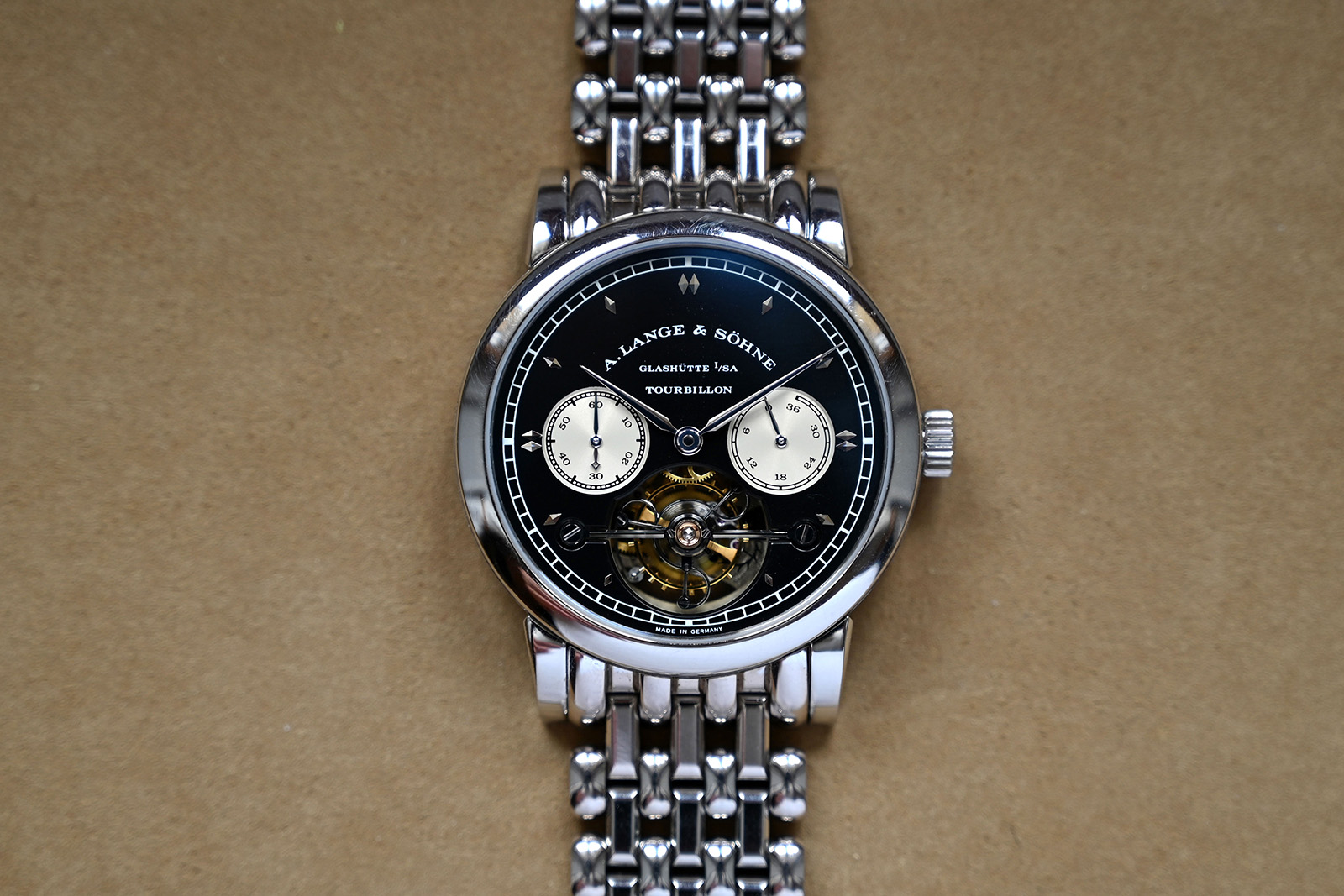
A triple-barrel architecture adds a third barrel for proportionally longer reserve. The reference example is the A. Lange & Söhne Lange 31 (Cal. L034.1, 2007), with three barrels delivering a 31-day power reserve. The Lange 31 also incorporates a constant-force mechanism (the long power reserve combined with conventional escapement would otherwise produce significant rate variation across the 31 days; the constant-force keeps rate stable). Winding the Lange 31 via the conventional crown takes ~120 turns; the watch ships with a special "winding key" that uses a torque ratchet to rewind from depleted in approximately 6 minutes.
The extreme end of multi-barrel architecture is Hublot's MP-05 LaFerrari (2013, with Ferrari design): 11 mainspring barrels arranged in linear configuration along the movement's length, delivering a 50-day power reserve from full wind. The MP-05 uses a custom electrical winder rather than crown winding; the design is more sculptural-engineering exercise than practical wristwatch. Production was limited to 50 pieces at CHF 300,000+; the watch is the most extreme commercial multi-barrel implementation.
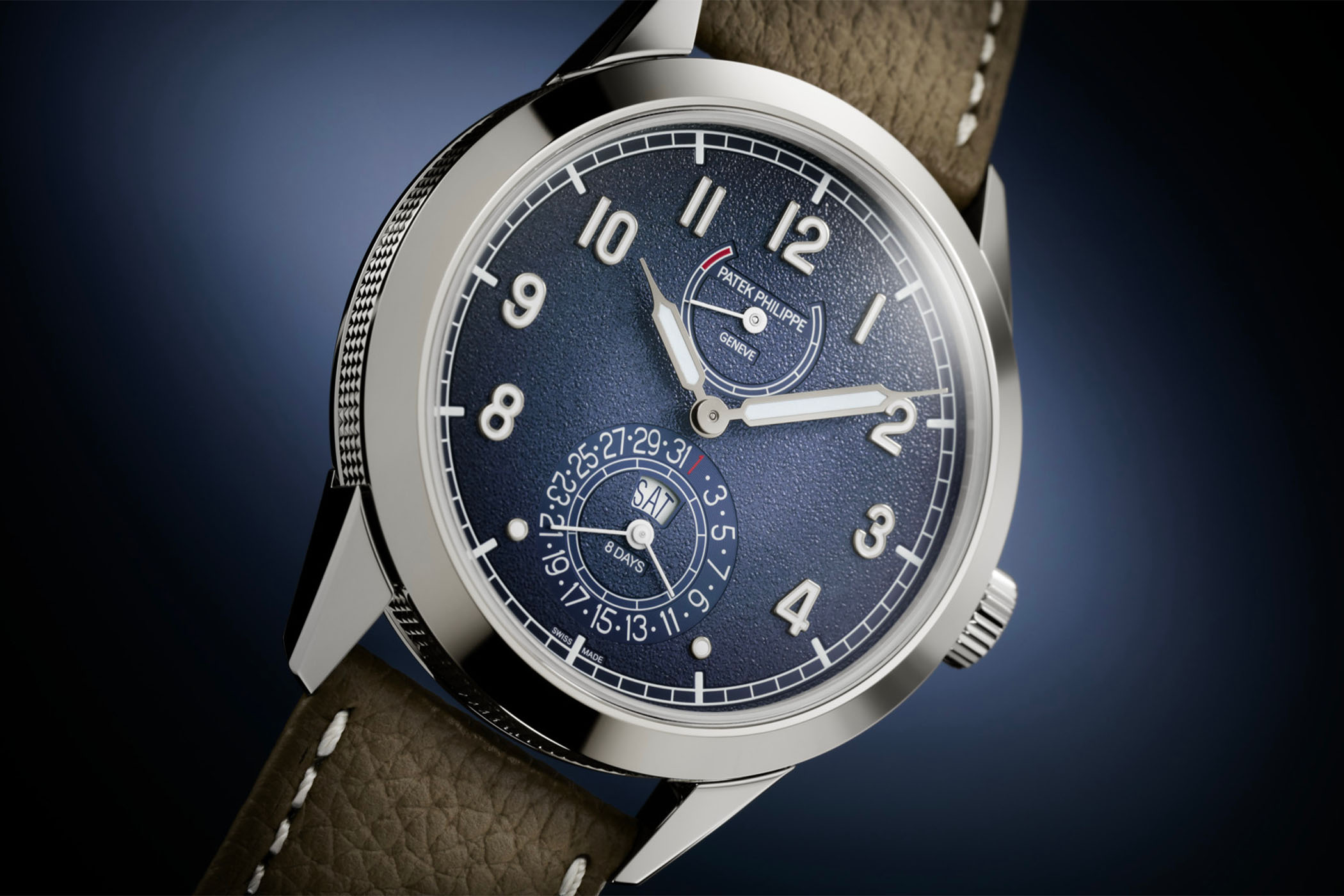
For buyers, multi-barrel architecture is a complication tier signal. Twin-barrel 7-8 day reserves are common across haute-horlogerie hand-wound (Panerai, IWC Big Pilot, various Patek references) and signal premium engineering at CHF 8,000-25,000. Triple-barrel 30-day reserves (Lange 31) sit at CHF 200,000+ as showcase complications. The practical use case is limited: a 7-day watch can sit in a watch box for a week without resetting; a 31-day watch can survive a month in a drawer. Beyond that the reserve becomes engineering art rather than utility.





Comments 1