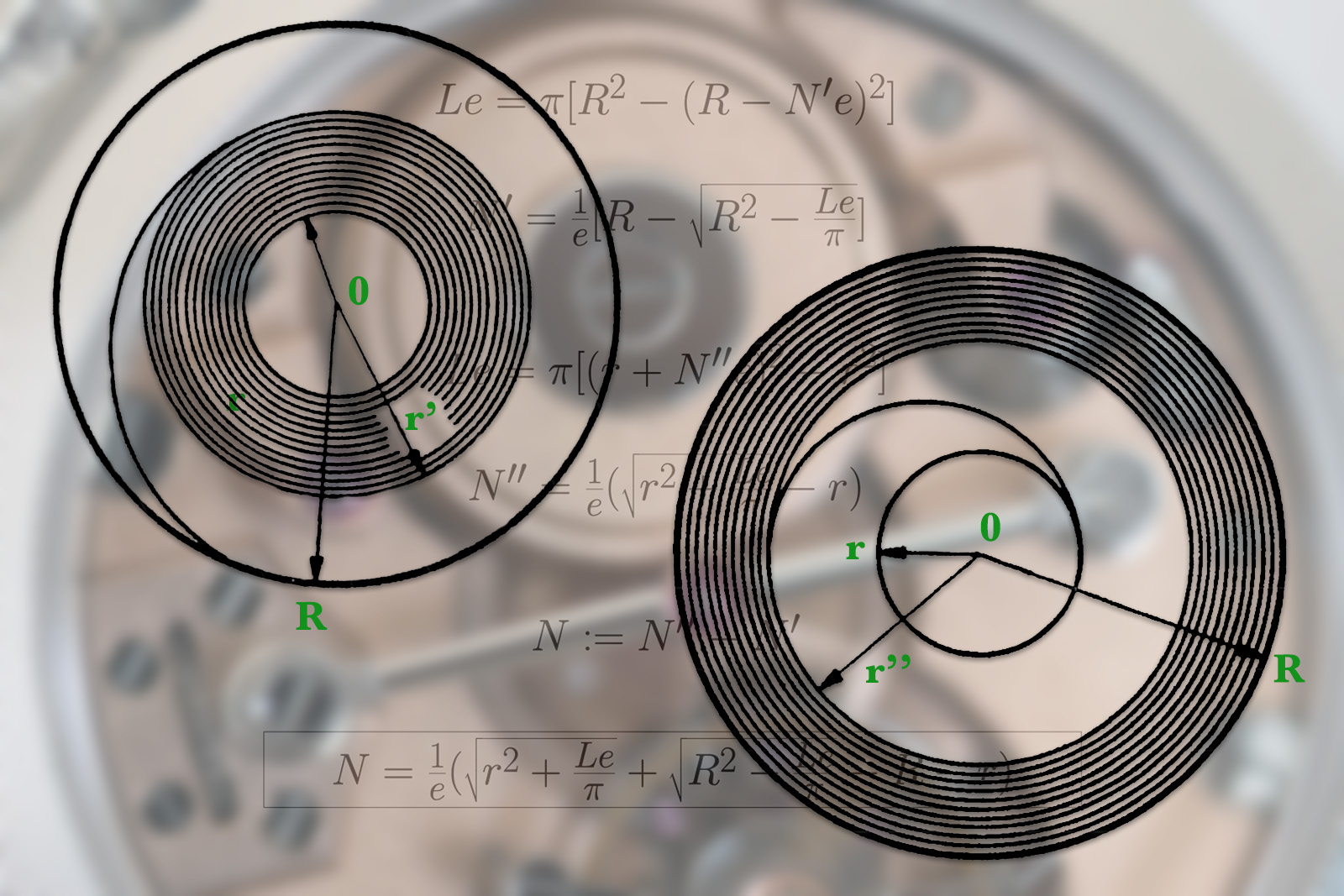
The mainspring, a flat coiled spring housed inside the barrel, is what stores energy in a mechanical watch. Unwound fully, it might be 20 centimetres long; coiled, it fits in a 10-millimetre-diameter barrel. Winding the watch (by hand via the crown, or automatically via a rotor) tightens the spring. As the spring unwinds, its stored energy travels through the wheel train to the escapement, which doses out the energy in discrete ticks to the balance wheel.
The mainspring concept dates to the late 15th century, enabling the first truly portable timepieces (pocket watches) and eventually the wristwatch. Early mainsprings were steel, prone to breakage and to uneven torque across the wind. Modern mainsprings are made from Nivaflex, a cobalt-chromium-nickel alloy patented by Reinhard Straumann (1933) that delivers constant torque across the power reserve and resists breakage. Most Swiss mechanical watches use a Nivaflex or Chromova mainspring supplied by a handful of specialist producers.
Power reserve varies by architecture. A typical wristwatch with a single barrel stores 40 to 48 hours of running time (ETA 2824, Rolex Cal. 3235, Valjoux 7750). Moving to 72 hours typically requires a larger barrel or a longer, thinner mainspring; Rolex's Cal. 3235 family achieves 72 hours with a proprietary long-wound mainspring. For seven-day and longer reserves, most manufacturers use twin or triple barrels: IWC's Portuguese 7-Day, Patek Philippe's Caliber 240 HU C, and Panerai's Cal. P.2002 all use this approach.
The absolute outer edge of mechanical power reserve includes Hublot MP-05 LaFerrari (50 days, 11 barrels in series), the Jaeger-LeCoultre Duomètre Quantième Lunaire (two entirely separate trains with separate mainsprings), and the A. Lange & Söhne Lange 31 (31 days, two mainsprings combined). For perpetual use without winding, automatic winding (Perrelet 1777, Rolex Perpetual 1931) re-tightens the mainspring via wrist motion, making the mainspring-reserve question irrelevant for daily-worn watches.





Comments 3