Caller GMT vs flyer GMT
Two GMT architectures coexist. Caller GMT: the GMT hand jumps independently, hour hand is fixed (good for tracking a faraway timezone, less good for travel). Flyer GMT: the hour hand jumps independently while the GMT hand stays on home time (better for travelers - set the local time without resetting the watch). The Rolex GMT-Master II is a flyer; some picks below are callers. Both are valid; they suit different use-cases.
Top picks for travelers: Tudor BB GMT (Pepsi, flyer), Grand Seiko SBGM221 (caller, but with stunning dial), Longines Spirit Zulu (flyer, COSC, under €4K).
Tudor
79833MN · 41mm · 200m
Editor's Pick ~€4,690
Pepsi GMT, in-house movement, sub-€5K. Sister-brand to Rolex.
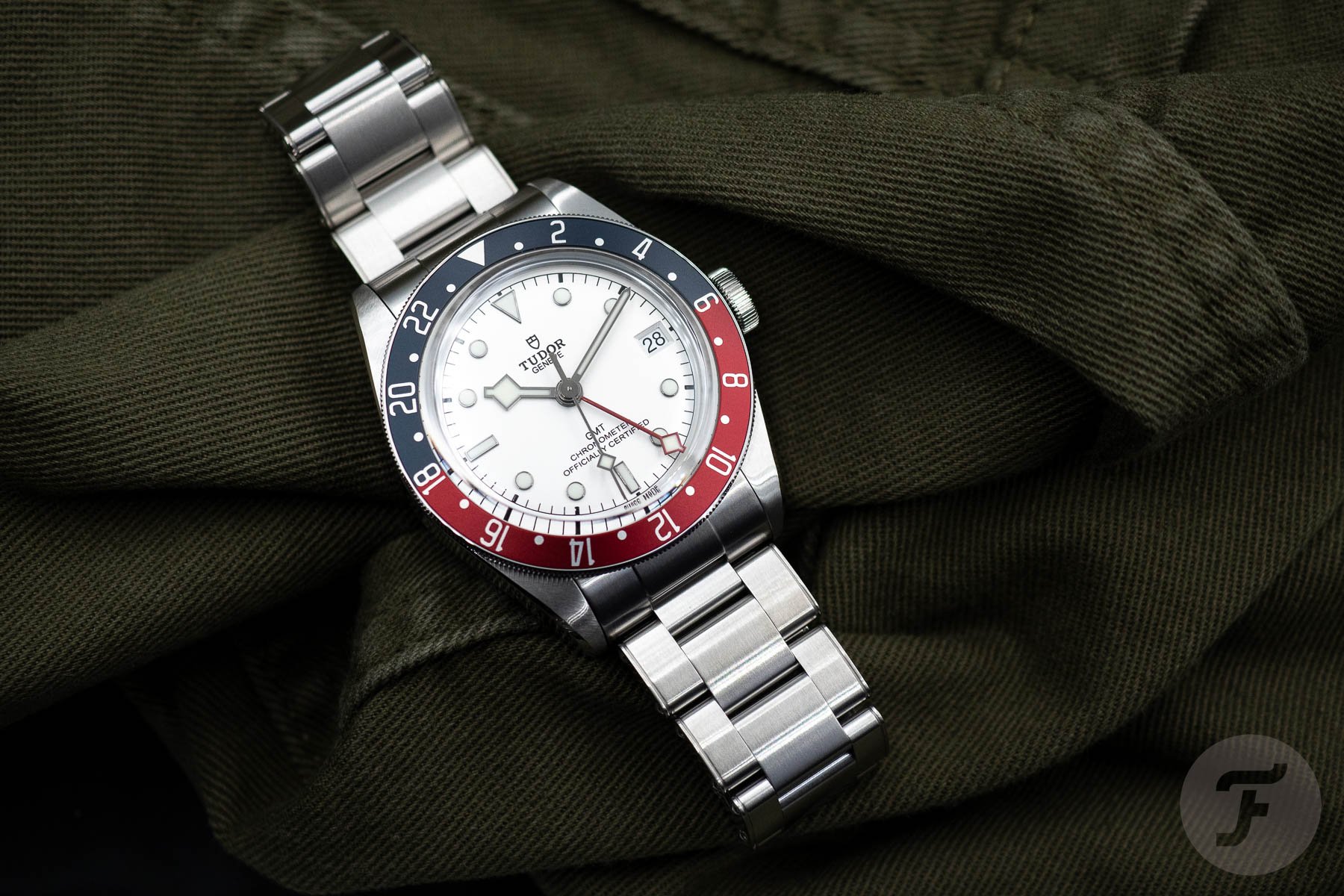
The Tudor Black Bay GMT is the Rolex Pepsi alternative most collectors arrive at. 41mm steel case, burgundy-and-blue ("Pepsi") aluminium bezel, in-house Cal. MT5652 (true flyer GMT, 70h reserve). Identical pricing at MSRP with no waitlist, and sister-brand to Rolex sells the heritage angle. Snowflake hands distinguish it from the Sub.
Tudor
79830RB · 39mm · 200m
Explorer II Style ~€4,650
Tudor's Explorer II-style fixed-bezel GMT, in 39mm.
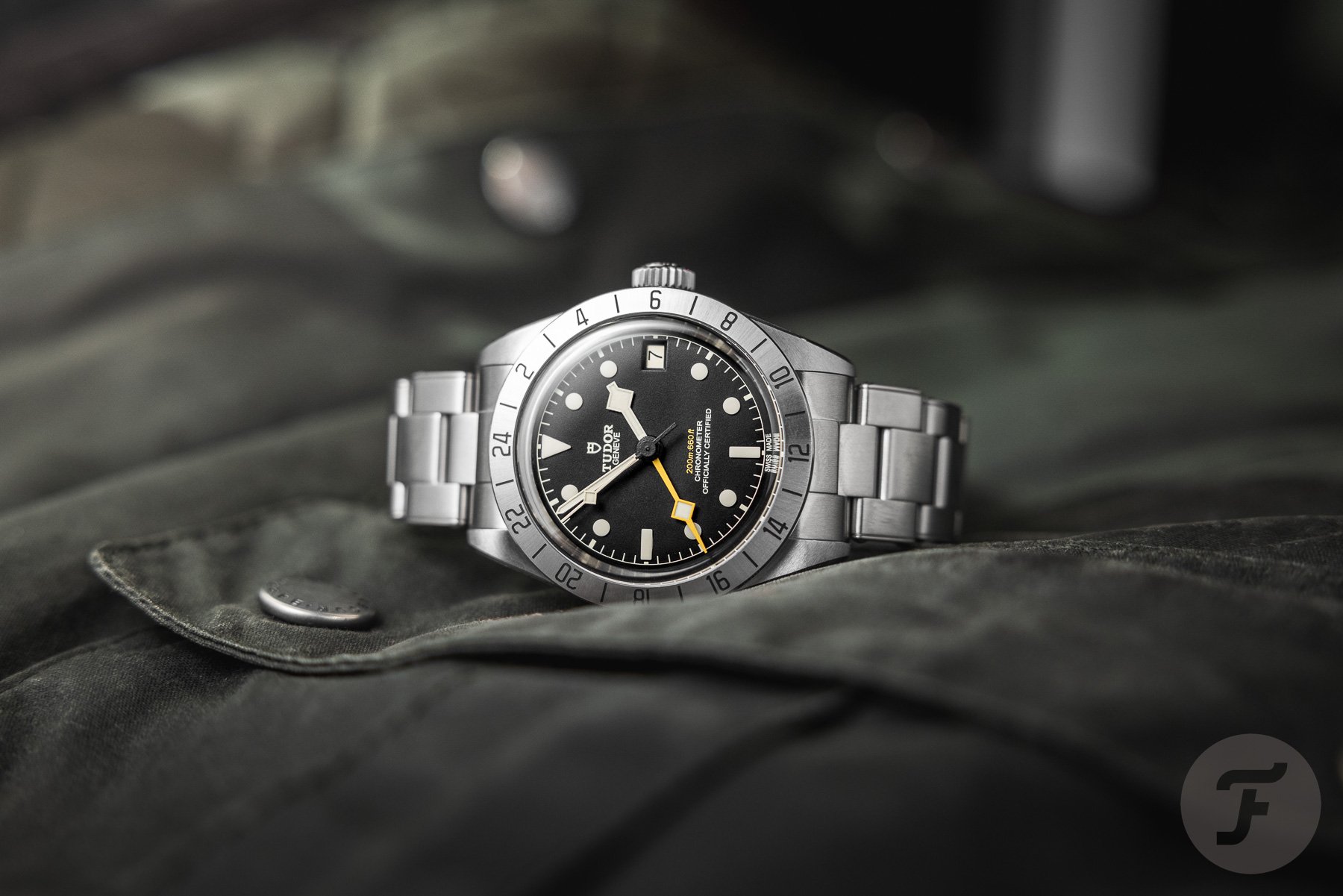
Tudor's BB Pro is the GMT for buyers who want the Rolex Explorer II silhouette. 39mm steel case (smaller than the BB GMT), fixed bezel with white-on-black 24-hour scale, in-house Cal. MT5652. Yellow GMT hand and gilt-on-black 3-6-9 dial. Closer to the Rolex Explorer II than to the GMT-Master.
Grand Seiko
SBGM221 · 39.5mm · 30m
Spring Drive Optional ~€5,500
GS's 39.5mm GMT with the cream “guilloché” dial. Caller GMT.
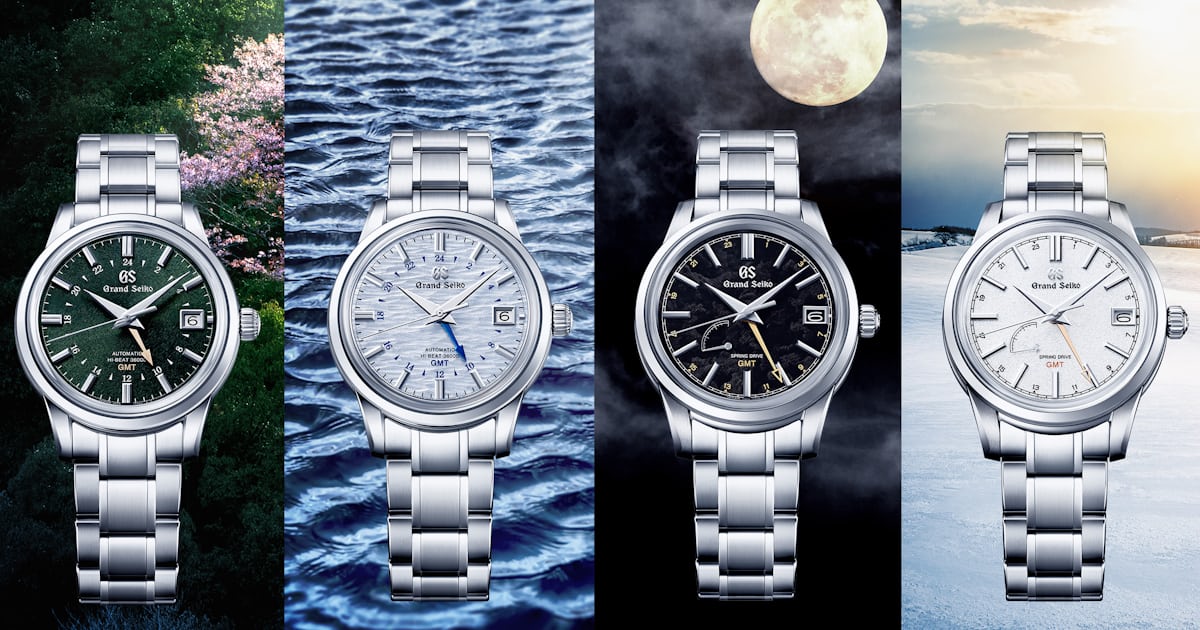
Grand Seiko's SBGM221 is a 39.5mm GMT with the model's signature cream-and-blue dial, applied bumpy “guilloché” texture, and zaratsu-polished case. Cal. 9S66 mechanical (72h reserve, ±15s/day chronometer-grade). Caller GMT (not flyer). The dial finishing is the headline; the GMT is functional but secondary to the visual.
Omega
220.10.43.22.03.001 · 43mm · 150m
~€7,800
Omega's World Timer with a laser-etched globe at 12.

Omega's Aqua Terra Worldtimer puts a laser-etched globe at 12 oclock and a 24-zone city ring around the perimeter. Co-axial Cal. 8938 (60h reserve, METAS Master Chronometer). Different format than the Rolex (true world timer not GMT), but solves the same multi-zone problem with more visual information.
Longines
L3.812 · 39mm · 100m
Value ~€3,560
COSC flyer GMT in 39mm steel, under €3,600.

Longines Spirit Zulu Time 39 is the under-€3,600 flyer GMT for travelers. Cal. L844.4 (modified ETA A31, COSC certified, 72h reserve), 39mm steel case, ceramic 24-hour bezel. The 39mm case sits in the sweet spot between the BB GMT (41mm) and the Spirit Zulu 42 (which exists too).
Mido
M026.629 · 44mm · 200m
Sub-€1500 ~€1,290
Pepsi or Coke GMT under €1,300. Caller GMT.
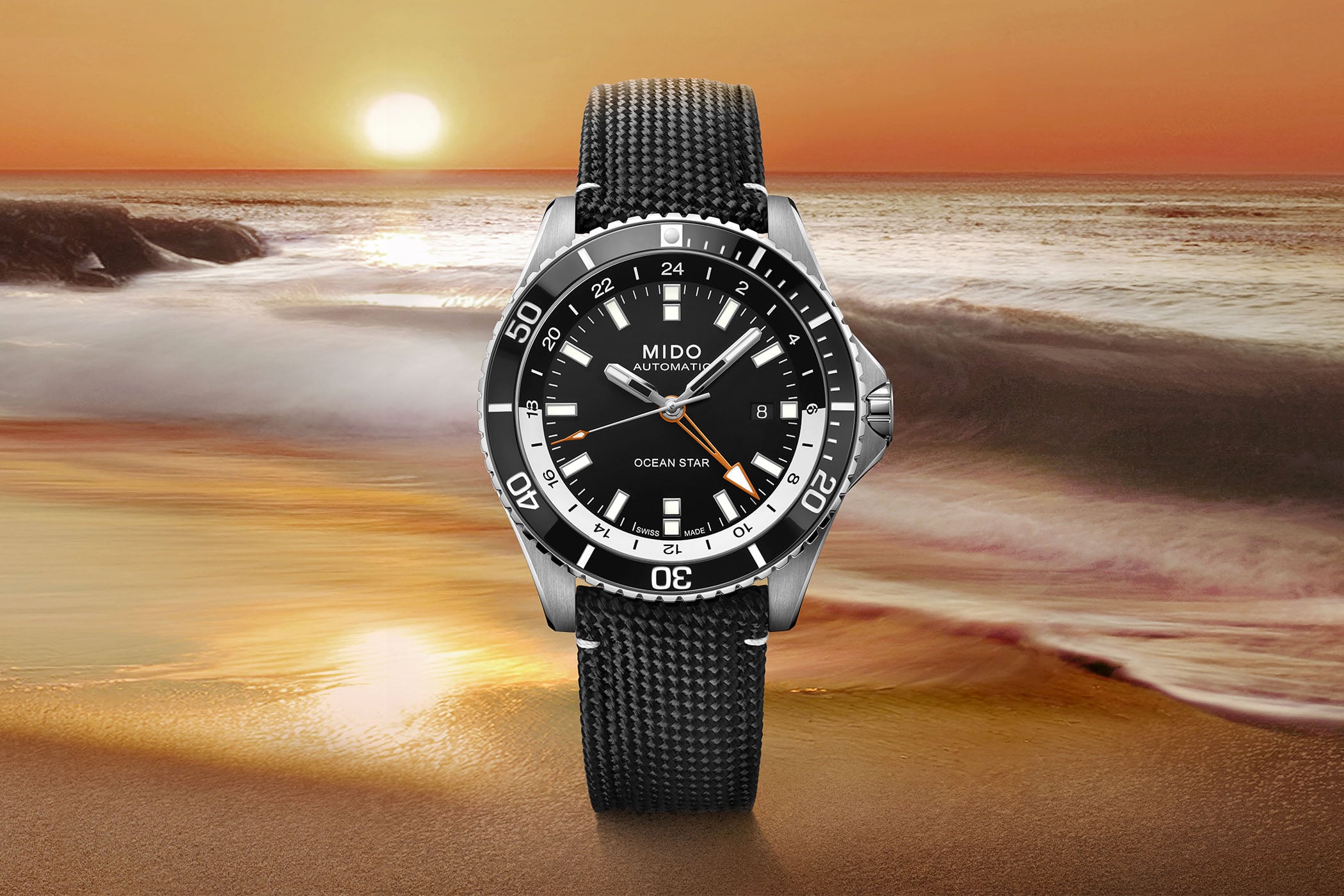
Mido's Ocean Star GMT is the under-€1,300 GMT with full Pepsi or Coke bezel-colour options. Cal. 80 / Powermatic 80 base (80h reserve, silicon balance spring). 44mm case is bigger than most GMTs on this list. Caller GMT (not flyer), but the value-per-feature ratio is hard to beat.
Christopher Ward
C65 GMT · 41mm · 150m
~€1,650
Sellita-powered Pepsi-style GMT with a glow-in-the-dark world map.
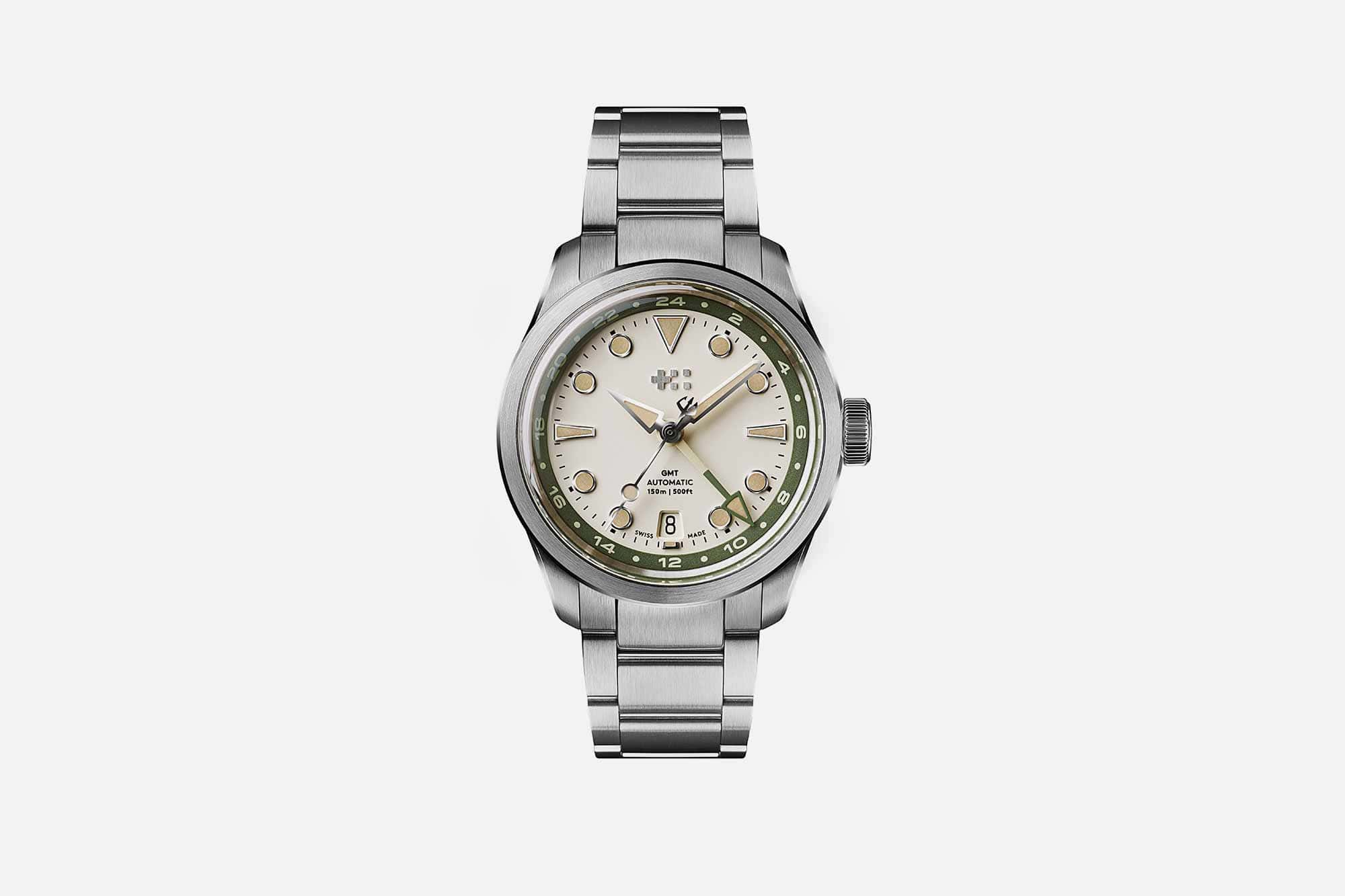
Christopher Ward's C65 GMT Worldglow uses the Sellita SW330-2 GMT movement (caller architecture, 56h reserve) and a luminous world-map dial. 41mm case, sapphire bezel insert, drilled lugs. CW's direct-to-consumer pricing puts the spec well under €2K.
Hamilton
H70345930 · 41mm · 100m
Field Style ~€1,270
Hamilton's field-watch interpretation of a GMT, sub-€1,300.
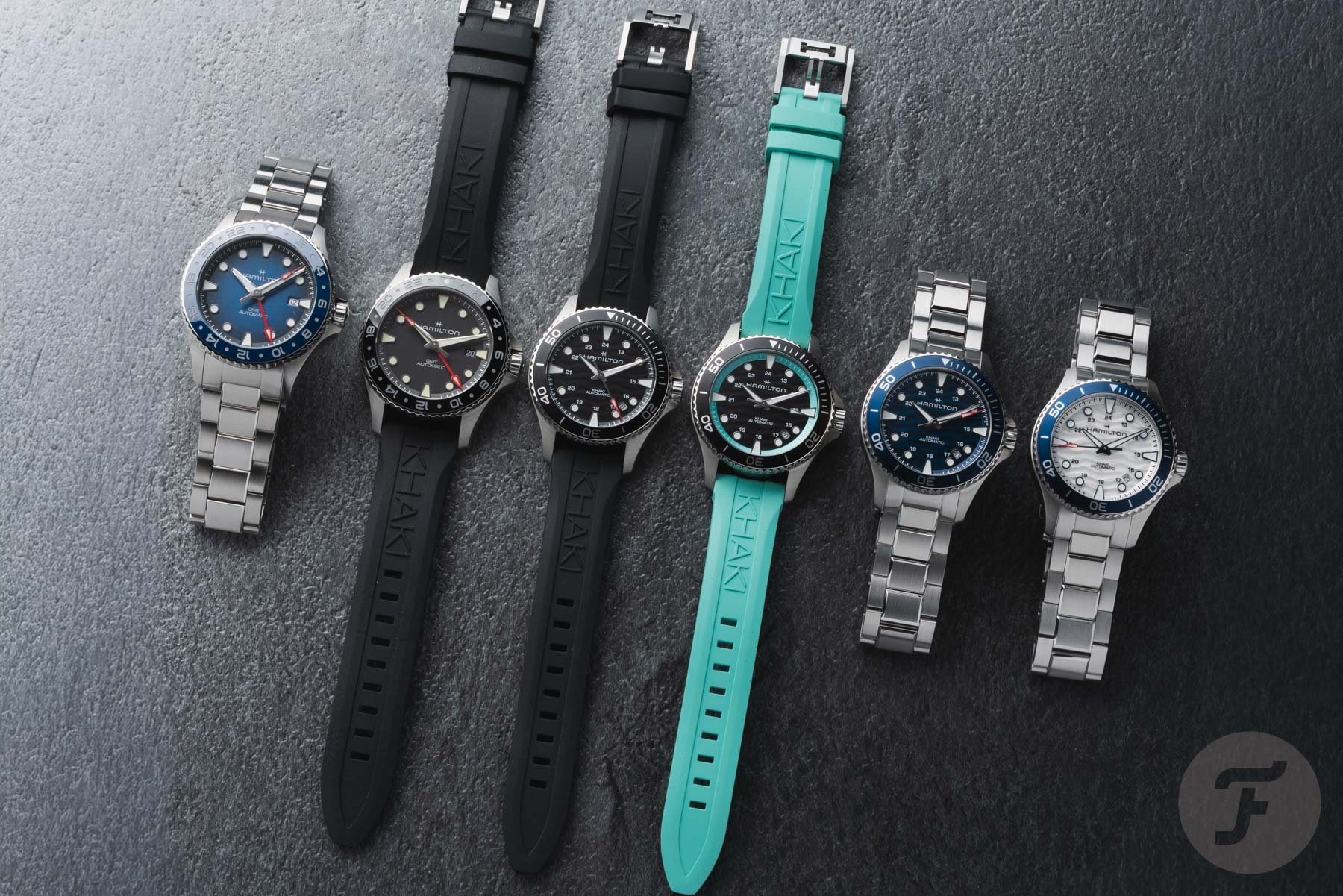
Hamilton's Khaki Field Expedition GMT puts the GMT complication in a more rugged, less luxury-coded field-watch case. Cal. H-14 GMT (ETA 2893-derived, 80h reserve), 41mm matte case, fixed engraved bezel with 24-hour scale. Caller GMT. The "tool watch" answer to the GMT-Master II.
Bremont
ALT1-WT · 43mm · 100m
British ~€6,795
British world timer with all 24 zones on a rotating inner ring.
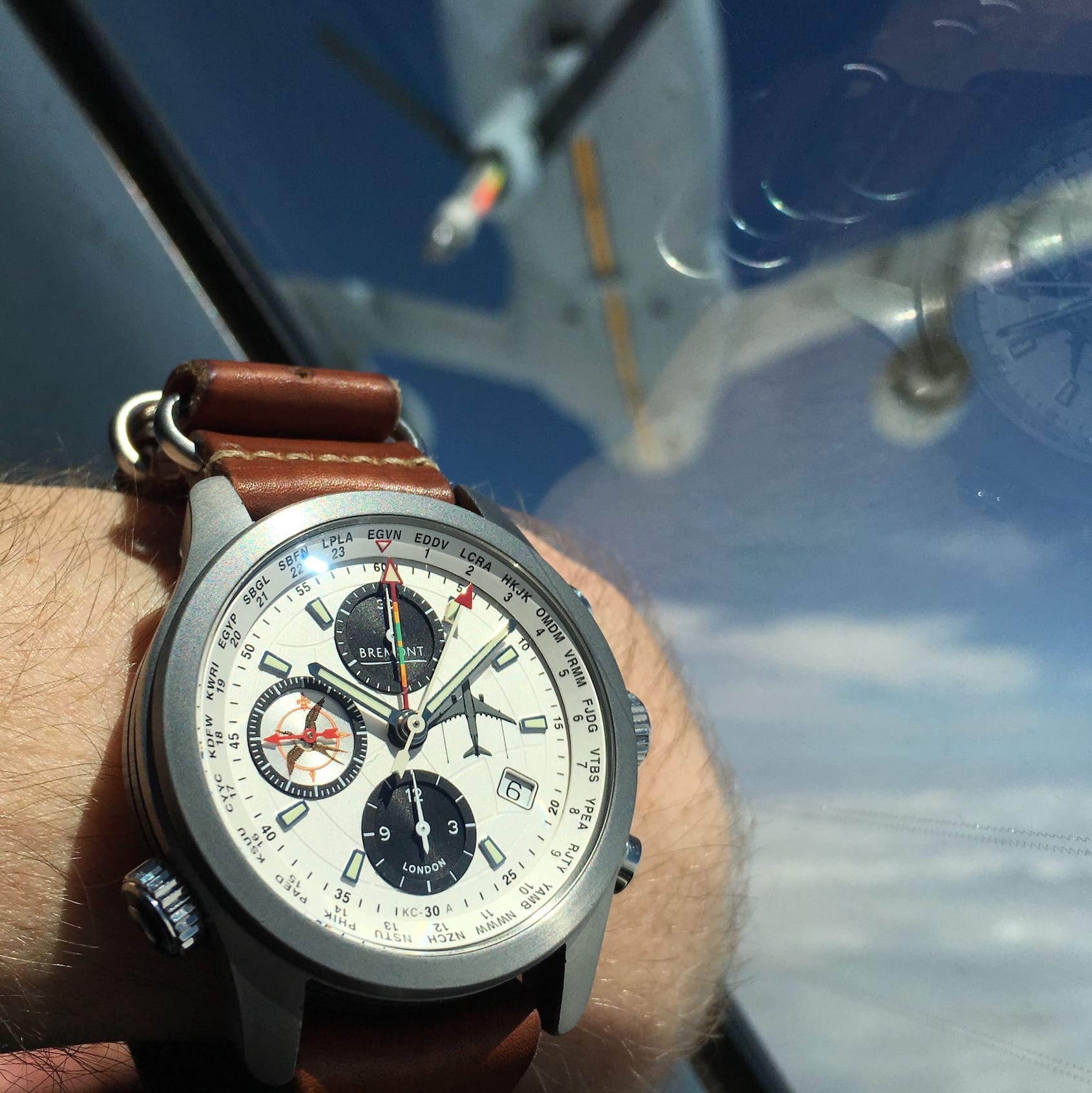
Bremont's ALT1-WT is a true world timer (vs GMT) with every city/zone visible at once via a rotating inner ring. Modified ETA 7754 chronograph base with world-time module, 43mm Bremont Trip-Tick case construction. British design, not at all Rolex-shaped, but solves the multi-zone problem differently.
Bell & Ross
BR03-93 GMT · 42mm · 100m
Pilot Style ~€4,300
B&R's square-case GMT for the pilot-watch buyer.
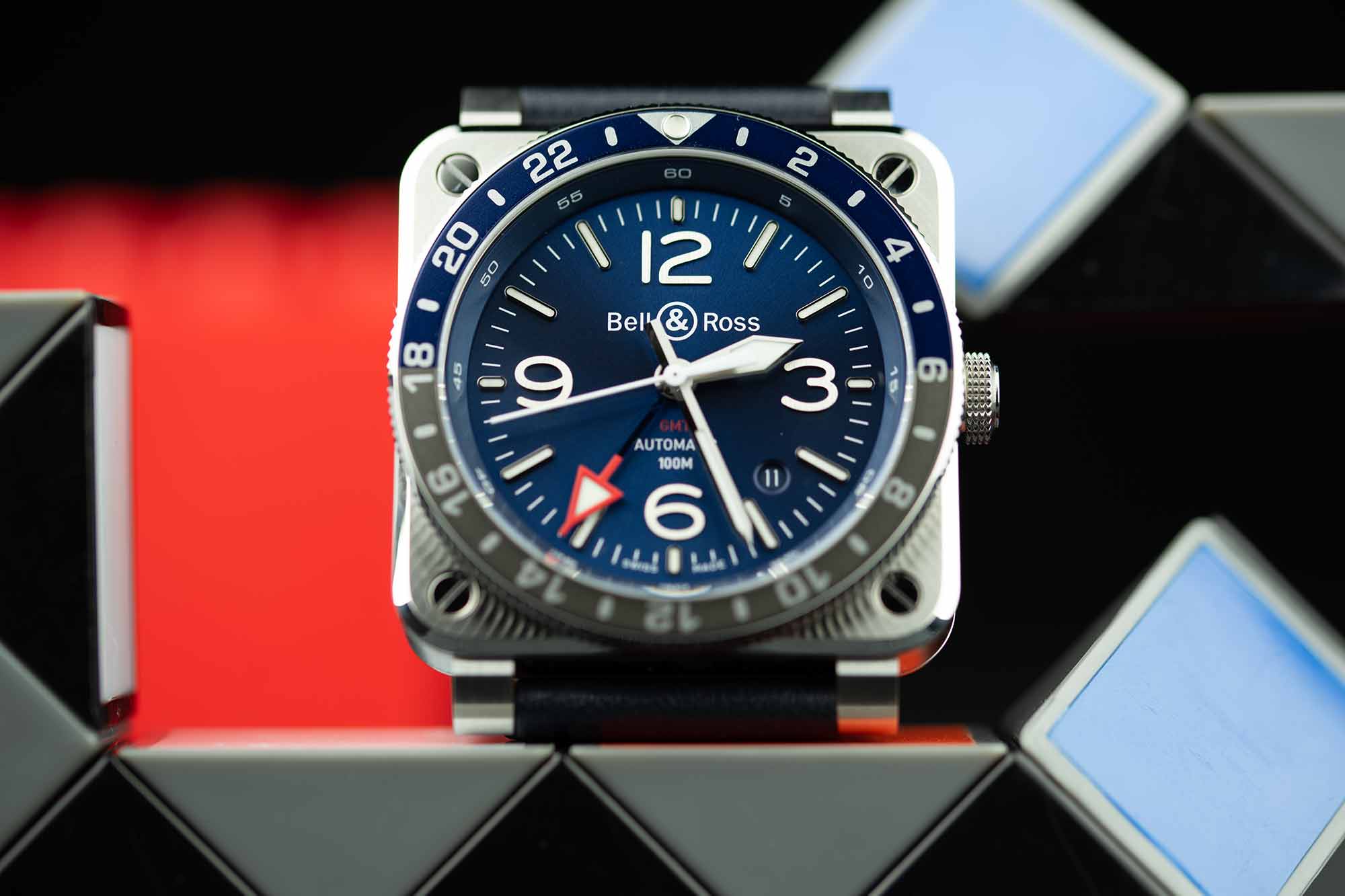
Bell & Ross's BR 03-93 GMT puts the GMT complication in the brand's signature 42mm square instrument-style case. Sellita SW330-derived movement, blue-and-orange "Pepsi" colour split on the 24-hour markers. Different format to the Rolex; same multi-zone utility.
Frequently asked questions
Why not just buy the GMT-Master II?
Pepsi, Batman and Sprite waitlists run three to five years and Rolex won't allocate to first-time buyers without prior brand history. The alternatives here deliver the rotating 24-hour bezel and true-GMT (jumping local hour) movement at retail, in weeks not years.
Which GMT alternative is closest to a Pepsi?
The Tudor Black Bay GMT at 4,300 euro on bracelet gives you the Pepsi bezel, true-GMT MT5652 movement, and same-family Rolex-Tudor finishing. Availability is normal, not queued. It's the answer most buyers land on when the GMT-Master II won't happen.
Is the Longines Spirit Zulu Time a real GMT alternative?
Yes. The Longines Spirit Zulu Time 39 at around 3,000 euro is a true jumping-hour GMT on the L844.4 movement with a ceramic bezel. Between the Tudor BB GMT and the Longines Zulu, most former GMT-Master shoppers stop shopping. Both are at retail.
Can I get a GMT alternative under 1,500 euro?
Yes. The Mido Ocean Star GMT at around 1,300 euro is the entry point for a proper true-GMT movement. Below that you're in caller-GMT territory (Seiko 5 GMT SSK003 at 500 euro), which changes local time by shifting the whole watch, not just the local hour.
Comments 26