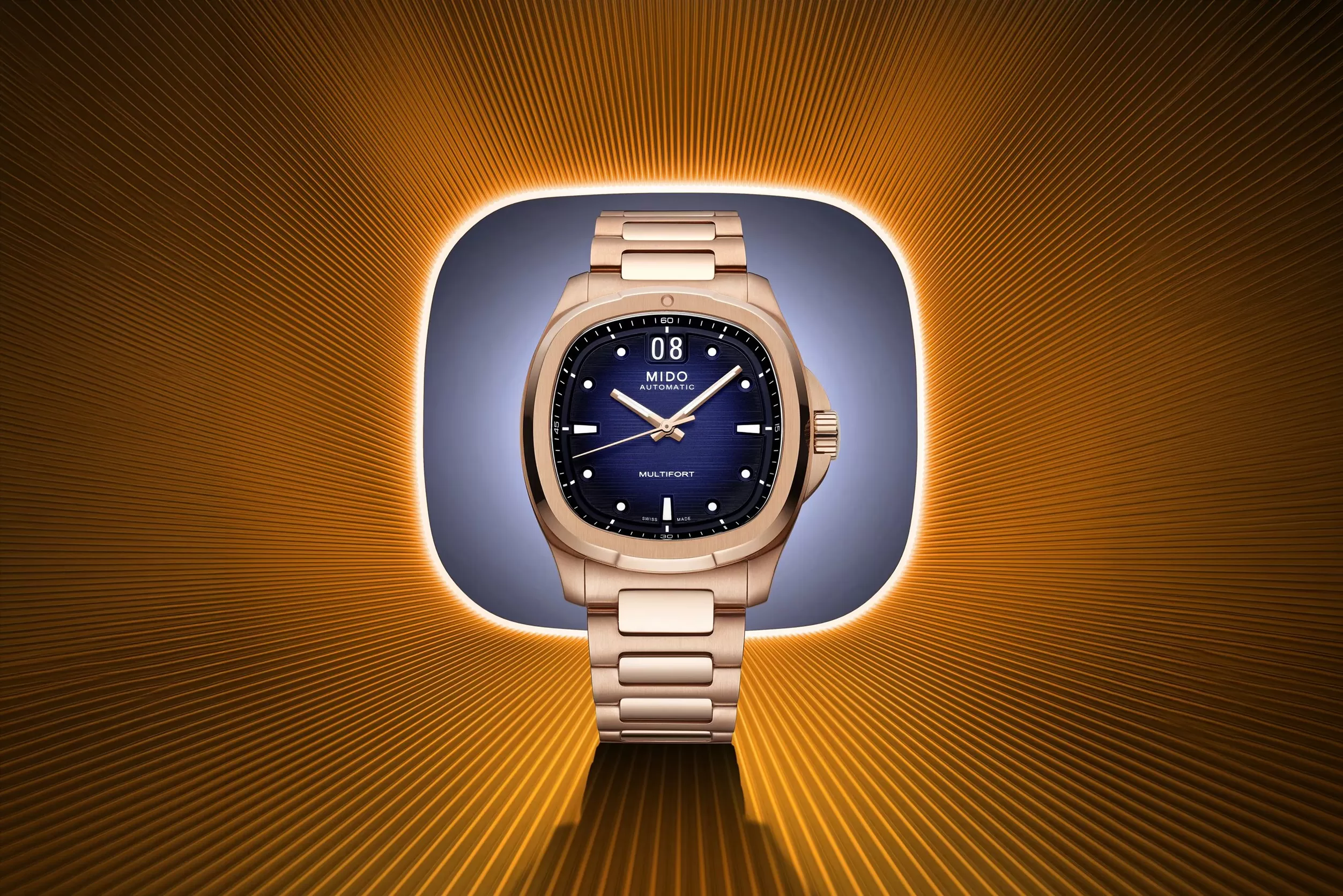
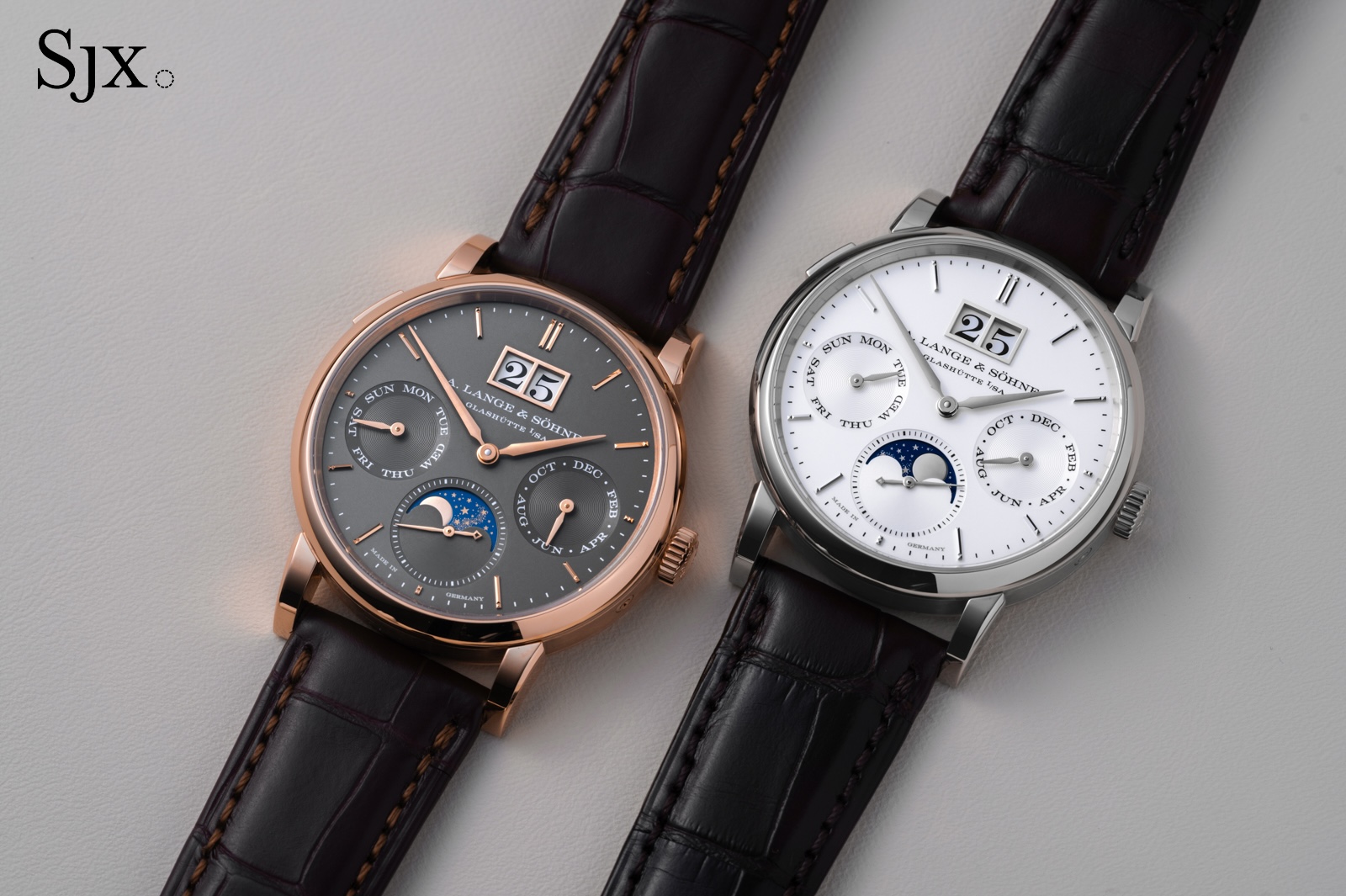
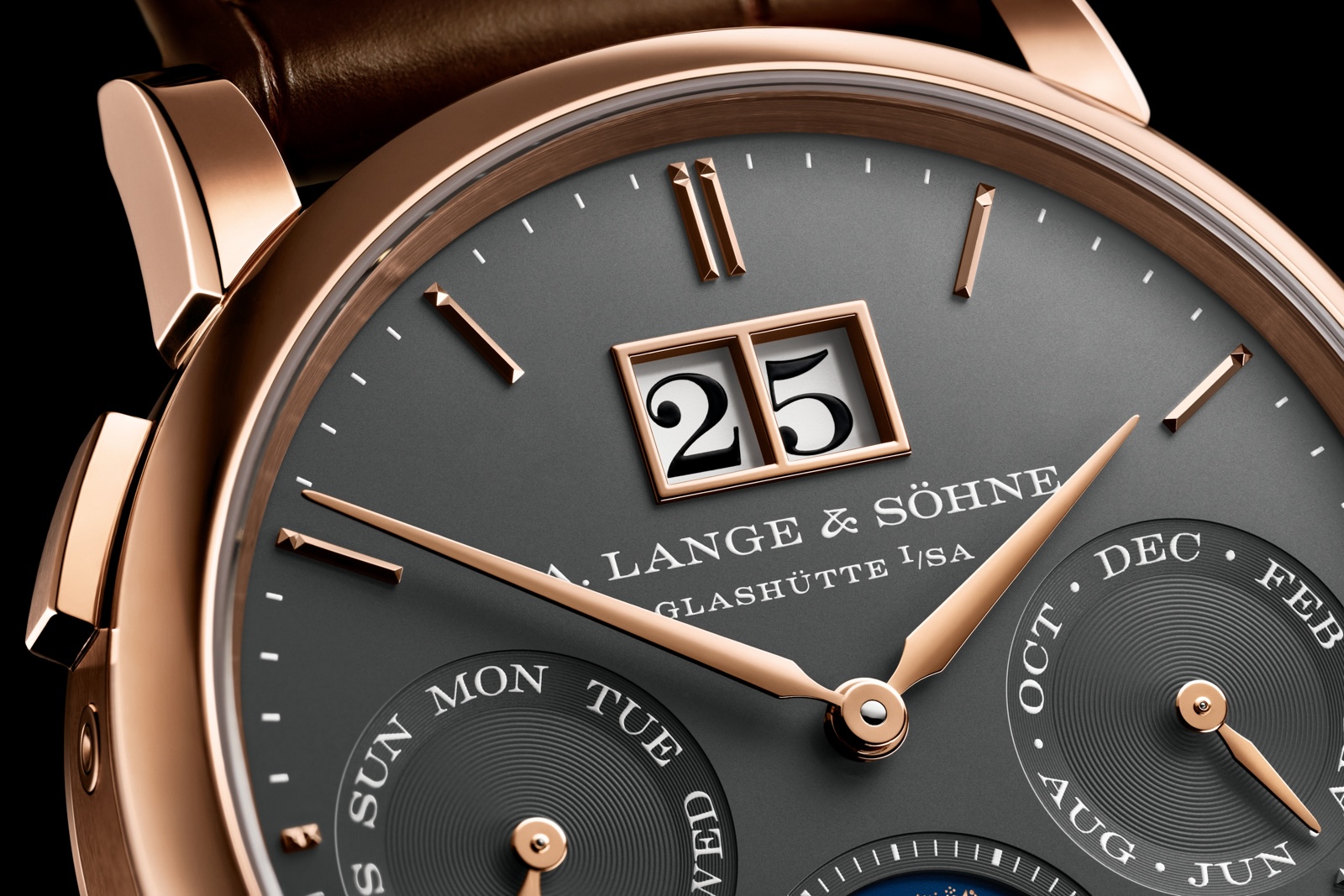
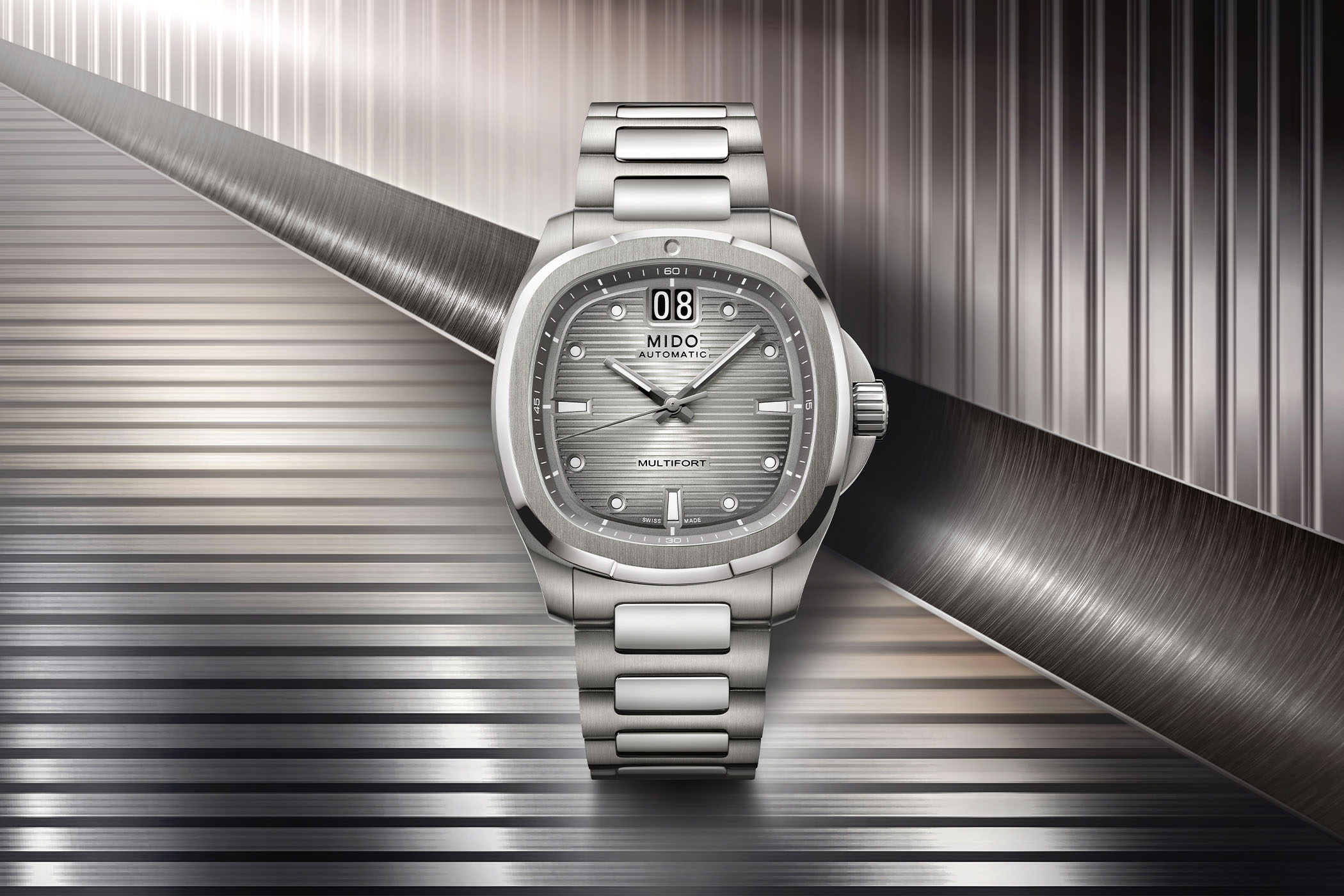
A big date (German Großdatum, French Grande Date) is a date-display complication that uses two separate discs for the date numeral, rather than the single date wheel found on conventional wristwatches. A standard date display has all 31 numerals on one ring, which constrains the numeral size to whatever fits on a 1/31 segment of a small disc. A big date uses a tens-digit disc (0-3) and a units-digit disc (0-9) under two adjacent dial apertures, with each digit much larger than the equivalent on a single-disc date because each disc only carries 4 or 10 positions instead of 31. The result is a date numeral approximately twice as tall and twice as wide as a conventional one.
The big-date mechanism existed in pocket-watch form at Lange & Söhne in Glashütte in the late 19th century; the brand's pre-WWII pocket-watch catalogue includes occasional Großdatum references. The technology essentially disappeared during the 1948-1990 East German GUB period when Glashütte production focused on simpler workhorse calibers. The modern revival came with the refounding of A. Lange & Söhne in 1990 by Walter Lange. When Lange's revived first wristwatch collection launched at Dresden in October 1994, the headline reference was the Lange 1, and its most distinctive dial feature was the large date window at 1 o'clock, with a numeral nearly 2× the size of any conventional date on the market.
"The big date is the moment in 1994 when Lange said: this is what a date should look like on a serious watch. Half the industry agreed within ten years."- Watchmaking design commentary on the Lange 1 launch
The Lange 1 big date was almost immediately copied across the industry, particularly at brands wanting to signal "German-style precision". IWC introduced its big-date version on the Portugieser Automatic ref. 5001 in 2003 and the Big Pilot series since 2002. Glashütte Original introduced the "Panorama Date" on the Senator Sixties series; the Panorama Date is technically a single-aperture variant, but mechanically a two-disc system. Patek Philippe's ref. 5396 Annual Calendar uses an Lange-style two-aperture big date. Other adopters: Vacheron, Jaeger-LeCoultre, and most modern German fine-watchmaking brands.
Mechanically the big date is not particularly complex; the two-disc gear train is simpler than a perpetual calendar or chronograph mechanism. The execution challenges are mostly aesthetic and reliability: the two date numerals must align cleanly across the two apertures (a slight mismatch is unsightly), the date change at midnight must be either crisply instantaneous or at least visually clean, and the change between months (going from "30" to "1") must transition both discs simultaneously. Lange's execution is generally regarded as the benchmark; the brand's big date changes both discs simultaneously in a single sub-second click at midnight, with no visible drag.
Big-date variants exist. The "Outsize Date" on certain Patek references uses the same two-disc principle but a slightly different numeral typography. The "Panorama Date" on Glashütte Original uses a single rectangular aperture covering both discs (rather than two separate windows), giving a slightly cleaner visual presentation. The "Big Date" on Audemars Piguet (Code 11.59) uses Lange-style two apertures. IWC's Big Pilot has a particularly large numeral execution because the Pilot watch has a generous dial area.
For collectors, a big-date reference signals "German-influenced precision aesthetic". The complication is now found across Holy Trinity and German fine-watchmaking catalogues, but the Lange 1's 1994 launch remains the iconic reference. Production volumes of big-date wristwatches across the industry are now in the hundreds of thousands per year, dominated by IWC, Lange, Glashütte Original, and Patek. The complication is essentially mainstream haute horlogerie at this point; a serious watch without a big date today reads as either more traditional (Patek Calatrava, vintage Rolex) or more sport-focused (Submariner, Royal Oak Jumbo).

Comments 2