
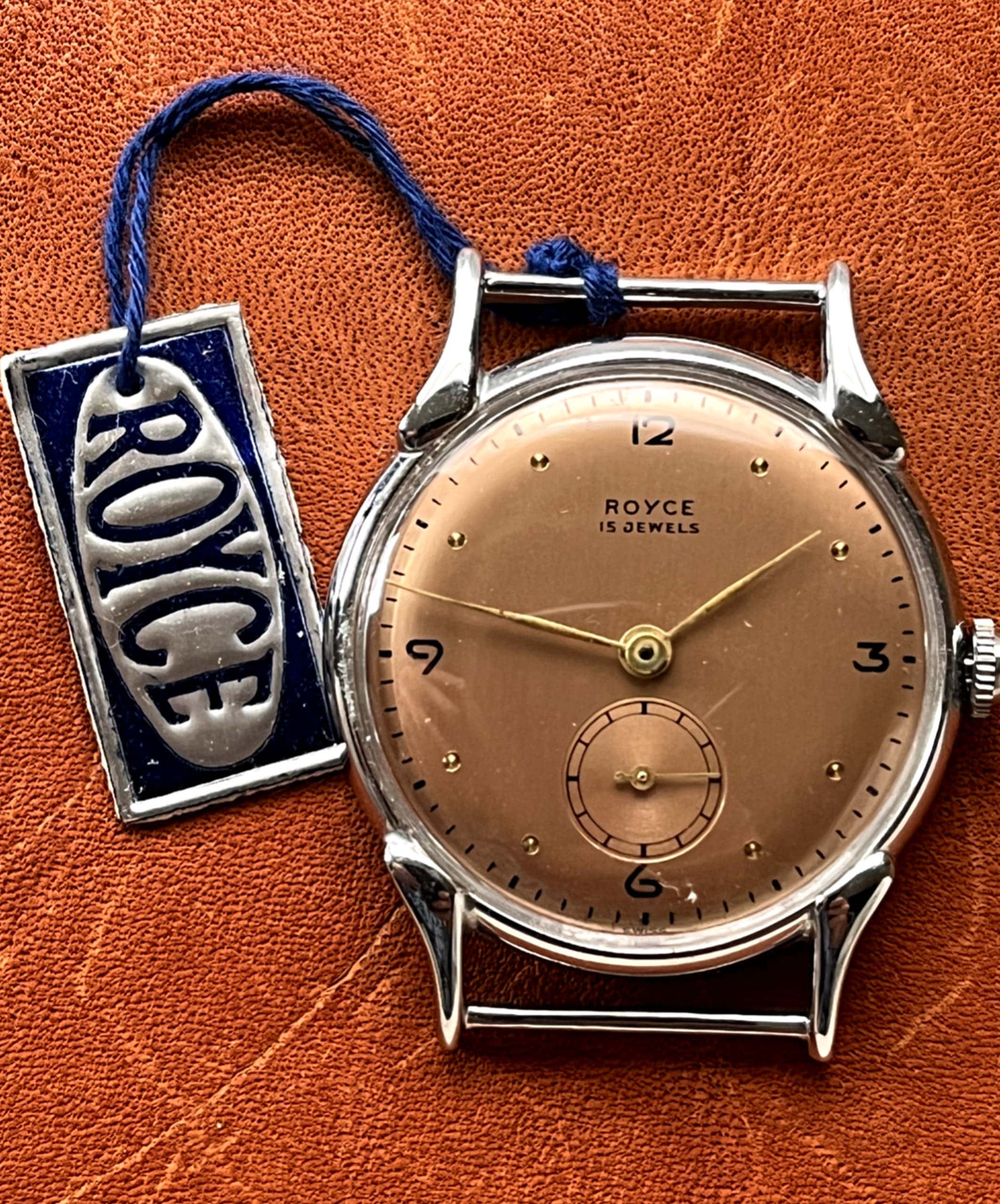
NOS, an acronym for "New Old Stock", is the collector vocabulary term for a discontinued watch in unworn condition. The piece itself was manufactured years or decades ago (typically 5-30+ years old) but has somehow remained unworn since leaving the factory: stored at a retailer's back-of-shop inventory, kept by a watchmaker as factory stock, given as a gift but never wound, or saved in a collector's safe. The watch is "new" in condition but "old" in production date, hence the term.
The strictest NOS specification requires the watch to retain its original protective stickers (the small clear or printed plastic labels factories apply to caseback, bezel, or crown for shipping protection). A truly NOS Rolex will show the brand sticker on the caseback, the polishing strip on the bracelet, and the original protective film on the crystal. Lower-grade NOS may be unworn but missing the protective stickers (perhaps the original retailer removed them for display); higher-grade NOS keeps everything as-shipped. "Sealed NOS" is the highest tier: the watch is still in its factory-sealed plastic bag, never having been removed even for inspection.
"NOS is the watch as the brand made it, as the retailer received it, and as the collector now finds it. Forty years pass, and nothing in between has touched it. That is the entire premium."- Vintage watch dealer commentary on NOS culture
The "full set" concept is closely related but slightly different. A "full set" includes the watch + original presentation box + chronograph operating instructions + warranty papers + tags / hangtags + extra links. A NOS watch should also be a full set; a full set watch is not necessarily NOS (it could be lightly worn but still have all paperwork). Auction catalogues use both terms explicitly: "NOS, full set, factory stickers intact" describes the highest-tier vintage condition.
NOS commands significant auction premiums. A typical premium for a vintage watch in NOS condition over the same reference in "honest worn / original condition" runs 50-100% for moderate-rarity references and 100-300%+ for high-rarity references. A 1970s Rolex Submariner ref. 5513 in worn-but-original condition might sell at USD 25,000-40,000; the same reference in NOS condition (sticker, full set) can reach USD 80,000+. Forgery is a problem; "factory stickers" can be applied retroactively to non-original watches, and condition restoration can be passed off as NOS by unscrupulous dealers. Auction houses (Phillips, Christie's) use spectroscopic analysis, sticker-adhesive aging tests, and provenance documentation to authenticate NOS claims.
NOS is not strictly the same as "unworn". A modern reference (e.g. a 2018 Patek Nautilus 5711) sold "unworn" with original packaging is technically "NIB" (New In Box), not NOS, because the watch is still in current production. NOS specifically requires discontinued status on top of the unworn condition. The line shifts as references discontinue: a Patek 5711 was NIB in 2020, but became NOS-eligible after the reference was discontinued in 2021.
For collectors, NOS is the "time capsule" end of the vintage market. Buying NOS means owning a watch as the original retailer sold it, with no service-replaced parts, no relume, no polish history, no bracelet stretch. The premium reflects that the buyer is paying for condition and completeness as much as the watch itself. The downside: NOS watches that have sat unworn for decades may need full service before wearing, since lubricants degrade and seals harden over storage time. Many collectors of NOS pieces choose not to wear them, treating the watch as preserved rather than functional.




Comments 1