The Rolex Submariner has been in continuous production since 1953. That's more than seven decades of incremental changes, each one logged in a new reference number. If you've ever stared at a listing and wondered what the difference is between a 5513 and a 16610, or why anyone pays a premium for a "Red Sub", this article is for you.
What follows covers every key reference in the Submariner line: what changed, what stayed the same, and how to spot the difference from across a room. At the end there's a buying section with current prices from Rolex's own site and pre-owned guidance from tracked market data.
Quick version: the references at a glance
- 6204 / 6205 (1953-1955): first Submariners, 37mm, no crown guards, 100m, calibre A260. Early 6204s may lack the "Submariner" name on the dial.
- 6200 (1954): "King Sub", oversized 8mm Brevet crown, Explorer-style 3-6-9 dial, made in tiny numbers despite carrying the lowest reference number.
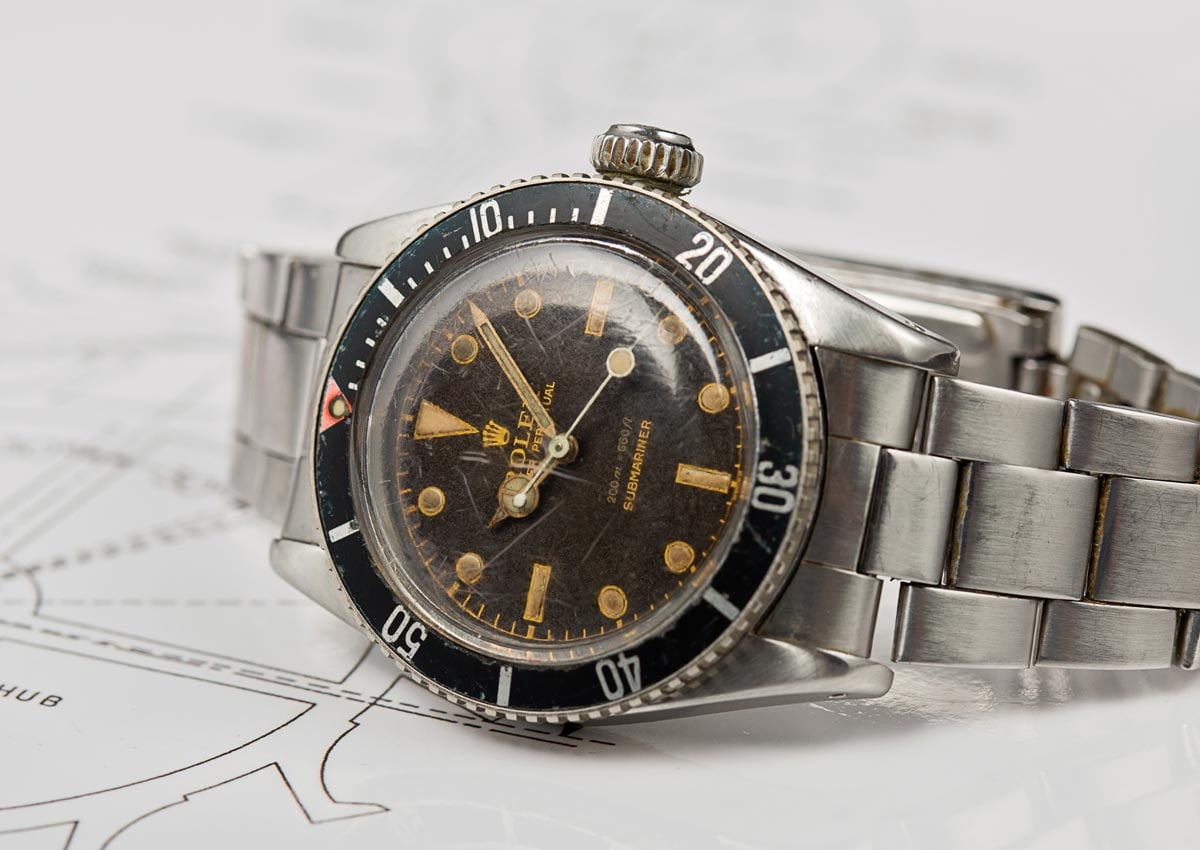
- 6538 (c.1955/1956-1959): "Big Crown", 38mm, 8mm Brevet crown, cal. 1030, 200m. The Bond watch.
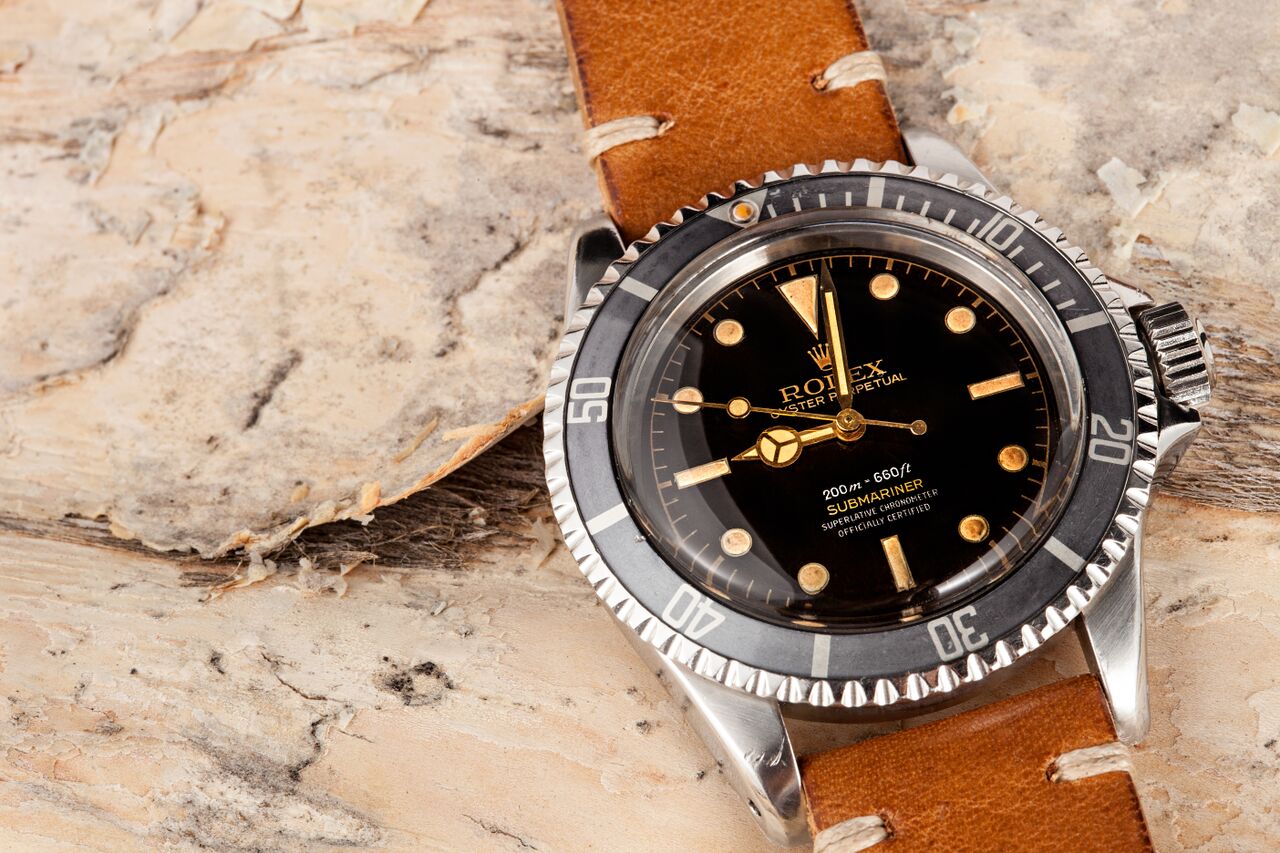
- 5512 / 5513 (1959-c.1978/1989): first 40mm Submariners, first crown guards. The 5512 is COSC-certified (4-line dial); the 5513 is not (2-line dial).
- 1680 (c.1967-1980): first Submariner Date, Cyclops lens, acrylic crystal, cal. 1575. Red-text dials (to c.1975) are the "Red Sub" and the most collectable.
- 16800 (1979-1988): first sapphire crystal Submariner, quick-set date via cal. 3035, 300m, first ratcheted unidirectional bezel.
- 16610 / 14060 / 14060M (1988-2012): cal. 3135 (date) or 3130 (no-date), still aluminium bezel, longest-running modern Subs before ceramic.
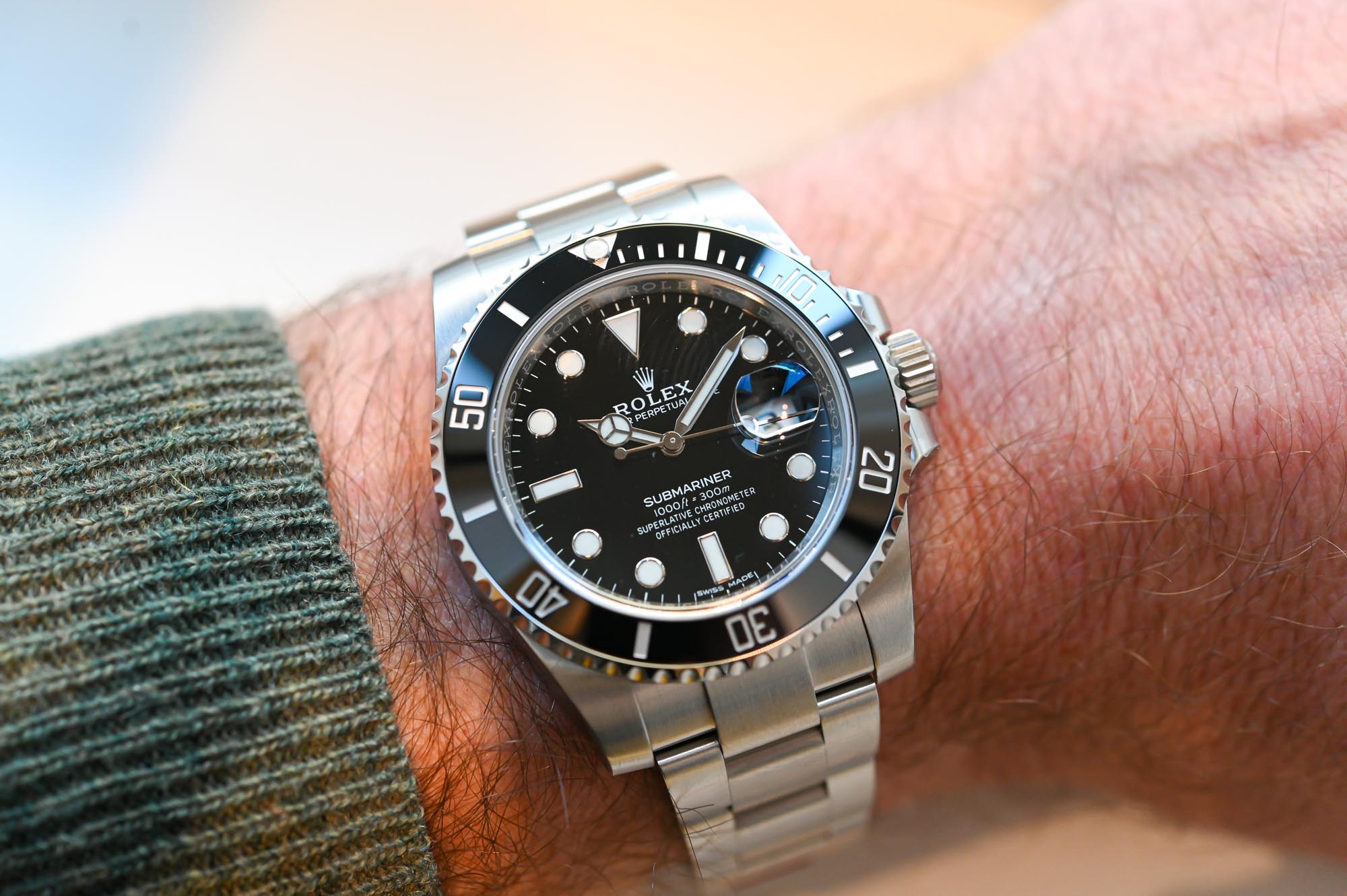
- 116610 / 114060 (2010-2020): "Super Case", ceramic Cerachrom bezel, Chromalight lume, Glidelock clasp, still 40mm nominal.
- 126610 / 124060 (2020-present): 41mm (measured closer to 40.5mm), slimmer lugs, cal. 3235/3230 with 70-hour power reserve, Chronergy escapement.
The vintage era: 6204 to 6538
The ref. 6204 is where it all started, introduced in 1953. It's a 37mm Oyster case with a bidirectional rotating bezel, calibre A260 automatic, and 100 metres of water resistance. Some early examples don't have the word "Submariner" on the dial at all, reportedly due to trademark complications. The hands on these first pieces are slim pencil/baton style, not the Mercedes hand Rolex would later make its signature.
The 6205 followed almost immediately in 1954-1955. Same 37mm case, same calibre, but later examples introduced the Mercedes-style hour hand and the "Submariner" name became consistent on the dial. The exact production sequence of the 6204 versus the 6205 is disputed in the literature, and both are confirmed as first-generation Submariners in Rolex's own product records.
Then there's the 6200, also known as the "King Sub". Despite carrying the lowest reference number, it actually appeared after the 6204 and 6205, in 1954. It introduced the oversized 8mm "Brevet" crown, an Explorer-style dial with 3-6-9 numerals, and a 37.5mm case. It was made in very small numbers and is now extremely rare.
The ref. 6538, the "Big Crown", is the one most people know. That nickname refers to the same 8mm Brevet screw-down crown, now on a 38mm case. Under the dial sits calibre 1030, a 25-jewel movement running at 18,000 vph, and water resistance jumped to 200m. The bezel insert is aluminium. Production dates are slightly disputed: Monochrome-Watches puts it at 1955-1959, while Bob's Watches says 1956-1959. There are 2-line and 4-line dial variants; the 4-liner has a COSC-certified movement. The 2-line dial version is the one Sean Connery wore as James Bond in Dr. No. That alone explains much of its collector premium today.
The 40mm breakthrough: 5512 and 5513
In 1959 Rolex made two changes that defined the Submariner for the next six decades: the case grew to 40mm, and crown guards appeared for the first time. The ref. 5512 was the launch piece. Early 5512s had square crown guards in a very brief sub-year run, with fewer than around 100 made. Those quickly gave way to pointed "eagle beak" guards from 1959 to 1963, then rounded guards thereafter. Early calibres were the 1530, later replaced by the 1560 and 1570, both chronometer-certified. The 5512 dial carries four lines of text as a result.
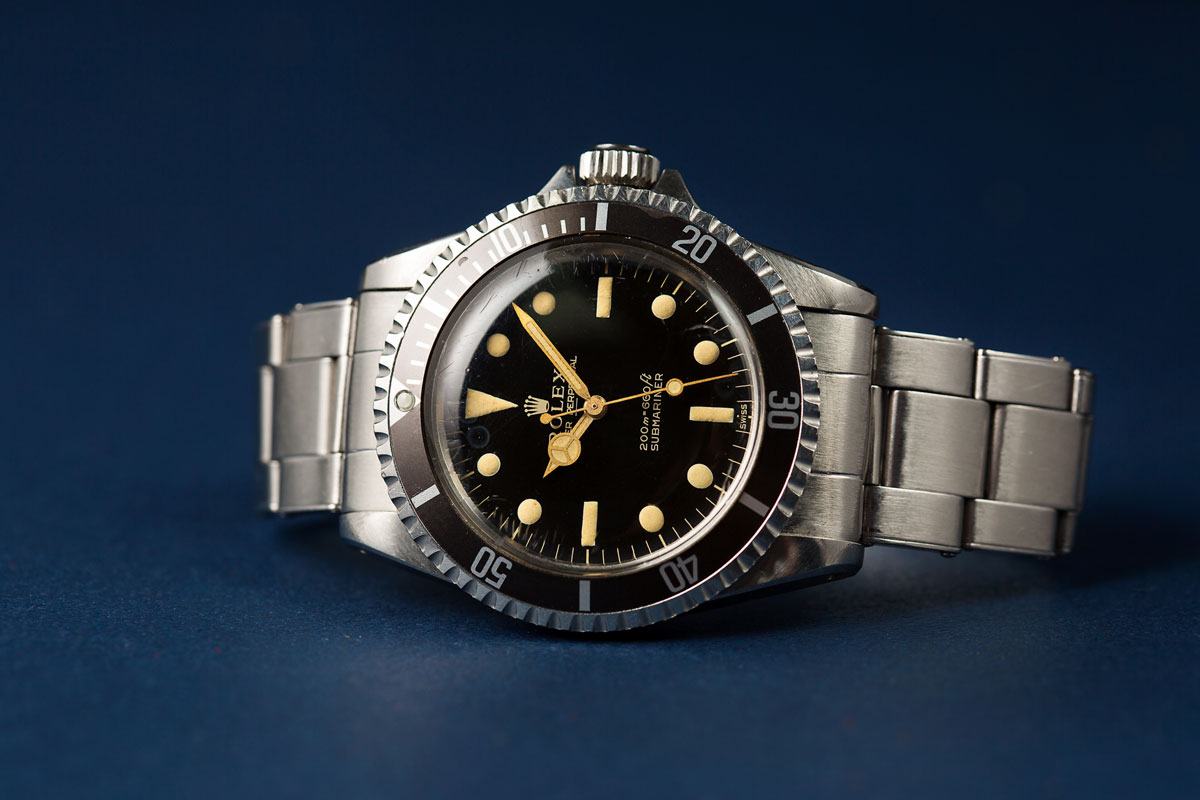
The 5513, introduced in 1962, looks almost identical. Same 40mm case, same crown guards, same acrylic crystal, same 200m rating. The difference is the movement: the 5513 ran calibre 1530 early on, then 1520, neither COSC-certified. That means the dial carries only two lines of text, "Oyster Perpetual Submariner", with no chronometer mention. It's the cleaner, simpler look, and production was enormous: approximately 151,449 examples of the 5513 were made versus roughly 17,338 of the 5512. Both switched from gilt/silver-gilt dials to matte black dials with white printing in 1965-1966.
On any vintage Submariner, counting the lines of text on the dial is the fastest way to tell a non-chronometer from a chronometer-certified reference. Two lines means the movement isn't COSC-rated. Four lines means it is. That single difference separates the 5513 from the 5512, the 14060 from the 14060M, and so on through the generations.
The date arrives: ref. 1680 and the "Red Sub"
Around 1967 Rolex introduced the first Submariner with a date complication. The ref. 1680 added a date window at 3 o'clock, a Cyclops magnifier on the acrylic crystal, and calibre 1575 (essentially a 1570 with a date module). It kept the 40mm case and 200m rating. It's also the only Submariner Date ever produced with an acrylic crystal.
The most collectable version is the early dial variant where "SUBMARINER" is printed in red rather than white. These "Red Subs" were produced roughly from launch to around 1975, though sources disagree on the exact cutoff: Bob's Watches and Oracle of Time say around 1975, Italian Watch Spotter says 1976-1977. The red text switched to white from that point onward. Within the 1680 family, collectors track multiple dial marks, MK1 through MK8 and beyond, distinguishable by details including whether the depth rating lists metres or feet first, the shape of the printed "6", and whether the red text sits on a white base layer or directly on the dial.
Five-digit era: 16800, 16610, 14060 and 14060M
The ref. 16800, introduced in 1979, is one of the most significant transitions in Submariner history. Three things happened at once: the acrylic crystal was replaced by sapphire, the calibre jumped to the 3035 with its quick-set date function, and water resistance increased to 300m, the standard that every Submariner still carries today. The 16800 also introduced the ratcheted unidirectional bezel, another change that stuck. The aluminium bezel insert remained.
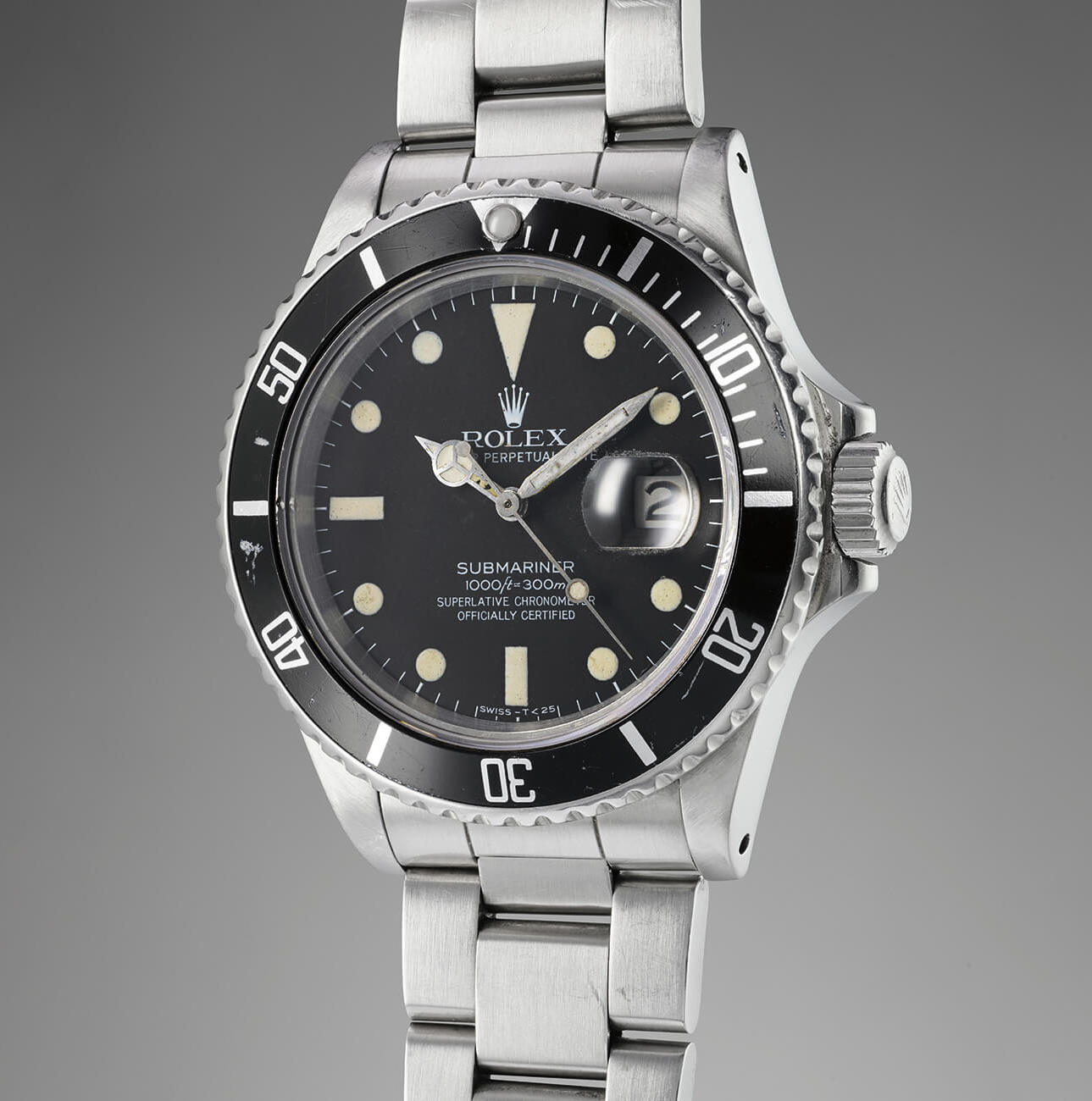


The 16610 arrived in 1988 and ran all the way to 2010, making it the longest-running modern Submariner Date. It upgraded to calibre 3135, which is chronometer-certified and beats at 28,800 vph. Over its 22-year run it accumulated several smaller changes: lug holes were dropped in 2003, an engraved rehaut appeared in 2005, and the lume transitioned from tritium to Super-LumiNova in 1998. In 2003 Rolex also introduced the 16610LV, known as the "Kermit", to mark the Submariner's 50th anniversary. It was the first Submariner with a green bezel (aluminium insert) and introduced the Maxi dial with larger hour markers.
On the no-date side, the 5513 was replaced by the 14060 in 1990, which was the first no-date Submariner with a sapphire crystal and Triplock crown. Its calibre 3000 wasn't COSC-certified, so the dial carries two lines of text. The 14060M, introduced in 1999, corrected that with calibre 3130, earning chronometer certification and four lines of text on the dial.
Ceramic generation: 116610, 114060 and the Super Case
In 2010 Rolex rolled out the 116610LN and 116610LV together. The headline change was the Cerachrom ceramic bezel insert, scratch-proof, fade-proof, and UV-resistant in a way that aluminium never was. The case also gained the "Super Case" profile: broader lugs, chunkier crown guards, a more assertive presence on the wrist. The Maxi dial, with its larger hour markers and broader hands, came standard. Lume switched to Chromalight, a blue-glowing compound rated to around 8 hours. The Glidelock clasp allowed up to 20mm of tool-free bracelet adjustment in 2mm increments. Calibre 3135 carried over from the 16610. Nominal size stayed at 40mm.
The 116610LV in this generation is called the "Hulk" because it has both a green sunburst dial and a green ceramic bezel. It's distinct from the earlier "Kermit" 16610LV, which had a green aluminium bezel on a black dial. The Hulk ran from 2010 to 2020 alongside the black-bezel 116610LN.
The no-date equivalent, the 114060, arrived in 2012 and ran to 2020. It brought the same Super Case, ceramic bezel, and Chromalight lume to the no-date configuration, with calibre 3130 making every example a Superlative Chronometer, something the earlier 14060 couldn't claim for all its production. It was the last 40mm no-date Submariner produced.
Current generation: 124060 and 126610 (2020 to now)
Rolex announced the current references in September 2020. The case officially moved to 41mm, though real-world measurements put it closer to 40.5mm versus around 40.2mm for the 116610LN. Rolex's 41mm figure likely reflects rounding, and multiple sources confirm the size difference in wearing terms is under one millimetre. The Super Case lug profile was retired in favour of slimmer, more tapered lugs, which many wearers find more comfortable.

The bigger change is mechanical. The 126610LN and 126610LV (date models) run calibre 3235, while the no-date 124060 uses calibre 3230. Both share the same architecture: a Chronergy escapement, Parachrom hairspring, and a 70-hour power reserve, up from roughly 48 hours in the previous generation. A small laser-etched Rolex coronet appears at 6 o'clock on 2020 dials, between "Swiss" and "Made". The 126610LV in this generation is nicknamed the "Starbucks" because it pairs a green ceramic bezel with a black dial, contrasting with the all-green Hulk it replaced.
Which one to buy now
Current list prices in Germany, including VAT (October 2026):
No date, black ceramic bezel
€9,750 new
Date, black ceramic bezel
€10,950 new
Pre-owned prices still sit above list, as they have for years. On Chrono24 Germany a 126610LN goes for roughly €11,500 to €14,800, depending on condition, papers and whether it has been worn.
If you want the best current technology and the most wearable case shape, the 124060 or 126610LN are the logical choices. The 124060 is the purer tool watch, no date, cleaner dial, and the lower list price. If vintage is your direction, the 5513 is the most accessible way into the classic 40mm era, with enough production numbers that decent examples still surface regularly. The 16610 sits in a sweet spot for buyers who want a modern-spec movement (cal. 3135, sapphire crystal, 300m) without paying the premium that ceramic-era pieces carry on the secondary market. For the Red Sub 1680, buy only with solid paperwork and a known service history, the dial variants are complex and fakes exist.
Comments
No comments yet, be the first to weigh in.