Most watch glossaries stop at fifty terms. Tourbillon, chronograph, GMT, done. Useful if you have never opened a watch magazine before, useless the moment a spec sheet says "cal. 3235 with Chronergy escapement and Syloxi hairspring" and you want to know what any of that actually means for the watch on your wrist.
The WristBuzz Watch Wiki is our attempt at the reference we wanted ourselves. 323 entries as of this week, across 20 categories, written in plain English by people who read AP filings and Rolex press releases for a living. No hedging, no "this complex mechanism", no filler. If the answer is "it does not really matter unless you are servicing it yourself", we say that too.
What people are actually reading
The click log tells its own story. The most-visited wiki pages this month are not the ones you might expect.
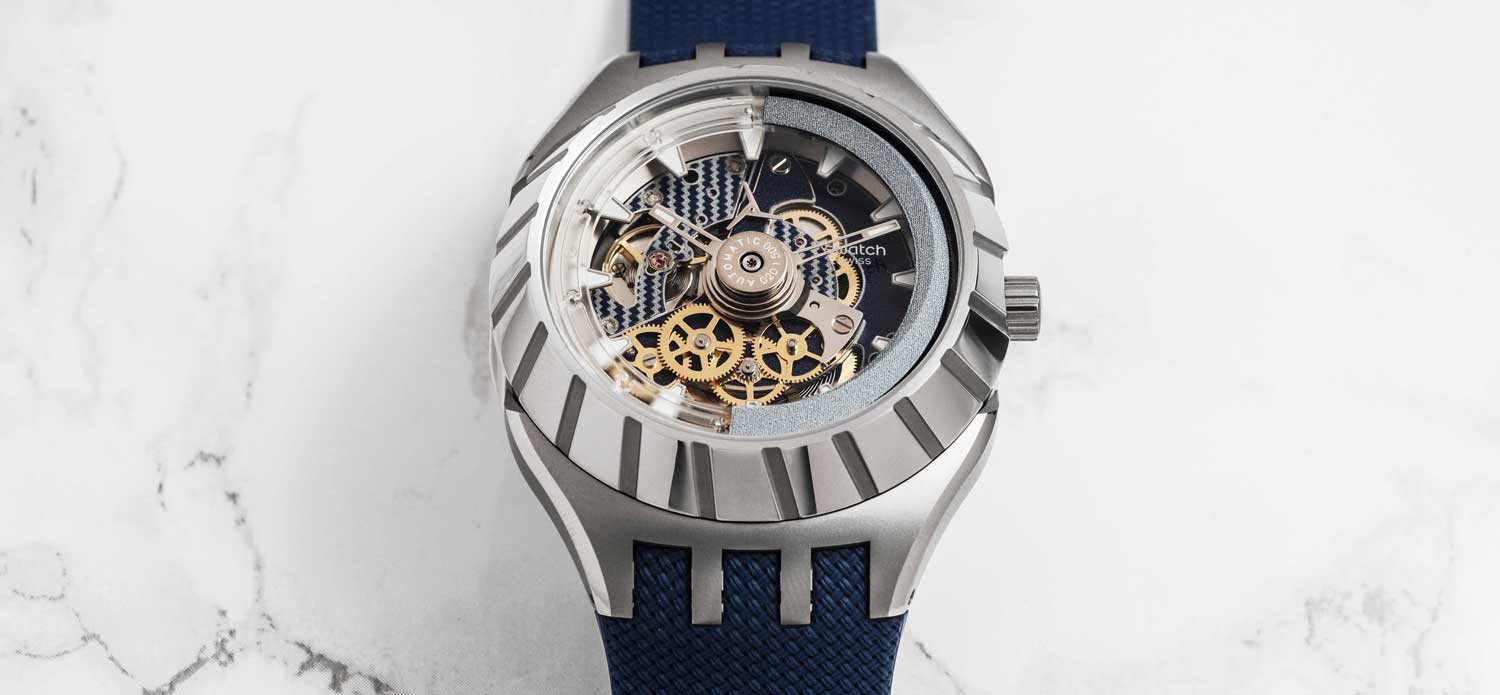
- Free-Sprung Balance - what a Microstella or gold-weight balance actually does, and why it is the single biggest reason your modern Rolex holds -2/+2 seconds.
- Besançon (France) - the French chronometric certification with the crowned viper stamp on the caseback, and how it stacks up against COSC.
- Nivachron Hairspring - Swatch Group's answer to silicon. What it is, which watches use it, and why Tudor talks about it constantly.
- Twin / Triple Barrel - why long power reserves need multiple mainsprings and what the trade-off is.
- Authorized Dealer (AD) - the AD relationship, waiting lists, and why the sales assistant remembers your name for three years before you get the call.
- Superlative Chronometer - the -2/+2 second Rolex spec, how it is tested, and why it is stricter than COSC.
- Quartz Crisis - the 1970s reset that killed two thirds of Swiss watch employment and made the industry we have today.
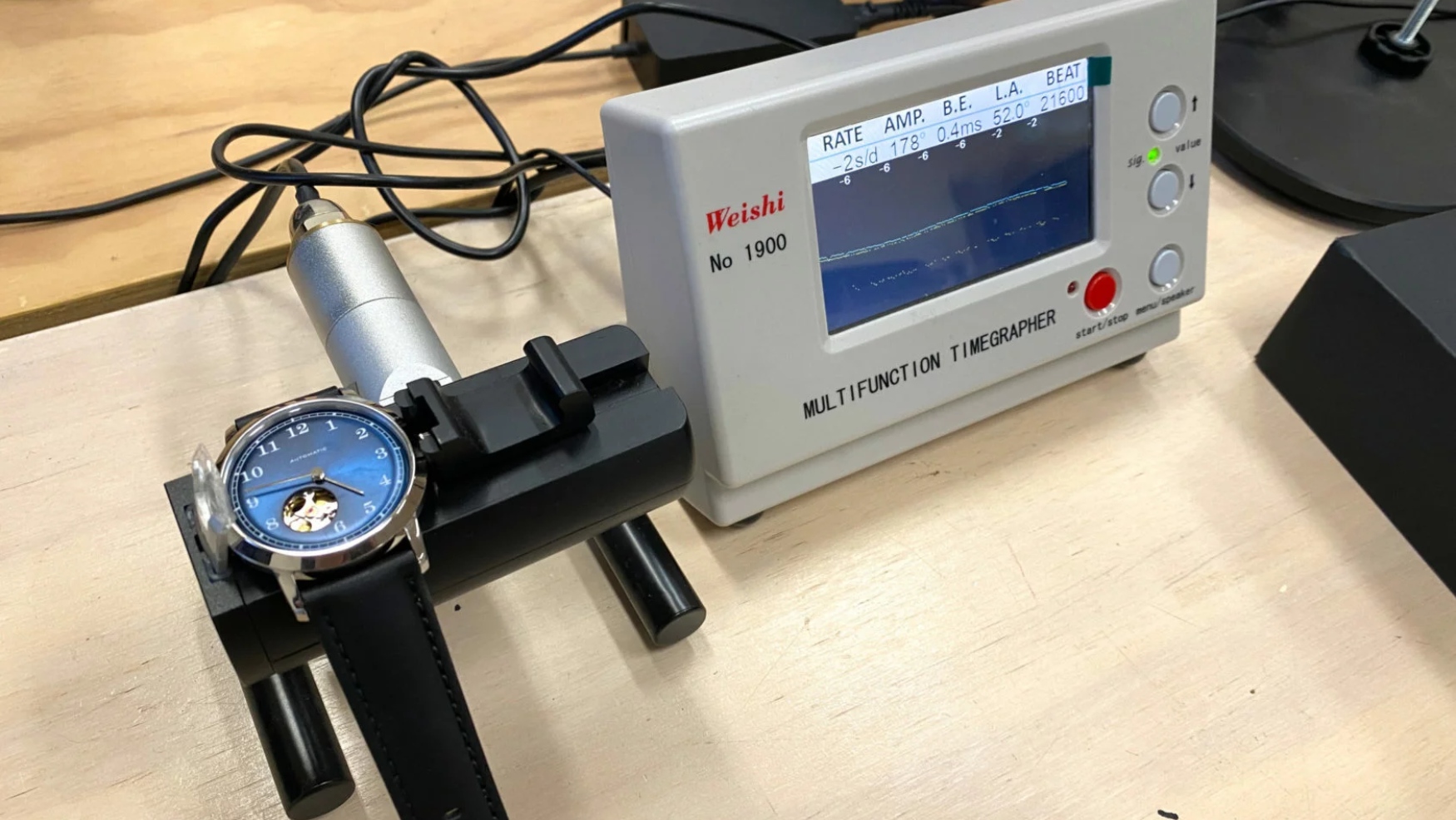
- Timegrapher - the €200 acoustic measurement device you can buy on Amazon that will tell you exactly how accurate your watch is running right now.
Some of these are terms you only meet when you are three-deep in a forum thread. Others come straight off the caseback of the watch you already own.
The categories, in one glance
The wiki is organised so you can browse a topic without knowing the exact term. The biggest buckets:
- Design (38) - dial fumé, coin-edge bezel, hobnail guilloché, snailed subdial, the visual grammar of a watch.
- Movement (36) - Co-Axial escapement, silicon vs Nivachron hairsprings, free-sprung balance, timegrapher printouts.
- Material (32) - Titanium Grade 2 vs Grade 5, Cerachrom vs aluminium, bronze vs Bronzo, sapphire crystal domes.
- History (30) - Quartz Crisis, the birth of the automatic, why the Genta Nautilus / Royal Oak moment matters.
- Complication (27) - perpetual calendar, minute repeater, world time, and a handful of things you have probably never seen (equation of time, celestial chart, remontoire).
- Industry (24) - AD relationships, grey market, MSRP vs street price, boutique-only releases.
- Regulation (12) - Swiss Made, ISO 6425, Geneva Seal, COSC and Besançon.
Also in there: Watchmaker profiles (Gerald Genta, Philippe Dufour, Kari Voutilainen), founder biographies, Place entries (Besançon, La Chaux-de-Fonds, Glashütte, Le Sentier), and Reference Lists that catalogue every ref number in a series.
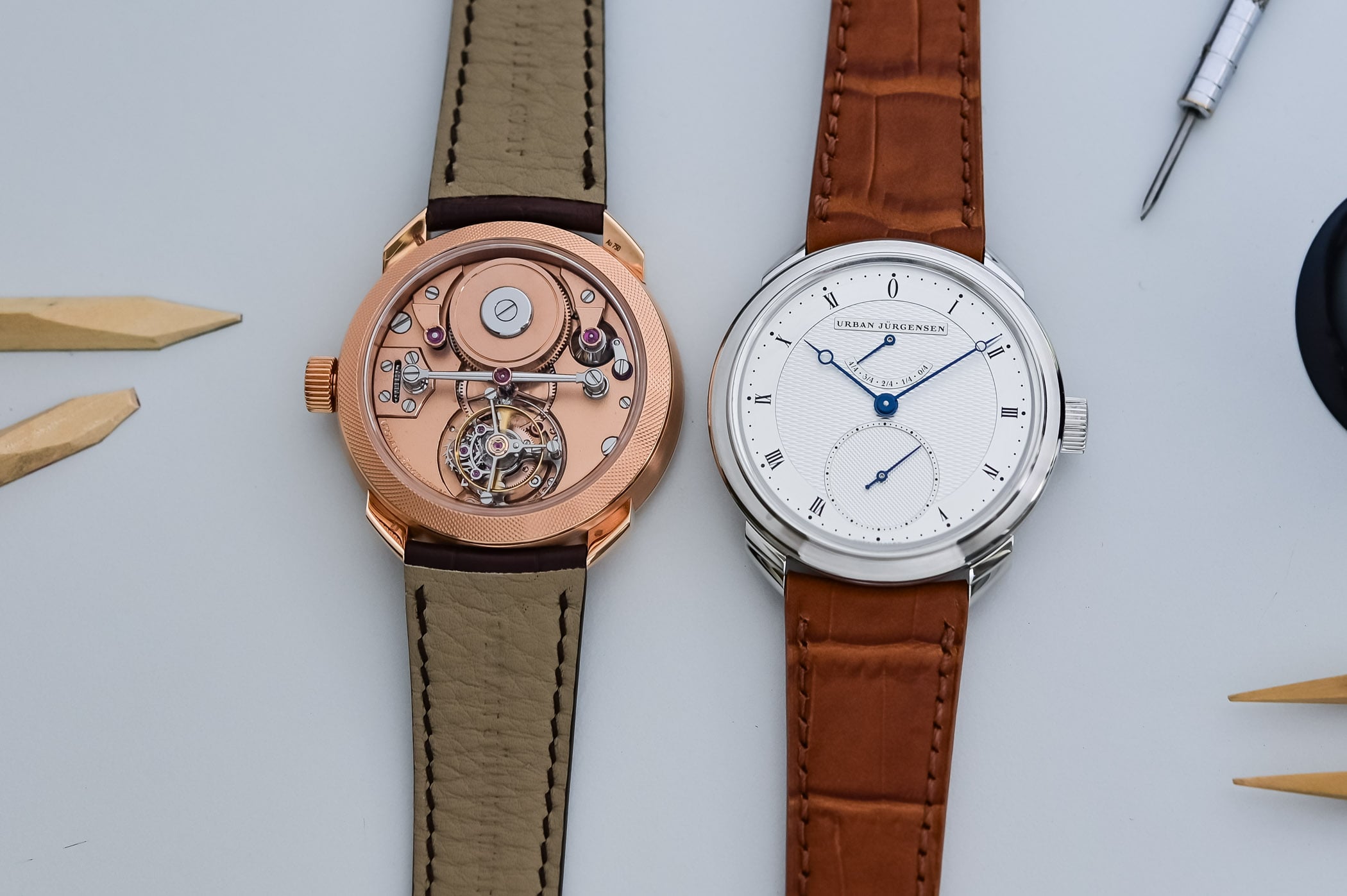
Take Free-Sprung Balance. Two paragraphs. First: what it is (a balance regulated by moving small weights on the rim, no regulator index). Second: why it matters (better isochronism, holds rate after a knock, harder to service). Then a short list of the calibres that use it. No filler. If you already know it, you skim it in ten seconds. If you do not, you leave knowing exactly what a Microstella is and why every high-end movement has one.
Who this is for
Three groups, roughly.
- Buyers on the fence. You are looking at a pre-owned listing that mentions "flat sapphire, aluminium bezel, tritium lume". You want to know what era that describes and whether the seller is telling the truth. The wiki gives you the era markers.
- Owners who want to understand what they have. Your Superlative Chronometer caseback, your ISO 6425 rating, your COSC papers. What do they actually promise, and what happens if the watch drifts outside spec.
- Journalists and enthusiasts writing about the industry. Half of the entries exist because we needed the definition ourselves while writing something else. Free to use as reference; every entry has a stable URL.
Where to start
The hub page lets you filter by category or search. If you want a quick tour, try five entries in a row: Co-Axial escapement, Nivachron hairspring, Geneva Seal, Perlage, Quartz Crisis. That gives you movement, materials, regulation, finishing and history in about ten minutes of reading.
If you find a term missing, tell us. The wiki grows because someone asks. That is how we ended up with an entry on the Faraday cage, on tropical dial patina, and on the difference between Titanium Grade 2 and Grade 5. Add a comment on any entry, or drop us a note. If we can write the definition without hedging, we will.
Comments
No comments yet, be the first to weigh in.